
Imaginary Worlds: Palgrave Studies in Literary Anthropology
Autor Wayne Fifeen Limba Engleză Hardback – 9 aug 2022
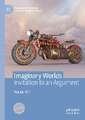
In this work, the author contends that we should create a comparative framework for the study of imaginary worlds in the social sciences. Making use of extended examples from both science fiction and fantasy fiction, as well as the living movement of steampunk, the reader is invited to an argument about how best to define imaginary worlds and approach them as social locations for qualitative research. It is suggested in this volume that increasing economic and existential forms of alienation fuel the contemporary surge of participation in imaginary worlds (from gaming worlds to young adult novels) and impel a search for more humane forms of social and cultural organization. Suggestions are made about the usefulness of imaginary worlds to social scientists as places for both testing out theoretical formulations and as tools for teaching in our classrooms.
Din seria Palgrave Studies in Literary Anthropology
-
 Preț: 218.64 lei
 -
 Preț: 291.30 lei
 -
 Preț: 257.32 lei
 - 15%
 Preț: 602.05 lei
 - 15%
 Preț: 605.24 lei
 -
 Preț: 200.06 lei
 -
 Preț: 150.26 lei
 - 15%
 Preț: 562.00 lei
 - 15%
 Preț: 614.19 lei
 -
 Preț: 205.02 lei
 -
 Preț: 134.53 lei
 - 15%
 Preț: 561.66 lei
 - 18%
 Preț: 782.98 lei
 - 15%
 Preț: 558.53 lei
 - 18%
 Preț: 856.12 lei
 - 18%
 Preț: 779.31 lei
 - 18%
 Preț: 699.22 lei
 - 18%
 Preț: 694.70 lei
 - 18%
 Preț: 779.14 lei
 -
 Preț: 362.15 lei
 - 18%
 Preț: 778.96 lei
 - 18%
 Preț: 924.59 lei
 -
 Preț: 340.51 lei
 - 18%
 Preț: 1038.89 lei
Preț: 749.36 lei
Preț vechi: 913.85 lei
-18%
Puncte Express: 1124
Carte tipărită la comandă
Livrare economică 28 noiembrie-12 decembrie
Livrare prin curier în România Termenul estimat este afișat lângă disponibilitate.
Transport gratuit pentru acest produs Plată online sau ramburs, în funcție de opțiunile comenzii.
Retur gratuit în 14 zile Comandă securizată și suport în română.
Specificații
ISBN-13: 9783031086403
ISBN-10: 3031086406
Pagini: 164
Ilustrații: VII, 154 p.
Dimensiuni: 153 x 216 x 14 mm
Greutate: 0.29 kg
Ediția:1st ed. 2022
Editura: Springer
Colecția Palgrave Studies in Literary Anthropology
Seria Palgrave Studies in Literary Anthropology
Locul publicării:Cham, Switzerland
ISBN-10: 3031086406
Pagini: 164
Ilustrații: VII, 154 p.
Dimensiuni: 153 x 216 x 14 mm
Greutate: 0.29 kg
Ediția:1st ed. 2022
Editura: Springer
Colecția Palgrave Studies in Literary Anthropology
Seria Palgrave Studies in Literary Anthropology
Locul publicării:Cham, Switzerland
Cuprins
Chapter One: Imaginary Worlds in a Comparative Framework.-Chapter Two: Steampunk as Stealth Politics.- Chapter Three: The Perils of Belief – Fantasy Fiction as Narrative Theology.- Chapter Four: Androids as Slaves – Lessons from the Science Fiction of Philip K. Dick.- Chapter Five: Imaginary Worlds and Contemporary Alienation
Textul de pe ultima copertă
In this work, the author contends that we should create a comparative framework for the study of imaginary worlds in the social sciences. Making use of extended examples from both science fiction and fantasy fiction, as well as the living movement of steampunk, the reader is invited to an argument about how best to define imaginary worlds and approach them as social locations for qualitative research. It is suggested in this volume that increasing economic and existential forms of alienation fuel the contemporary surge of participation in imaginary worlds (from gaming worlds to young adult novels) and impel a search for more humane forms of social and cultural organization. Suggestions are made about the usefulness of imaginary worlds to social scientists as places for both testing out theoretical formulations and as tools for teaching in our classrooms.
Wayne Fife is Professor of Anthropology at MemorialUniversity, Canada and the author of Doing Fieldwork and Counting as a Qualitative Method, as well as many journal articles on heritage and eco-tourism, economic inequality and education, play as politics, social alienation, ethnographic research methods, and implicit forms of religion.
Caracteristici
Paves the way for the cross-disciplinary comparison of imaginary worlds Combines insights from anthropology and literature studies Explores why imaginary worlds have become so popular in the contemporary period