
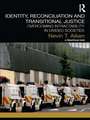
Identity, Reconciliation and Transitional Justice: Overcoming Intractability in Divided Societies: Transitional Justice
Autor Nevin Aikenen Limba Engleză Hardback – 16 ian 2013
Identity, Reconciliation and Transitional Justice makes a timely contribution to debates about how to best understand and address past human rights violations in post-conflict societies, and it offers a valuable resource to students, scholars, practitioners and policymakers dealing with these difficult issues.
Din seria Transitional Justice
-
 Preț: 388.24 lei
 - 15%
 Preț: 441.80 lei
 -
 Preț: 438.07 lei
 -
 Preț: 393.53 lei
 -
 Preț: 448.26 lei
 -
 Preț: 440.53 lei
 - 15%
 Preț: 441.91 lei
 - 18%
 Preț: 1201.13 lei
 - 15%
 Preț: 401.50 lei
 -
 Preț: 204.91 lei
 -
 Preț: 455.97 lei
 -
 Preț: 423.71 lei
 - 15%
 Preț: 402.91 lei
 -
 Preț: 446.23 lei
 - 18%
 Preț: 1198.39 lei
 - 18%
 Preț: 1197.31 lei
 -
 Preț: 419.40 lei
 - 15%
 Preț: 412.33 lei
 - 15%
 Preț: 441.36 lei
 -
 Preț: 442.68 lei
 -
 Preț: 441.75 lei
 -
 Preț: 439.55 lei
 - 18%
 Preț: 1065.61 lei
 - 18%
 Preț: 977.45 lei
 -
 Preț: 443.98 lei
 - 18%
 Preț: 1193.29 lei
 - 18%
 Preț: 1205.92 lei
 - 18%
 Preț: 1067.11 lei
 - 18%
 Preț: 964.02 lei
 - 15%
 Preț: 412.02 lei
 - 18%
 Preț: 1066.82 lei
 - 14%
 Preț: 1020.66 lei
Preț: 1201.13 lei
Preț vechi: 1464.79 lei
-18%
Puncte Express: 1802
Carte tipărită la comandă
Livrare economică 08-22 iunie
Specificații
ISBN-13: 9780415628334
ISBN-10: 0415628334
Pagini: 280
Ilustrații: 1 b/w image
Dimensiuni: 156 x 234 x 18 mm
Greutate: 0.58 kg
Ediția:New.
Editura: Taylor & Francis
Colecția Routledge
Seria Transitional Justice
Locul publicării:Oxford, United Kingdom
ISBN-10: 0415628334
Pagini: 280
Ilustrații: 1 b/w image
Dimensiuni: 156 x 234 x 18 mm
Greutate: 0.58 kg
Ediția:New.
Editura: Taylor & Francis
Colecția Routledge
Seria Transitional Justice
Locul publicării:Oxford, United Kingdom
V-ar putea interesa
-
 Emergency Law in Ireland 1918-1925Colm Campbell-30%Preț: 389.60 lei556.47 lei
 -
 Doing Research on Crime and JusticeRoy King-11%Preț: 375.87 lei424.13 lei
 -
 Foundational Texts in Modern Criminal LawMarkus D Dubber-6%Preț: 1004.87 lei1068.59 lei
 -
 The Language of Bribery CasesRoger W. Shuy-34%Preț: 595.76 lei900.04 lei
 -
 -27%Preț: 69.97 lei96.23 lei
 -
 -17%Preț: 265.76 lei320.01 lei
 -
 -26%Preț: 1356.52 lei1823.71 lei
 -
 -26%Preț: 521.13 lei700.85 lei
 -
 The People V. O.J. SimpsonJeffrey Toobin-25%Preț: 62.68 lei83.51 lei
 -
 Law, Life and LaughterIrvine Smith-19%Preț: 51.24 lei62.98 lei
Cuprins
1. Introduction; Identity, Reconciliation and Transitional Justice; 3.A Social Learning Model of Transitional Justice; 4.Transitional Justice in Northern Ireland and South Africa;5. Instrumental Learning; 6. Socioemotional Learning; 7. Distributive Learning; 8. Conclusion:Social Learning and Reconciliation in Divided Societies
Recenzii
This book offers both scholars and practitioners an overview of recent literature in transitional justice and reconciliation, but also a timely contribution of a theoretical framework that can be used in the context of post-conflict societies when instituting policies. Further, it applies the theoretical framework and offers a wealth of empirical data on the transitional justice approaches in Northern Ireland and in South Africa.
- Dženeta Karabegović, University of Warwick
- Dženeta Karabegović, University of Warwick
Descriere
Building upon an interdisciplinary synthesis of recent literature from the fields of transitional justice and conflict transformation, this book introduces a groundbreaking theoretical framework that highlights the critical importance of identity in the relationship between transitional justice and reconciliation in deeply divided societies. Using this framework, Aiken argues that transitional justice interventions will be successful in promoting reconciliation and sustainable peace to the extent that they can help to catalyze those crucial processes of ‘social learning’ needed to transform the antagonistic relationships and identifications that divide post-conflict societies even after the signing of formal peace agreements. Combining original field research and an extensive series of expert interviews, Aiken applies this social learning model in a comprehensive examination of both the South African Truth and Reconciliation Commission and the uniquely ‘decentralized’ approach to transitional justice that has emerged in Northern Ireland.