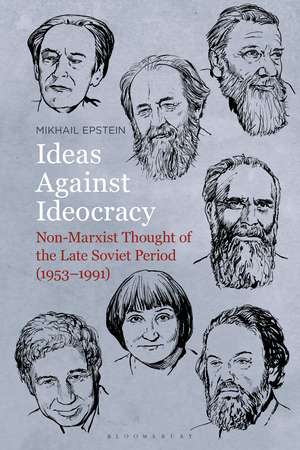
Ideas Against Ideocracy: Non-Marxist Thought of the Late Soviet Period (1953–1991)
Autor Professor Mikhail Epsteinen Limba Engleză Paperback – 20 apr 2023
This groundbreaking work by one of the world's foremost theoreticians of culture and scholars of Russian philosophy gives for the first time a systematic examination of the development of Russian philosophy during the late Soviet period.
Countering the traditional view of an intellectual wilderness under the Soviet regime, Mikhail Epstein provides a comprehensive account of Russian thought of the second half of the 20th century that is highly sophisticated without losing clarity. It provides new insights into previously mostly ignored areas such as late-Soviet Russian nationalism and Eurasianism, religious thought, cosmism and esoterism, and postmodernism and conceptualism.
Epstein shows how Russian philosophy has long been trapped in an intellectual prison of its own making as it sought to create its own utopia. However, he demonstrates that it is time to reappraise Russian thought, now freed from the bonds of Soviet totalitarianism and ideocracy but nevertheless dangerously engaged into new nationalist aspirations and metaphysical radicalism. We are left with not only a new and exciting interpretation of recent Russian intellectual history, but also the opportunity to rethink our own philosophical heritage.
Preț: 208.46 lei
Preț vechi: 288.99 lei
-28%
Puncte Express: 313
Carte tipărită la comandă
Livrare economică 07-21 decembrie
Livrare prin curier în România Termenul estimat este afișat lângă disponibilitate.
Transport gratuit de la 400.00 lei Plată online sau ramburs, în funcție de opțiunile comenzii.
Retur gratuit în 14 zile Comandă securizată și suport în română.
Specificații
ISBN-13: 9781501380914
ISBN-10: 1501380915
Pagini: 280
Dimensiuni: 150 x 228 x 16 mm
Greutate: 0.42 kg
Editura: Bloomsbury Publishing
Colecția Bloomsbury Academic
Locul publicării:New York, United States
ISBN-10: 1501380915
Pagini: 280
Dimensiuni: 150 x 228 x 16 mm
Greutate: 0.42 kg
Editura: Bloomsbury Publishing
Colecția Bloomsbury Academic
Locul publicării:New York, United States
Cuprins
Acknowledgments
Preface
Introduction: Philosophy, the State, and Plato-Marxism
Part I. The Philosophy of National Spirit. Conservatism, Eurasianism, and Traditionalism
1. The Search for National Identity. Traditions and New Challenges
2. The Neo-Slavophile Revival in Aesthetics and Criticism. Petr Palievsky and Vadim Kozhinov
3. Other Neo-Slavophiles and Nationalists of the 1960s-70s
4. Nation As Personality. The Moral Conservatism of Aleksandr Solzhenitsyn
5. From Anti-Socialism to Anti-Semitism. Igor Shafarevich
6. The Philosophy of Ethnicity. Neo-Eurasianism, Lev Gumilev
7. Radical Traditionalism and Neofascism. Aleksandr Dugin
Part II. Religious Thought. Orthodox Christianity
1. Major Expatriate Theologians
2. Science and Theology. Archbishop Luka (Valentin Voino-Iasenetsky)
3. The Christian Intuitivism of Boris Pasternak
4. Christian Socialism. Anatolii Krasnov-Levitin
5. Atheism as the Forerunner of Spiritual Rebirth
6. The Dialogue between Believers and Atheists. Sergei Zheludkov and Kronid Liubarsky
7. Christianity and the New Humanism. Secularization and the Intelligentsia
8. The Philosophy of Christian Synthesis. Aleksandr Men
9. The Generation of Neophytes and Theological Innovations
Part III. Mysticism, Universalism, and Cosmism
1. General Features of Russian Mysticism
2. Religious Universalism and Meta-History. Daniil Andreev and The Rose of the World
3. Cosmism and Active Evolutionism
4. The Religion of Absolute Self and the Abyss of Negativity. Iurii Mamleev
Part IV. Postmodernist Thought. Conceptualism
1. The Origins of Conceptualism
2. The Archaic Postmodernism of Andrei Siniavsky
3. The Satirical Metaphysics of Aleksandr Zinoviev
4. The Metaphysics of Emptiness. The Philosophical Installations of Ilya Kabakov
5. The Philosophy of Sots-Art and Morality of Eclecticism. Vitalii Komar and Aleksandr Melamid
6. Shimmering Aesthetics. Dmitrii Prigov
7. The Canonization of Emptiness. The Medical Hermeneutics Inspectorate
8. Postmodernism vs. Soviet Utopianism and Western Demythologization. Boris Groys
9. Academic Postmodernism. Valerii Podoroga
Epilogue: The End of Soviet Philosophy and Strategies for the Future
Conclusion
Index
Preface
Introduction: Philosophy, the State, and Plato-Marxism
Part I. The Philosophy of National Spirit. Conservatism, Eurasianism, and Traditionalism
1. The Search for National Identity. Traditions and New Challenges
2. The Neo-Slavophile Revival in Aesthetics and Criticism. Petr Palievsky and Vadim Kozhinov
3. Other Neo-Slavophiles and Nationalists of the 1960s-70s
4. Nation As Personality. The Moral Conservatism of Aleksandr Solzhenitsyn
5. From Anti-Socialism to Anti-Semitism. Igor Shafarevich
6. The Philosophy of Ethnicity. Neo-Eurasianism, Lev Gumilev
7. Radical Traditionalism and Neofascism. Aleksandr Dugin
Part II. Religious Thought. Orthodox Christianity
1. Major Expatriate Theologians
2. Science and Theology. Archbishop Luka (Valentin Voino-Iasenetsky)
3. The Christian Intuitivism of Boris Pasternak
4. Christian Socialism. Anatolii Krasnov-Levitin
5. Atheism as the Forerunner of Spiritual Rebirth
6. The Dialogue between Believers and Atheists. Sergei Zheludkov and Kronid Liubarsky
7. Christianity and the New Humanism. Secularization and the Intelligentsia
8. The Philosophy of Christian Synthesis. Aleksandr Men
9. The Generation of Neophytes and Theological Innovations
Part III. Mysticism, Universalism, and Cosmism
1. General Features of Russian Mysticism
2. Religious Universalism and Meta-History. Daniil Andreev and The Rose of the World
3. Cosmism and Active Evolutionism
4. The Religion of Absolute Self and the Abyss of Negativity. Iurii Mamleev
Part IV. Postmodernist Thought. Conceptualism
1. The Origins of Conceptualism
2. The Archaic Postmodernism of Andrei Siniavsky
3. The Satirical Metaphysics of Aleksandr Zinoviev
4. The Metaphysics of Emptiness. The Philosophical Installations of Ilya Kabakov
5. The Philosophy of Sots-Art and Morality of Eclecticism. Vitalii Komar and Aleksandr Melamid
6. Shimmering Aesthetics. Dmitrii Prigov
7. The Canonization of Emptiness. The Medical Hermeneutics Inspectorate
8. Postmodernism vs. Soviet Utopianism and Western Demythologization. Boris Groys
9. Academic Postmodernism. Valerii Podoroga
Epilogue: The End of Soviet Philosophy and Strategies for the Future
Conclusion
Index
Recenzii
This second volume of Mikhail Epstein's magisterial philosophical survey is an immense event. Each of its four sections-conservative nationalism, Orthodox religiosity, mystical cosmism, postmodernism-presents major Russian thinkers and artists working their way out of an astonishing paradox: how militant materialism of the Soviet sort could have promoted its apparent opposite, a Platonic utopia where ideas reigned supreme over factual matter, wholeness over difference, and totalizing projections over individual lived experience. The quest of these non-Marxist creators for solid ground is both frightening and inspirational.
Mikhail Epstein's magisterial Ideas against Ideocracy: Non-Marxist Thought of the Late Soviet Period (1953-1991) completes the project begun in its companion volume, the 2020 Phoenix of Philosophy: Russian Thought of the Late Soviet Period, tracing the development of Eurasianist, Christian, cosmist, and postmodern strands. Epstein clarifies and contextualizes the contributions of a dizzying range of thinkers, and his painstaking scholarship, lucid explication, and capacious archive make this an essential guide to the fertile and sometimes eccentric riot of ideas that emerged in the late Soviet period. Despite its omnivorous scope, however, his account is never merely encyclopedic. Epstein's framing arguments about the saturation of Soviet life with the philosophical and
about the Soviet consummation and exhaustion of the Platonic tradition will foster productive disputation for years to come.
This book offers an extraordinary comprehensive account of Russian intellectual life in the latter Soviet period and brings to light central philosophical trends, themes, and ideas largely unknown or not readily available to the Anglophone readership. Clearly written and brilliantly argued, the volume provides valuable insights into genuine philosophical thought that continued flourishing under Soviet ideocracy, thus countering a still prevailing dismissive view of Soviet intellectual discourse and affirming the global appeal and contemporary relevance of Russian thought.
Mikhail Epstein's second volume of his unprecedented survey of late Soviet philosophy daringly connects the works by philosophers, political thinkers and dissidents, writers, and visual artists. The work covers three major areas: the philosophy of national spirit, religious philosophy, and postmodernist thought. Philosophical ideas expressed through the poetics of literary or visual art are as important for Epstein as traditional forms of philosophic discourse. Despite Epstein's significant impact on all three areas of philosophy discussed in the book, the reader will not find in it a special chapter dedicated to his own philosophy. Nevertheless, this book reads as Mikhail Epstein's ultimate contribution - in the form of critique - to these fields of philosophy, Russian as well as global.
Mikhail Epstein's magisterial Ideas against Ideocracy: Non-Marxist Thought of the Late Soviet Period (1953-1991) completes the project begun in its companion volume, the 2020 Phoenix of Philosophy: Russian Thought of the Late Soviet Period, tracing the development of Eurasianist, Christian, cosmist, and postmodern strands. Epstein clarifies and contextualizes the contributions of a dizzying range of thinkers, and his painstaking scholarship, lucid explication, and capacious archive make this an essential guide to the fertile and sometimes eccentric riot of ideas that emerged in the late Soviet period. Despite its omnivorous scope, however, his account is never merely encyclopedic. Epstein's framing arguments about the saturation of Soviet life with the philosophical and
about the Soviet consummation and exhaustion of the Platonic tradition will foster productive disputation for years to come.
This book offers an extraordinary comprehensive account of Russian intellectual life in the latter Soviet period and brings to light central philosophical trends, themes, and ideas largely unknown or not readily available to the Anglophone readership. Clearly written and brilliantly argued, the volume provides valuable insights into genuine philosophical thought that continued flourishing under Soviet ideocracy, thus countering a still prevailing dismissive view of Soviet intellectual discourse and affirming the global appeal and contemporary relevance of Russian thought.
Mikhail Epstein's second volume of his unprecedented survey of late Soviet philosophy daringly connects the works by philosophers, political thinkers and dissidents, writers, and visual artists. The work covers three major areas: the philosophy of national spirit, religious philosophy, and postmodernist thought. Philosophical ideas expressed through the poetics of literary or visual art are as important for Epstein as traditional forms of philosophic discourse. Despite Epstein's significant impact on all three areas of philosophy discussed in the book, the reader will not find in it a special chapter dedicated to his own philosophy. Nevertheless, this book reads as Mikhail Epstein's ultimate contribution - in the form of critique - to these fields of philosophy, Russian as well as global.