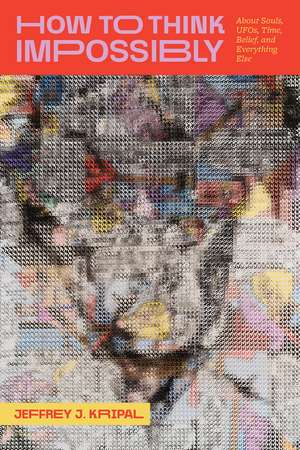
How to Think Impossibly: About Souls, UFOs, Time, Belief, and Everything Else
Autor Jeffrey J. Kripalen Limba Engleză Hardback – 26 iul 2024
În cadrul programelor de studii avansate de metafizică și ontologie, How to Think Impossibly ocupă un loc distinct, propunând o reevaluare radicală a fenomenelor considerate „imposibile” de către paradigma materialistă dominantă. Subliniem modul în care Jeffrey J. Kripal nu se limitează la o simplă catalogare a paranormalului, ci folosește aceste experiențe de limită pentru a chestiona însăși structura realității. Descoperim aici o pledoarie pentru o viziune în care fantasticul nu este opusul realului, ci o componentă intrinsecă a acestuia, ce apare atunci când asumpțiile noastre culturale sunt provocate.
Remarcăm o structură riguroasă, organizată în două mari secțiuni care ghidează cititorul de la fenomenologie la teorie. Prima parte analizează experiențe concrete — de la teologia mistică la perspectivele oferite de spectrul autist — în timp ce a doua parte, „Making the Impossible Possible”, avansează ipoteze teoretice îndrăznețe despre „universul bloc” și natura duală a umanului. Comparabil cu Phenomena de Klaus Heinemann Ph. D. în dorința de a reconcilia experiența subiectivă cu rigoarea intelectuală, volumul de față este actualizat pentru provocările epistemologice contemporane, refuzând să ignore datele care nu se potrivesc în modelele clasice.
Această lucrare reprezintă o evoluție firească a operei lui Kripal. Dacă în The Flip autorul analiza momentul de „răsturnare” a conștiinței, iar în The Superhumanities propunea o decolonizare a realității în mediul academic, How to Think Impossibly sintetizează aceste teme într-un manual de gândire critică aplicat miraculosului. Stilul este unul academic, dar marcat de o deschidere vulnerabilă și, pe alocuri, de un umor fin, facilitând o explorare profundă a ceea ce înseamnă să fii uman într-un univers mult mai vast decât cel măsurabil.
Preț: 244.99 lei
Carte disponibilă
Livrare economică 27 mai-10 iunie
Livrare express 12-16 mai pentru 40.95 lei
Specificații
ISBN-10: 0226833682
Pagini: 312
Ilustrații: 1 halftones
Dimensiuni: 152 x 229 x 25 mm
Greutate: 0.51 kg
Ediția:First Edition
Editura: University of Chicago Press
Colecția University of Chicago Press
De ce să citești această carte
Această carte este esențială pentru cercetătorii și studenții din filozofie și studiul religiilor care doresc să depășească limitele materialismului reducționist. Cititorul câștigă un cadru teoretic solid pentru a integra experiențele anormale în studiul umanioarelor. Este o invitație de a gândi dincolo de binarul minte-materie, oferind o perspectivă unificată asupra unor fenomene pe care știința convențională le categorizează adesea drept simple anomalii.
Despre autor
Jeffrey J. Kripal este un renumit istoric al religiilor și profesor la Rice University, cunoscut pentru abordările sale provocatoare asupra paranormalului și misticismului în contextul culturii occidentale. Opera sa, care include titluri precum Authors of the Impossible și Machine Intelligence and the Imaginal Realm, se concentrează constant pe intersecția dintre știință, religie și experiența umană extraordinară. Kripal este o voce de referință în efortul de a aduce fenomenele considerate oculte sau imposibile în centrul discursului academic legitim, propunând o viziune „super-umanistă” asupra cunoașterii.
Descriere scurtă
From precognitive dreams and telepathic visions to near-death experiences, UFO encounters, and beyond, so-called impossible phenomena are not supposed to happen. But they do happen—all the time. Jeffrey J. Kripal asserts that the impossible is a function not of reality but of our everchanging assumptions about what is real. How to Think Impossibly invites us to think about these fantastic (yet commonplace) experiences as an essential part of being human, expressive of a deeply shared reality that is neither mental nor material but gives rise to both. Thinking with specific individuals and their extraordinary experiences in vulnerable, open, and often humorous ways, Kripal interweaves humanistic and scientific inquiry to foster an awareness that the fantastic is real, the supernatural is super natural, and the impossible is possible.
Notă biografică
Cuprins
Introduction. The Fantastic Foundations of Reality
Part One. When the Impossible Happens
1. Words Are Experiences: Evolutionary Origins and the World of the Dead
2. Why They Don’t Land: Mantis, Mystical Theology, and Social Criticism
3. “That They Are Not Human”: Thinking on the Autistic Spectrum
Part Two. Making the Impossible Possible
4. The Timeswerve: Theorizing in a Block Universe
5. The World Is One, and the Human Is Two: Some Tentative Conclusions
6. We Are God (and the Devil): Further Thoughts and Moral Objections
Conclusion. How to Think Impossibly
Epilogue. The Three Bars
Acknowledgments. A Sociology of the Impossible
Notes
Index