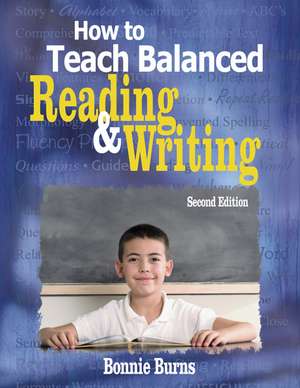
How to Teach Balanced Reading and Writing
Editat de Bonnie L. Burnsen Limba Engleză Paperback – 4 iul 2006
Structura acestei ediții este fundamentată pe modelul Whole-Part-Whole, o metodologie care urmărește integrarea echilibrată a competențelor de lectură și scriere în contextul diversității crescute din sălile de clasă. Remarcăm o organizare riguroasă, care debutează cu definirea instruirii echilibrate și avansează progresiv către achiziția limbajului, recunoașterea literelor și dezvoltarea conștientizării fonemice. Această a doua ediție aduce actualizări esențiale, introducând noi activități instrucționale în fiecare capitol și punând un accent sporit pe nevoile cursanților diverși și pe evaluarea timpurie a alfabetizării.
Descoperim aici o abordare pragmatică, ancorată în datele raportului National Reading Panel și în legislația Reading First, ceea ce conferă materialului o relevanță imediată pentru curriculumul actual. Din punct de vedere stilistic, How to Teach Balanced Reading and Writing evită limbajul excesiv de teoretic, oferind în schimb mostre grafice și tehnici pentru dezvoltarea fluenței. Comparabil cu Reading Instruction That Works, Fifth Edition de Tim Pressley în rigurozitate, volumul de față se distinge prin flexibilitatea sa, fiind conceput să funcționeze independent de programul de lectură specific adoptat de un district școlar.
Poziționată în continuarea preocupărilor din Guided Reading, lucrarea de față extinde viziunea editorului Bonnie L. Burns asupra modului în care suportul pedagogic trebuie calibrat în funcție de nivelul de dezvoltare al elevului. Față de Teaching Reading and Writing de Andrew P. Johnson, care mizează pe simplitatea resurselor, volumul de față propune o structură mai detaliată a intervenției didactice, acoperind atât instruirea directă în fonetică, cât și scrierea aplicată în diverse arii curriculare. Este un instrument de lucru care prioritizează rezultatele cercetării traduse în practici de succes la clasă.
Preț: 298.52 lei
Carte tipărită la comandă
Livrare economică 20 noiembrie-04 decembrie
Specificații
ISBN-10: 1412937426
Pagini: 288
Dimensiuni: 216 x 279 x 15 mm
Greutate: 0.68 kg
Ediția:Second Edition
Editura: SAGE Publications
Colecția Corwin
Locul publicării:Thousand Oaks, United States
V-ar putea interesa
-
 Preț: 386.37 lei
 -
 Preț: 287.41 lei
 -
 Comprehension BoostersGunningPreț: 188.56 lei
 -
 First Art for Toddlers and TwosMaryann KohlPreț: 123.07 lei
 -
 Developing Thinking in AlgebraJohn Mason-15%Preț: 603.10 lei709.52 lei
 -
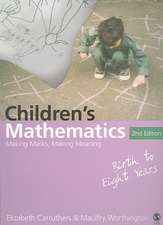 Children's MathematicsElizabeth Carruthers-15%Preț: 622.11 lei731.90 lei
 -
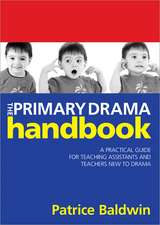 The Primary Drama HandbookPatrice BaldwinPreț: 406.47 lei
 -
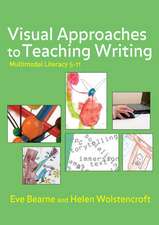 -8%Preț: 407.13 lei442.52 lei
 -
 PhonicsMaureen Lewis-8%Preț: 418.95 lei455.38 lei
De ce să citești această carte
Recomandăm această carte cadrelor didactice, studenților de la pedagogie și coordonatorilor de alfabetizare care caută metode validate de cercetare pentru a preda cititul și scrisul. Cititorul câștigă acces la strategii concrete pentru gestionarea diferențelor de învățare și tehnici de evaluare a conștientizării fonetice. Este un ghid esențial pentru a transforma teoria educațională în activități practice, adaptabile oricărui context școlar.
Descriere scurtă
'This book's major strengths include straightforward writing, clear discussion of topics, excellent graphic samples, strong attention to a balanced perspective and practical ideas' - Jennifer Trujillo, Assistant Professor, Teacher Education, Fort Lewis College
'The book is easy to follow and very accessible. It is not too esoteric or philosophical, yet includes important theory and knowledge about learning. The suggestions are excellent, relevant, and inclusive' - Karen Heath, Literacy Coordinator, Barre Schools, VT
Reading is a complex process, and in today's increasingly diverse classrooms, each student has unique learning needs. In the face of these challenges, how can teachers ensure that all students develop essential literacy skills?
How to Teach Balanced Reading and Writing provides practical, research-based strategies for all aspects of literacy education. Presenting best practices in an easy-to-use format, literacy expert Bonnie Burns supplies guidance for providing direct instruction in phonics, using authentic texts, building word recognition, strengthening comprehension, and implementing writing across the curriculum. Aligned with the National Reading Panel Report (2000) and Reading First legislation, this book offers strategies to use with students at all developmental levels.
This second edition has been extensively revised to include ·
o A discussion of language acquisition
o Strategies for assessing phonemic awareness
o Techniques for developing fluency
o Increased attention to the needs of diverse learners
o Additional instructional activities in every chapter
Because of its flexibility, this book is suitable for both novice and experienced teachers. Its friendly, accessible format also makes it an ideal text for new teachers and students in education courses.
Recenzii
"One of the strongest aspects of this book is that any teacher can use it regardless of the reading program a district may be using. It brings the various practices of reading and writing and pulls them together in a practical and useful way that any teacher can incorporate into a reading/writing program."
"The book is easy to follow, very accessible - not too esoteric or philosophical, but includes important theory and knowledge about learning - and the messages are right on. As a discerning language arts specialist, I can honestly say that the positions and suggestions are excellent, relevant, and inclusive."
"This volume offers practical examples and will be especially appreciated by novice teachers."
Cuprins
Publisher's Acknowledgments
About the Author
1. Balanced Reading and Writing
The Reading Wars
Combined Approaches
Whole-Part-Whole Model of Instruction
Continuing to Define Balanced Instruction
Integrating the Language Arts
Levels of Support and Intensity of Instruction
Balancing Student- and Teacher-Centered Instruction
2. Getting Ready to Read
Concept of Reading
Language Acquisition
Sociocultural and Other Factors That Affect Reading
Emergent Literacy
Letter and Word Recognition
Comprehension and Beginning Readers
Choosing Texts for Beginning Readers
Emergent Writing
Success in First Grade Is Critical
3. Developing Phonemic Awareness
Developing Phonemic Awareness
The Alphabetic Principle
Phonological Awareness and Alphabet Knowledge
Phonemic Awareness Skills
When Should Phonemic Awareness Be Taught?
Balancing Phonemic Awareness
Initial Activities for Learning Phonological Awareness
Phonemic Awareness Activities
At-Risk Readers
Resources for Phonemic Awareness
4. Teaching Word Recognition
The Debate About Phonics
How Does Word Recognition Develop?
Word Recognition in a Balanced Reading Program
Approaches to Teaching Phonics
Activities to Teach Word Recognition
Phonics and Older Students Who Struggle With Reading
Assessing Sound-Symbol Relationships
5. Fluency
Fluency Is Linked to Comprehension
Assessing Fluency
Factors Affecting Fluency
Individual Methods for Improving Fluency
Whole-Class Methods for Improving Fluency
Reading Rates
Other Fluency Issues
Thinking About Rate for Older Students
6. Guided Reading
What Is Guided Reading?
Leveled Groups
Planning and Logistical Management
Procedures
Teaching Comprehension During Guided Reading
Questioning
Variations
7. Grouping for Reading and Choosing Books
Reading Groups
Whole-Group Instruction
Small-Group Instruction
Independent Reading
Responding to Literature
Children Need to Read Extensively
Choosing Books
The Advantage of Great Literature
8. Instruction for Comprehension
Capable and Less-Capable Readers
An Instructional Model for Teaching Comprehension
Factors Affecting Comprehension
Comprehension Strategies
Comprehension Activities for Before Reading
Comprehension Skills and Strategies During Reading
Comprehension Strategies for After Reading
Strategies for Higher Level Thinking: Inferring, Generalizing, Evaluating
Putting It All Together
Influencing the Attitude and Motivation of Readers
9. Vocabulary Instruction
Vocabulary Development
Depth of Word Knowledge
Is It Worthwhile to Teach Vocabulary?
Indirect Teaching of Vocabulary
Choosing Words for Direct Teaching
Prereading Activities for Teaching Vocabulary Directly
Extension Activities for Directly Teaching Vocabulary
Teaching Students Strategies for Learning New Words
Reviewing Vocabulary With a Magic Square
Assessing Vocabulary
10. Teaching and Learning Spelling
Stages of Spelling Development
Characteristics of Good and Poor Spellers
Spelling Should Be Taught Developmentally
Activities to Encourage or Teach Spelling
Techniques for Transitional Spellers
Spelling Rules
What About Spelling Tests?
11. Balanced Writing
Elements of the Writing Process
Developmental Stages of Writing
Balanced Writing Instruction
Writers’ Workshop
Structured Writing
Audiences and Genres
Writing in Response to Reading
Looking Back at Objectives and Balanced Writing
12. Reading and Writing in the Content Areas
The Differences Between a Textbook and a Novel
Trade Books and Text Sets
Removing Obstacles to Comprehension With Prereading Activities
Removing the Obstacles of Concept Vocabulary
Guiding Comprehension During the Reading Process
Responding to Texts After Reading
Standard Techniques That Do Not Work Well
13. Assessment
Determining Reading Level With an Informal Reading Inventory
Diagnostic Assessment
Informal Classroom Assessment
Standardized Assessment
Assessing Assessment
References
Index