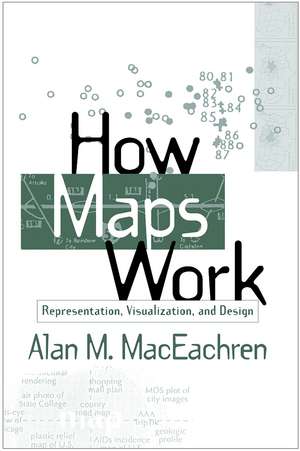
How Maps Work: Representation, Visualization, and Design
Autor Alan M. MacEachrenen Limba Engleză Paperback – 19 aug 2004
Now available in paperback for the first time, this classic work presents a cognitive-semiotic framework for understanding how maps work as powerful, abstract, and synthetic spatial representations. Explored are the ways in which the many representational choices inherent in mapping interact with information processing and knowledge construction, and how the resulting insights can be used to make informed symbolization and design decisions. A new preface to the paperback edition situates the book within the context of contemporary technologies. As the nature of maps continues to evolve, Alan MacEachren emphasizes the ongoing need to think systematically about the ways people interact with and use spatial information.
Preț: 490.82 lei
Puncte Express: 736
Carte tipărită la comandă
Livrare economică 07-21 decembrie
Livrare prin curier în România Termenul estimat este afișat lângă disponibilitate.
Transport gratuit pentru acest produs Plată online sau ramburs, în funcție de opțiunile comenzii.
Retur gratuit în 14 zile Comandă securizată și suport în română.
Specificații
ISBN-13: 9781572300408
ISBN-10: 157230040X
Pagini: 513
Ilustrații: illustrations
Dimensiuni: 152 x 229 x 34 mm
Greutate: 0.78 kg
Ediția:Pbk.
Editura: Guilford Publications
Colecția Guilford Press
ISBN-10: 157230040X
Pagini: 513
Ilustrații: illustrations
Dimensiuni: 152 x 229 x 34 mm
Greutate: 0.78 kg
Ediția:Pbk.
Editura: Guilford Publications
Colecția Guilford Press
V-ar putea interesa
-
 How to Lie with Maps, Third EditionMark MonmonierPreț: 209.43 lei
 -
 Preț: 203.40 lei
 -
 -12%Preț: 295.35 lei334.57 lei
 -
 Functional Art, TheAlberto CairoPreț: 330.64 lei
 -
 The Truthful ArtAlberto Cairo-20%Preț: 280.56 lei350.70 lei
 -
 40 Maps That Will Change How You See the WorldAlastair Bonnett-17%Preț: 123.53 lei148.13 lei
 -
 MapmaticsPaulina Rowinska-47%Preț: 49.54 lei93.56 lei
 -
 Data Design: Visualising Quantities, Locations, ConnectionsProfessor Per Mollerup-36%Preț: 201.92 lei313.30 lei
 -
 Maps as Mediated SeeingGerald FremlinPreț: 159.74 lei
 -
 -8%Preț: 446.71 lei485.56 lei
 -
 Radical CartographyWilliam Rankin-43%Preț: 134.48 lei237.71 lei
 -
 Semiology of GraphicsJacques Bertin-15%Preț: 606.81 lei713.90 lei
 -
 Telling Stories with MapsAllen CarrollPreț: 270.17 lei
 -
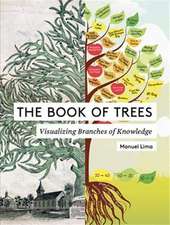 The Book of TreesManuel Lima-8%Preț: 132.55 lei143.66 lei
 -
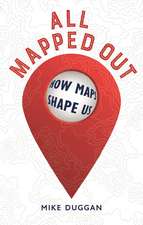 All Mapped Out: How Maps Shape UsMike DugganPreț: 113.44 lei
 -
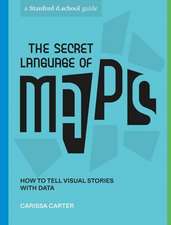 The Secret Language of MapsCarissa Carter-23%Preț: 78.17 lei101.22 lei
 -
 Grootens, J: Blind Maps and Blue DotsJoost Grootens-43%Preț: 168.66 lei297.59 lei
Public țintă
Professional Practice & Development and UndergraduateCuprins
1. Taking a Scientfic Approach to Improving Map Representation and Design
I. How Meaning Is Derived from Maps
2. An Information-Processing View of Vision and Visual Cognition
3. How Maps Are Seen
4. How Maps Are Understood:
Visual Array
Visual Description
Knowledge Schemata
Cognitive Representation
II. How Maps Are Imbued with Meaning
5. A Primer on Semiotics for Understanding Map Representation
6. A Functional Approach to Map Representation: The Semantics and Syntactics of Map Signs
7. A Lexical Approach to Map Representation: Map Pragmatics
III. How Maps Are Used: Applications in Geographic Thinking
8. GVIS: Facilitating Visual Thinking
9. GVIS: Relationships in Space and Time
10. GVIS: Should We Believe What We See?
Postscript
I. How Meaning Is Derived from Maps
2. An Information-Processing View of Vision and Visual Cognition
3. How Maps Are Seen
4. How Maps Are Understood:
Visual Array
Visual Description
Knowledge Schemata
Cognitive Representation
II. How Maps Are Imbued with Meaning
5. A Primer on Semiotics for Understanding Map Representation
6. A Functional Approach to Map Representation: The Semantics and Syntactics of Map Signs
7. A Lexical Approach to Map Representation: Map Pragmatics
III. How Maps Are Used: Applications in Geographic Thinking
8. GVIS: Facilitating Visual Thinking
9. GVIS: Relationships in Space and Time
10. GVIS: Should We Believe What We See?
Postscript
Notă biografică
Alan M. MacEachren is currently Professor of Geography and Director of the GeoVISTA Center at The Pennsylvania State University. In addition to researching cognitive and semiotic aspects of how maps work, he is active in the development of interactive systems for geographic visualization and in understanding and enabling group work with geospatial information and technologies. He is the author of Some Truth with Maps and coeditor of Visualization in Modern Cartography.
Recenzii
Should be required reading for anyone making maps. --C. E. Tiedemann, University of Illinois at Chicago
Alan MacEachren has made a significant and important contribution to our understanding of cartography. The map is as old as societies themselves and is a fundamental building block of human knowledge. This book should be mandatory reading for all those interested in the role of maps in the emerging information era.--Professor D.R.F. Taylor, Ph.D., President, International Cartographic Association, Carleton University, Ottawa, Canada
I believe this book to be a milestone in the literature of cartography. There have been texts on the history, on the production/design and to aid the teaching of maps and mapping but there has never been such a comprehensive and balanced examination of maps as tools. In many ways this is a most timely publication. With the emergence of computers onto the cartographic scene a new freedom is being offered to map conceivers and designers. Gone are the restrictions of the manual craft. Ahead there are only challenges. New softwares such as GIS are now opening opportunities to more than the professional cartographer, to use maps to explore as well as present spatial data at all scales. The main title, How Maps Work, could not be more appropriate. It challenges the author to take many viewpoints. The art/science debate in cartography is looked at afresh and new ideas offered. Also the research literature of map design and use has never been so effectively examined and evaluated. First impressions of the richness and scientific depth of its content may deter some beginners in map studies but I believe that it has something for many, if not all, facets of the potential cartographic readership. Layers of treatment can be detected, from sections which deal with more general issues to others which can offer the researcher a firm platform for new investigations.
Although there are many fine writers who have published in this field I believe that MacEachren, in spite of his relative youth, attracts wide respect among his peers. At international conferences and in all good contemporary cartographic writings his work is constantly referenced. What should also give readers confidence is that this book is not just a review of the work of others. The text builds on an impressive pedigree of research work conducted or supervised by him over the last fifteen years. More recently his investigations have been pioneering the new fields of scientific visualization through cartography and animation in particular. I, for one, am most grateful that he has taken the time and effort to distill his wide knowledge so effectively in this book.
With its rich array of subtopics, levels of treatment and specialized sections worthy of deep quarrying, and also its extensive and fascinating range of illustrations, I believe that this book can command a wide and varied readership. It will certainly become a foundation stone in my own teaching and research library. --Michael Wood, Senior Lecturer, Centre for Remote Sensing and Mapping Science, Department of Geography, University of Aberdeen, Scotland
In looking at maps as spatial representations that stimulate other spatial representations, Alan MacEachren provides an insightful and coherent examination of the cognitive mechanisms underlying map reading and map analysis. How Maps Work is a tour de force for academic cartography and other fields concerned with perceptual, cognitive and metaphysical aspects of spatial information--a masterful synthesis of interest to anyone curious about the map as a unique and valuable tool for exploration, discovery, and hypothesis testing.--Mark Monmonier, Ph.D., Professor of Geography, Syracuse University
The book is a masterful synthesis--a tour de force that will be highly influential in academic cartography as well as in other fields concerned with perceptual, cognitive, and metaphysical aspects of spatial information. There is nothing like it, it's timely, and it will be read by the more influential scholars and decision-makers. --Mark Monmonier, Professor of Geography, Syracuse University
I used the book in a graduate seminar series at SUNY-Buffalo... the book created a fabric for discussion which was rich enough and broad enough to support extensive and intensive scrutiny. The author mentions the support of Seymour Weingarten, Editor-in-Chief at Guilford Press, who 'was willing to take a chance on a cartographic book that was not an introductory text.' Mr. Weingarten is to be commended, as this book contributes to the formalization of knowledge on scientific visualization generally and cartographic representation in particular. Would I use the book in another graduate seminar? Absolutely. I recommend it to mapping-science and GIS professionals, to scientists working in computer vision, to everyone whose work involves creation of, or inference about, representations of spatial information. --BP Buttenfield, University of Colorado, Environment and Planning B: Planning and Design
The book is well produced and extensively illustrated. --David Forrest. University of Glasgow, Mapping Awareness
-Alan MacEachren has made a significant and important contribution to our understanding of cartography. The map is as old as societies themselves and is a fundamental building block of human knowledge. This book should be mandatory reading for all those interested in the role of maps in the emerging information era.--Professor D.R.F. Taylor, Ph.D., President, International Cartographic Association, Carleton University, Ottawa, Canada
I believe this book to be a milestone in the literature of cartography. There have been texts on the history, on the production/design and to aid the teaching of maps and mapping but there has never been such a comprehensive and balanced examination of maps as tools. In many ways this is a most timely publication. With the emergence of computers onto the cartographic scene a new freedom is being offered to map conceivers and designers. Gone are the restrictions of the manual craft. Ahead there are only challenges. New softwares such as GIS are now opening opportunities to more than the professional cartographer, to use maps to explore as well as present spatial data at all scales. The main title, How Maps Work, could not be more appropriate. It challenges the author to take many viewpoints. The art/science debate in cartography is looked at afresh and new ideas offered. Also the research literature of map design and use has never been so effectively examined and evaluated. First impressions of the richness and scientific depth of its content may deter some beginners in map studies but I believe that it has something for many, if not all, facets of the potential cartographic readership. Layers of treatment can be detected, from sections which deal with more general issues to others which can offer the researcher a firm platform for new investigations.
Although there are many fine writers who have published in this field I believe that MacEachren, in spite of his relative youth, attracts wide respect among his peers. At international conferences and in all good contemporary cartographic writings his work is constantly referenced. What should also give readers confidence is that this book is not just a review of the work of others. The text builds on an impressive pedigree of research work conducted or supervised by him over the last fifteen years. More recently his investigations have been pioneering the new fields of scientific visualization through cartography and animation in particular. I, for one, am most grateful that he has taken the time and effort to distill his wide knowledge so effectively in this book.
With its rich array of subtopics, levels of treatment and specialized sections worthy of deep quarrying, and also its extensive and fascinating range of illustrations, I believe that this book can command a wide and varied readership. It will certainly become a foundation stone in my own teaching and research library. --Michael Wood, Senior Lecturer, Centre for Remote Sensing and Mapping Science, Department of Geography, University of Aberdeen, Scotland
In looking at maps as spatial representations that stimulate other spatial representations, Alan MacEachren provides an insightful and coherent examination of the cognitive mechanisms underlying map reading and map analysis. How Maps Work is a tour de force for academic cartography and other fields concerned with perceptual, cognitive and metaphysical aspects of spatial information--a masterful synthesis of interest to anyone curious about the map as a unique and valuable tool for exploration, discovery, and hypothesis testing.--Mark Monmonier, Ph.D., Professor of Geography, Syracuse University
The book is a masterful synthesis--a tour de force that will be highly influential in academic cartography as well as in other fields concerned with perceptual, cognitive, and metaphysical aspects of spatial information. There is nothing like it, it's timely, and it will be read by the more influential scholars and decision-makers. --Mark Monmonier, Professor of Geography, Syracuse University
I used the book in a graduate seminar series at SUNY-Buffalo... the book created a fabric for discussion which was rich enough and broad enough to support extensive and intensive scrutiny. The author mentions the support of Seymour Weingarten, Editor-in-Chief at Guilford Press, who 'was willing to take a chance on a cartographic book that was not an introductory text.' Mr. Weingarten is to be commended, as this book contributes to the formalization of knowledge on scientific visualization generally and cartographic representation in particular. Would I use the book in another graduate seminar? Absolutely. I recommend it to mapping-science and GIS professionals, to scientists working in computer vision, to everyone whose work involves creation of, or inference about, representations of spatial information. --BP Buttenfield, University of Colorado, Environment and Planning B: Planning and Design
The book is well produced and extensively illustrated. --David Forrest. University of Glasgow, Mapping Awareness
This clearly is an important book....A thoughtful and thought-provoking intellectual treatise on the role of graphic representation in human perception, cognition, visualization, and communication. Although the vehicle for this journey is the geographic map, you will learn a great deal about yourself and your interaction with the environment along the way.
--URISA Journal, 6/23/2004ƒƒI used the book in a graduate seminar series....The book created a fabric for discussion which was rich enough and broad enough to support extensive and intensive scrutiny....I recommend it to mapping science and GIS professionals, to scientists working in computer vision, to everyone whose work involves creation of, or inference about, representations of spatial information.
--Environment and Planning B: Planning and Design, 6/23/2004Descriere
Now available in paperback for the first time, this classic work presents a cognitive-semiotic framework for understanding how maps work as powerful, abstract, and synthetic spatial representations. Explored are the ways in which the many representational choices inherent in mapping interact with information processing and knowledge construction, and how the resulting insights can be used to make informed symbolization and design decisions. A new preface to the paperback edition situates the book within the context of contemporary technologies. As the nature of maps continues to evolve, Alan MacEachren emphasizes the ongoing need to think systematically about the ways people interact with and use spatial information.