Cantitate/Preț
Produs

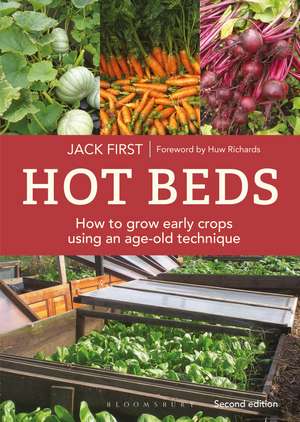
Hot Beds: How to Grow Early Crops Using an Age-Old Technique

Autor Jack First
en Limba Engleză Paperback – 10 feb 2026
A practical guide to cultivating out-of-season vegetables in small spaces, using the age-old technique of growing in hot beds.

The ancient method of hot-bed gardening, once favoured by both the Romans and the Victorians, uses the natural heat generated by decomposing organic matter to grow out-of-season vegetables in small spaces.

In this practical guide, hot-bed pioneer Jack First shows how to adapt and modernise this age-old method to suit today's gardens. With just stable manure (or eco-friendly alternatives), a simple wooden frame and a modest space, you could be harvesting crisp salads in March and new potatoes in early April.

Featuring hundreds of photographs, this accessible book gives you everything you need to build and maintain your own hot bed. With clear step-by-step instructions, a detailed calendar year and helpful diagrams, it's a must have for anyone looking to extend their growing season in a sustainable, budget-friendly way.
Citește tot Restrânge

Toate formatele și edițiile

Toate formatele și edițiile Preț Express
Paperback (2) 6323 lei  22-36 zile
  Bloomsbury Publishing – 7 ian 2013 6323 lei  22-36 zile
  Bloomsbury USA – 10 feb 2026 11755 lei  22-36 zile +3986 lei  5-11 zile

Preț: 11755 lei

Preț vechi: 14306 lei
-18% Nou

Puncte Express: 176

Preț estimativ în valută:
2081 2423$ 1808£

Carte disponibilă

Livrare economică 02-16 februarie
Livrare express 16-22 ianuarie pentru 4985 lei

Preluare comenzi: 021 569.72.76

Specificații

ISBN-13: 9781399419635
ISBN-10: 1399419633
Pagini: 208
Ilustrații: Colour photos throughout
Dimensiuni: 135 x 188 x 11 mm
Greutate: 0.32 kg
Ediția:2nd edition
Editura: Bloomsbury USA
Locul publicării:London, United Kingdom

Cuprins

Foreword by Huw Richards
Introduction
Hot beds are nothing new
How hot beds work
The advantages of hot beds
Preparing the hot bed
Creating the hot bed
Planning and sowing
What to grow, and varieties
Management of your hot beds
Case studies
Further possibilities
Resources

Recenzii

Jack is a fount of knowledge and the expert on hot beds. When I visited his allotment and saw how advanced and healthy his crops were, it proved to me that these old systems still work a treat and are just as relevant now - if not more so - than they ever were.
Within four chapters I was convinced enough to start thinking about where to squeeze a couple of hot beds into my garden. Nicely laid out and easy to read and reference. a must for any keen gardener or sustainable living enthusiast.
I have waited a long time for this book. Jack First has done all the hard work. His authority on the subject is evident in the detailed descriptions and analysis of the various methods used. Most importantly, if the last few summers are the start of a pattern we must get used to, then this gem of a book may mean a lot more than just a fascinating insight into a traditional technique.

If you want super-early crops without the hassle and expense of a heated greenhouse, look no further than Hot Beds by Jack First. This compact book brings back up to date Victorian gardeners' techniques of building frames over piles of manure to harness the heat and grow everything from slads and spinach to beet and carrots. A must-read if you'd like to pursue a low-cost, eco-friendly approach to out-of-season crops.
With increasing numbers of people seeing the value in growing their own fruit and vegetables, it seems that there is a ready-made audience for First's new guide. If you fancy getting a head start on your salad crops, why not make this the year you join the hot bed revolution?
With clear instructions, diagrams and colour images the author shares his experience of using this established method of early growing. This is an area full of possibilities for increasing yields in the vegetable garden.
Jack First's small but perfectly formed volume on Hot Beds is going to save me a lot of time. a very detailed guide. If you're unfamiliar with this once widely used technique then Jack First is the man to tell you about it. Charles Dowding has read this book and is experimenting with the technique on his new farm. That's got to be the highest recommendation anyone can have.
First and foremost. Jack Frost comes off second best when he takes on Jack First.
I'd describe this book as ground-breaking, except that there's no actual digging involved.
Jack's passion for the subject he has pioneered, tried and tested, comes across in this practical guide. Hot Beds explains this highly productive, space-saving, low-cost, eco-friendly growing technique in a straightforward way, showing you how to grow crops without fossil-fuel energy or elaborate equipment
A load of manure takes pride of place amongst the illustrations in this illuminating text on the history, theory and practice of building hot beds. In precise language, using clear illustrations, the author demonstrates how local waste resources can be recycled sustainably, saving both real and financial resources. Combined with a clarity of writing style, the index and cross-referencing make the book a joy to work with. As Jack First researched this book and prepared it for publication, he was probably unaware that he was writing the definitive textbook on the hands-on application of Social Credit principles. Hot Beds is set to be a signpost towards a future of a sane and sustainable economy.
Learn how to grow veg and fruit so that you can harvest at least two months earlier than conventionally grown crops.
Hot Beds describes how the author has been experimenting with hot beds at home and at work for the past 15 years. Muck is the traditional material, but is not available to all. Jack, an experienced grower of out-of-season greens, new potatoes and salad, has tried many other materials with great success.
Jack is certainly pioneering this highly productive, yet low-cost, year-round gardening technique. It is difficult not to be tempted into trying the same to some degree and upon reading this delightful book. We have decided to incorporate some of these methods into our own allotment during the next 2 months. We're pretty certain that you will too.