Cantitate/Preț
Produs

Horse-And-Buggy Genius

Autor Royden Loewen
en Limba Engleză Hardback – 3 mai 2016
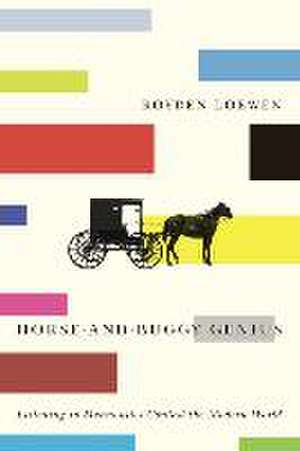
The history of the twentieth century is one of modernization, a story of old ways being left behind. Many traditionalist Mennonites rejected these changes, especially the automobile, which they regarded as a symbol of pride and individualism. They became known as a "horse-and-buggy" people. Between 2009 and 2012, Royden Loewen and a team of researchers interviewed 250 Mennonites in thirty-five communities across the Americas about the impact of the modern world on their lives. This book records their responses and strategies for resisting the very things--ease, technology, upward mobility, consumption--that most people today take for granted. Loewen's subjects are drawn from two distinctive groups: 8,000 Old Order Mennonites, who continue to pursue old ways in highly urbanized southern Ontario, and 100,000 Old Colony Mennonites, whose history of migration to protect traditional ways has taken them from the Canadian prairies to Mexico and farther south to Belize, Paraguay, and Bolivia. Whether they live in the shadow of an urban, industrial region or in more isolated, rural communities, the fundamental approach of "horse-and-buggy" Mennonites is the same: life is best when it is kept simple, lived out in the local, close to nature. This equation is the genius at the heart of their world.
Citește tot Restrânge

Preț: 47506 lei

Puncte Express: 713

Carte tipărită la comandă

Livrare economică 08-22 iunie


Specificații

ISBN-13: 9780887552083
ISBN-10: 0887552080
Pagini: 258
Dimensiuni: 152 x 229 x 19 mm
Greutate: 0.52 kg
Editura: University of Manitoba Press

Notă biografică

Royden Loewen is a professor of history and Chair of Mennonite Studies at the University of Winnipeg. His books include Family, Church and Market: A Mennonite Community in the Old and New Worlds, and From the Inside Out: The Rural World of Mennonite Diarists.

Descriere

Between 2009 and 2012, Royden Loewen and a team of researchers interviewed 250 Mennonites in thirty-five communities across the Americas about the impact of the modern world on their lives. This book records their responses and strategies for resisting the very things that most people today take for granted.