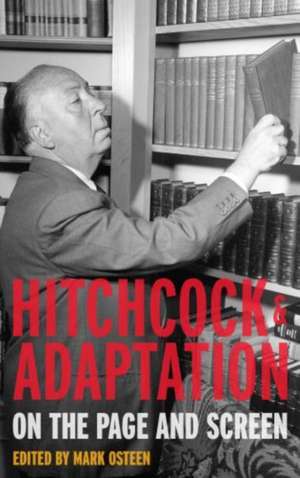
Hitchcock and Adaptation: On the Page and Screen
Editat de Mark Osteenen Limba Engleză Hardback – 14 mar 2014
Preț: 462.10 lei
Preț vechi: 675.97 lei
-32%
Puncte Express: 693
Carte tipărită la comandă
Livrare economică 21 noiembrie-05 decembrie
Livrare prin curier în România Termenul estimat este afișat lângă disponibilitate.
Transport gratuit pentru acest produs Plată online sau ramburs, în funcție de opțiunile comenzii.
Retur gratuit în 14 zile Comandă securizată și suport în română.
Specificații
ISBN-13: 9781442230873
ISBN-10: 1442230878
Pagini: 352
Ilustrații: 33 b/w photos
Dimensiuni: 163 x 234 x 30 mm
Greutate: 0.64 kg
Ediția:New.
Editura: Bloomsbury Publishing
Colecția Rowman & Littlefield
Locul publicării:New York, United States
ISBN-10: 1442230878
Pagini: 352
Ilustrații: 33 b/w photos
Dimensiuni: 163 x 234 x 30 mm
Greutate: 0.64 kg
Ediția:New.
Editura: Bloomsbury Publishing
Colecția Rowman & Littlefield
Locul publicării:New York, United States
V-ar putea interesa
-
 -15%Preț: 431.72 lei507.91 lei
 -
 Critical Approaches to African Cinema DiscourseNwachukwu Frank Ukadike-33%Preț: 710.24 lei1053.85 lei
 -
 -32%Preț: 523.89 lei768.56 lei
 -
 Film, Art, and Filmart: An Introduction to Aesthetics Through FilmMichael D. Dahnke-28%Preț: 272.73 lei378.12 lei
 -
 Romance Film: Passion Strategies In Film And LifeNorman Kagan-29%Preț: 178.04 lei249.46 lei
 -
 Modern Art at the Border of Mind and BrainJonathan FinebergPreț: 302.73 lei
 -
 Preț: 260.31 lei
 -
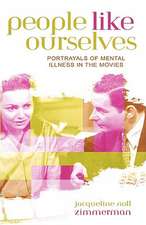 People Like Ourselves: Portrayals of Mental Illness in the MoviesJacqueline Noll Zimmerman-34%Preț: 410.88 lei625.39 lei
 -
 Soccer in Spain: Politics, Literature, and FilmTimothy J. Ashton-34%Preț: 602.19 lei912.44 lei
 -
 Dracula's Daughters: The Female Vampire on FilmDouglas Brode-30%Preț: 506.00 lei722.23 lei
 -
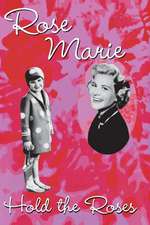 Hold the RosesRose MariePreț: 136.60 lei
 -
 Four Essays on Art and AnarchismMichael ParaskosPreț: 35.79 lei
 -
 Preț: 478.17 lei
 -
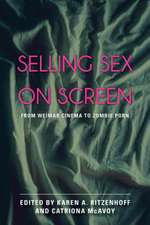 Selling Sex on Screen: From Weimar Cinema to Zombie PornKaren A. Ritzenhoff-32%Preț: 552.19 lei816.98 lei
 -
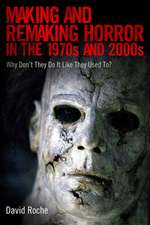 Preț: 276.66 lei
 -
 Fred Zinnemann and the Cinema of ResistanceJ. E. SmythPreț: 281.82 lei
 -
 Media Disparity: A Gender BattlegroundCory L. Armstrong-24%Preț: 368.26 lei484.34 lei
 -
 Globalisms: Facing the Populist ChallengeManfred B. Steger-9%Preț: 221.71 lei244.54 lei
 -
 Love in the AfterlifeRichard Striner-22%Preț: 503.27 lei641.70 lei
 -
 Screening WoolfEarl G. Ingersoll-30%Preț: 503.27 lei720.61 lei
 -
 Magical Musical Tour: Rock and Pop in Film SoundtracksProfessor Kevin J. Donnelly-17%Preț: 206.77 lei248.06 lei
 -
 -25%Preț: 220.46 lei292.87 lei
 -
 PERFORMANCEJeremy Mark RobinsonPreț: 125.85 lei
 -
 WOMEN IN LOVEJeremy Mark RobinsonPreț: 114.33 lei
 -
 Embodied Cognition and CinemaMaarten Coëgnarts-23%Preț: 548.98 lei712.96 lei
Descriere
From early silent features like The Lodger and Easy Virtue to his final film, Family Plot, in 1976, most of Alfred Hitchcock's movies were adapted from plays, novels, and short stories. Hitchcock always took care to collaborate with those who would not just execute his vision but shape it, and many of the screenwriters he enlisted-including Eliot Stannard, Charles Bennett, John Michael Hayes, and Ernest Lehman-worked with the director more than once. And of course Hitchcock's wife, Alma Reville, his most constant collaborator, was with him from the 1920s until his death.
In Hitchcock and Adaptation: On the Page and Screen, Mark Osteen has assembled a wide-ranging collection of essays that explore how Hitchcock and his screenwriters transformed literary and theatrical source material into masterpieces of cinema. Some of these essays look at adaptations through a specific lens, such as queer aesthetics applied to Rope, Strangers on a Train, and Psycho, while others tackle the issue of Hitchcock as author, auteur, adaptor, and, for the first time, present Hitchcock as a literary source. Film adaptations discussed in this volume include The 39 Steps, Shadow of a Doubt, Lifeboat, Rear Window, Vertigo, Marnie, and Frenzy. Additional essays analyze Hitchcock-inspired works by W. G. Sebald, Don DeLillo, Bret Easton Ellis, and others.
These close examinations of Alfred Hitchcock and the creative process illuminate the significance of the material he turned to for inspiration, celebrate the men and women who helped bring his artistic vision from the printed word to the screen, and explore how the director has influenced contemporary writers. A fascinating look into an underexplored aspect of the director's working methods, Hitchcock and Adaptation will be of interest to film scholars and fans of cinema's most gifted auteur.
In Hitchcock and Adaptation: On the Page and Screen, Mark Osteen has assembled a wide-ranging collection of essays that explore how Hitchcock and his screenwriters transformed literary and theatrical source material into masterpieces of cinema. Some of these essays look at adaptations through a specific lens, such as queer aesthetics applied to Rope, Strangers on a Train, and Psycho, while others tackle the issue of Hitchcock as author, auteur, adaptor, and, for the first time, present Hitchcock as a literary source. Film adaptations discussed in this volume include The 39 Steps, Shadow of a Doubt, Lifeboat, Rear Window, Vertigo, Marnie, and Frenzy. Additional essays analyze Hitchcock-inspired works by W. G. Sebald, Don DeLillo, Bret Easton Ellis, and others.
These close examinations of Alfred Hitchcock and the creative process illuminate the significance of the material he turned to for inspiration, celebrate the men and women who helped bring his artistic vision from the printed word to the screen, and explore how the director has influenced contemporary writers. A fascinating look into an underexplored aspect of the director's working methods, Hitchcock and Adaptation will be of interest to film scholars and fans of cinema's most gifted auteur.
Cuprins
Acknowledgments
Introduction: Hitchcock and Adaptation, Mark Osteen
I: Hitchcock and Authorship
Chapter 1: Hitchcock the Author, Thomas M. Leitch
Chapter 2: Wrong Men on the Run: The 39 Steps as Hitchcock's Espionage Paradigm, Walter Raubicheck and Walter Srebnick
Chapter 3: The Role and Presence of Authorship in Suspicion, Patrick Faubert
II. Hitchcock Adapting
Chapter 4: Melancholy Elephants: Hitchcock and Ingenious Adaptation, Ken Mogg
Chapter 5: Conrad's The Secret Agent, Hitchcock's Sabotage, and The Inspiration of "Public Uneasiness," Matthew Paul Carlson
Chapter 6: Stranger(s) Than Fiction: Adaptation, Modernity, and the Menace of Fan Culture in Hitchcock's Strangers on a Train, Leslie H. Abramson
Chapter 7: Reading Hitchcock/Reading Queer: Adaptation, Narrativity, and a Queer Mode of Address in Rope, Strangers on a Train, and Psycho, Heath A. Diehl
Chapter 8: "Dear Miss Lonelyhearts": Voyeurism and the Spectacle of Human Suffering in Rear Window, Nicholas Andrew Miller
Chapter 9: "The Proper Geography": Hitchcock's Adaptation of Daphne du Maurier's "The Birds," John Bruns
Chapter 10: From Kaleidoscope to Frenzy: Hitchcock's Second British Homecoming, Tony Williams
III. Hitching a Ride: The Collaborations
Chapter 11: Hitchcock's Diegetic Imagination: Thornton Wilder, Shadow of a Doubt, and Hitchcock's Mise-en-Scène, Donna Kornhaber
Chapter 12: "The Name of Hitchcock! The Fame of Steinbeck!"-The Legacy of Lifeboat, Maria A. Judnick
Chapter 13: "What did Alma Think?":Continuity, Writing, Editing, and Adaptation, Christina Lane and Jo Botting
IV. Adapting Hitchcock
Chapter 14: The Second Look, the Second Death: W. G. Sebald's Orphic Adaptation of Hitchcock's Vertigo, Russell J. A. Kilbourn
Chapter 15: Dark Adaptations: Robert Bloch and Hitchcock on the Small Screen, Dennis R. Perry and Carl H. Sederholm
Chapter 16: Extraordinary Renditions: DeLillo's Point Omega and Hitchcock's Psycho, Mark Osteen
Chapter 17: The Culture of Spectacle in American Psycho, David Seed
Alfred Hitchcock Filmography
About the Contributors
About the Editor
Introduction: Hitchcock and Adaptation, Mark Osteen
I: Hitchcock and Authorship
Chapter 1: Hitchcock the Author, Thomas M. Leitch
Chapter 2: Wrong Men on the Run: The 39 Steps as Hitchcock's Espionage Paradigm, Walter Raubicheck and Walter Srebnick
Chapter 3: The Role and Presence of Authorship in Suspicion, Patrick Faubert
II. Hitchcock Adapting
Chapter 4: Melancholy Elephants: Hitchcock and Ingenious Adaptation, Ken Mogg
Chapter 5: Conrad's The Secret Agent, Hitchcock's Sabotage, and The Inspiration of "Public Uneasiness," Matthew Paul Carlson
Chapter 6: Stranger(s) Than Fiction: Adaptation, Modernity, and the Menace of Fan Culture in Hitchcock's Strangers on a Train, Leslie H. Abramson
Chapter 7: Reading Hitchcock/Reading Queer: Adaptation, Narrativity, and a Queer Mode of Address in Rope, Strangers on a Train, and Psycho, Heath A. Diehl
Chapter 8: "Dear Miss Lonelyhearts": Voyeurism and the Spectacle of Human Suffering in Rear Window, Nicholas Andrew Miller
Chapter 9: "The Proper Geography": Hitchcock's Adaptation of Daphne du Maurier's "The Birds," John Bruns
Chapter 10: From Kaleidoscope to Frenzy: Hitchcock's Second British Homecoming, Tony Williams
III. Hitching a Ride: The Collaborations
Chapter 11: Hitchcock's Diegetic Imagination: Thornton Wilder, Shadow of a Doubt, and Hitchcock's Mise-en-Scène, Donna Kornhaber
Chapter 12: "The Name of Hitchcock! The Fame of Steinbeck!"-The Legacy of Lifeboat, Maria A. Judnick
Chapter 13: "What did Alma Think?":Continuity, Writing, Editing, and Adaptation, Christina Lane and Jo Botting
IV. Adapting Hitchcock
Chapter 14: The Second Look, the Second Death: W. G. Sebald's Orphic Adaptation of Hitchcock's Vertigo, Russell J. A. Kilbourn
Chapter 15: Dark Adaptations: Robert Bloch and Hitchcock on the Small Screen, Dennis R. Perry and Carl H. Sederholm
Chapter 16: Extraordinary Renditions: DeLillo's Point Omega and Hitchcock's Psycho, Mark Osteen
Chapter 17: The Culture of Spectacle in American Psycho, David Seed
Alfred Hitchcock Filmography
About the Contributors
About the Editor
Recenzii
Osteen's collection should certainly interest the Hitchcock scholar (and anyone else that enjoys scholarly essays on film). Casual fans will also find a lot of interesting information. . . .A large percentage of the essays focus on Hitchcock's film work, and it is here that the book blossoms into life. The essays offer many factual details to support the scholarly analysis, which makes the sometimes overreaching conclusions more digestible to the average reader. These factual details are what will interest many of the director's fans. . . .If any of this sounds appealing, this book should be worth picking up.
In Hitchcock & Adaptation: On the Page and Screen, Mark Osteenhas curated a number of essays that open upthis crucial piece of Hitchcock's directorialmethodology and detail his creative approachthat inspired his film masterpieces. . . . Readers of this compilationare in for a captivating read concerning theenduring thematic and stylistic relevancy ofHitchcock (conceptually speaking, not the Hitchcock) in adaptation film study today. . . .To put it simply, Osteen's collection ofessays is incredibly valuable to film andliterary scholars as the collection covers agreat deal of Hitchcock's cinematic historyin a manner that uncovers the complexrelationship between Hitchcock andadaptation.
In Hitchcock & Adaptation: On the Page and Screen, Mark Osteenhas curated a number of essays that open upthis crucial piece of Hitchcock's directorialmethodology and detail his creative approachthat inspired his film masterpieces. . . . Readers of this compilationare in for a captivating read concerning theenduring thematic and stylistic relevancy ofHitchcock (conceptually speaking, not the Hitchcock) in adaptation film study today. . . .To put it simply, Osteen's collection ofessays is incredibly valuable to film andliterary scholars as the collection covers agreat deal of Hitchcock's cinematic historyin a manner that uncovers the complexrelationship between Hitchcock andadaptation.