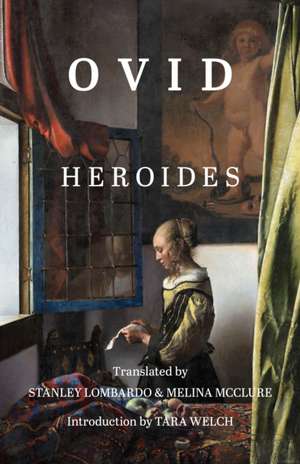
Heroides
Autor Ovid Traducere de Stanley Lombardo, Melina McClure Introducere de Tara Welchen Limba Engleză Paperback – 20 mai 2024
Remarcăm în această ediție a Heroides o schimbare fundamentală de perspectivă: încercarea de a vedea cum ar fi arătat mitologia clasică dacă poveștile ar fi fost scrise de femei. Tema centrală a scrisorilor — abandonul, dorul și reproșul — este abordată prin vocea unor figuri precum Penelopa sau Dido, oferind o dimensiune psihologică adâncă unor personaje adesea marginalizate în epopeile masculine. Credem că elementul distinctiv al acestei versiuni semnate de Stanley Lombardo și Melina McClure rezidă în echilibrul lingvistic: o traducere care păstrează rigoarea metrică și pasiunea originală, dar care elimină arhaismele prăfuite prezente în edițiile anterioare. Comparabil cu Ovid: Heroides de P. J. Davis în ceea ce privește analiza modului în care un poet bărbat încearcă să reprezinte psihologia feminină în momente de criză, acest volum este însă actualizat pentru sensibilitățile moderne, beneficiind de o introducere semnată de Tara Welch care ancorează textele în contextul academic curent. Față de abordarea pur filologică din alte ediții, precum cea a lui John Godwin, lucrarea de față pune accent pe fluiditatea narativă și pe impactul emoțional al textului. Poziționăm Heroides ca o piesă esențială în opera lui Ovid, completând viziunea sa despre relațiile umane începută în The Love Poems și continuată prin structura epică din The Metamorphoses. Dacă în The Metamorphoses transformarea este adesea fizică și exterioară, în aceste epistole asistăm la o metamorfoză a suferinței în artă literară, demonstrând versatilitatea autorului în a trece de la registrul eroic la cel elegiac.
Preț: 128.63 lei
Preț vechi: 155.51 lei
-17%
Carte disponibilă
Livrare economică 09-23 noiembrie
Livrare express 24-30 octombrie pentru 47.63 lei
Specificații
ISBN-10: 1647921899
Pagini: 188
Ilustrații: none
Dimensiuni: 140 x 216 x 12 mm
Greutate: 0.23 kg
Editura: Hackett Publishing Company,Inc
Colecția Hackett Publishing Company, Inc.
Locul publicării:Indianapolis, United States
V-ar putea interesa
-
 The Erotic PoemsOvid-18%Preț: 77.53 lei94.39 lei
 -
 Homer Vol. IV. Odyssey (Books XIII-XXIV)D. B. Monro-25%Preț: 169.00 lei225.44 lei
 -
 The Love PoemsOvid-19%Preț: 69.97 lei86.16 lei
 -
 300,000 KissesSeán HewittPreț: 138.04 lei
 -
 Preț: 230.21 lei
 -
 Odyssey, Volume IIHomerPreț: 233.79 lei
 -
 Iliad, Volume IHomerPreț: 234.28 lei
 -
 IliadHomerPreț: 235.30 lei
 -
 -27%Preț: 51.55 lei70.77 lei
 -
 OCR Anthology for Latin AS and A Level Shorter Verse AuthorsDr John Godwin-10%Preț: 148.78 lei165.25 lei
 -
 Ovid Heroides: A SelectionDr John GodwinPreț: 120.76 lei
 -
 Propertius, Tibullus and Ovid: A Selection of Love PoetryDr Anita Nikkanen-21%Preț: 138.02 lei174.87 lei
 -
 Love Letters of Great MenUrsula Doyle-35%Preț: 46.14 lei71.02 lei
 -
 Medea and Other PlaysEuripidesPreț: 43.30 lei
 -
 -18%Preț: 140.00 lei170.24 lei
 -
 HoraceHorace-19%Preț: 58.29 lei71.64 lei
 -
 15 HeroinesVariousPreț: 97.94 lei
 -
 The Women of Greek Myths in Their Own WordsHonor Cargill-Martin-9%Preț: 114.52 lei125.76 lei
De ce să citești această carte
Recomandăm această ediție pentru cititorii pasionați de mitologie care doresc să descopere „vocea” personajelor feminine din antichitate. Este un volum esențial pentru studenții de litere și clasiciști, oferind o traducere modernă, plină de vitalitate, care face textul lui Ovidius accesibil fără a-i știrbi din eleganță. Cititorul câștigă o înțelegere mai profundă a emoțiilor umane universale prin prisma unor eroine legendare.
Despre autor
Ovid (Publius Ovidius Naso) rămâne unul dintre cei mai influenți poeți ai canonului occidental, cunoscut pentru măiestria cu care a prelucrat miturile grecești și romane. Opera sa vastă include The Metamorphoses, un proiect monumental care leagă tradițiile mitologice într-un întreg coerent, și The Love Poems, unde analizează cu ironie și spirit critic paradoxurile iubirii. Traducătorul acestui volum, Stanley Lombardo, este profesor emerit de studii clasice, recunoscut pentru capacitatea de a reda claritatea și vigoarea textelor antice, continuând tradiția începută cu versiunile sale pentru The Essential Metamorphoses.
Descriere
Recenzii
"There are many small pleasures for the reader looking at the Latin (duplicated line-starts and -ends, verbal effects, etc.). Most are unobtrusive, which is all to the good. This translation is not designed to be a crib, though it wouldn’t be bad as one. More importantly, the poems read well in English. There are lots of glancing references to the tropes of elegy, but they won’t slow down the first-time reader of the poems. The translators have even made something of several of the puns (e.g. verbum/vela dare), an impressive feat.
"Welch's Introduction is perfectly pitched; it gives a lot of useful information in short compass, and it does so in a lively manner, with full attention to the scholarship but not so as the general reader would notice."
–Laurel Fulkerson, Professor Emerita of Classics, Florida State University
"There is a clear need for this volume. Its new translation offers language that is more up-to-date than Isbell, the revised Loeb by Goold, and other translations available. The language used by Lombardo and McClure is full of verve and passion yet doesn’t try to be overly colloquial.
"Welch's Introduction covers a lot of ground, and I found myself learning or re-learning things about the epistles that will nicely inform my (or any instructor's) presentation of these letters to students, whether they be high school or college students."
–Teresa Ramsby, Professor of Classics, University of Massachusetts Amherst
Notă biografică
Harold Isbell is a renowned translator.