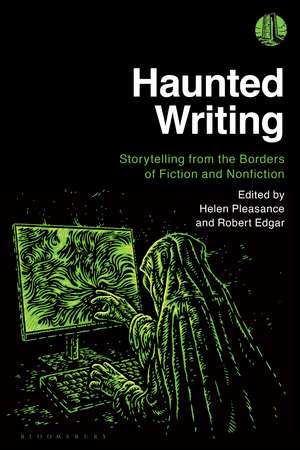
Haunted Writing: Storytelling from the Borders of Fiction and Nonfiction: Bloomsbury Spectres, Hauntings and Horrors
Editat de Helen Pleasance, Professor or Dr. Robert Edgaren Limba Engleză Paperback – 18 feb 2027
With essays covering a range of ideas from subjectivity, intersectionality and challenging dominant versions of history, to braiding personal and researched stories, playfulness, experimentation and creating stories from archival documents, this beautifully written collection intervenes in contemporary discussions in creative writing and culture surrounding ownership, appropriation and ethics. Bringing a fresh voice and new perspectives to ever-present questions within creative writing, Haunted Writing uncovers how the past is a spectre that disrupts contemporary writing.

Preț: 184.09 lei
Preț vechi: 204.18 lei
-10% Precomandă
Puncte Express: 276
Carte nepublicată încă
Livrare prin curier în România Precomanda se expediază când titlul devine disponibil.
Transport gratuit de la 400.00 lei Plată online sau ramburs, în funcție de opțiunile comenzii.
Retur gratuit în 14 zile Comandă securizată și suport în română.
Doresc să fiu notificat când acest titlu va fi disponibil:
Se trimite...
Specificații
ISBN-13: 9781350560048
ISBN-10: 1350560049
Pagini: 288
Ilustrații: 15 bw illus
Dimensiuni: 156 x 234 mm
Editura: Bloomsbury Publishing
Colecția Bloomsbury Academic
Seria Bloomsbury Spectres, Hauntings and Horrors
Locul publicării:London, United Kingdom
ISBN-10: 1350560049
Pagini: 288
Ilustrații: 15 bw illus
Dimensiuni: 156 x 234 mm
Editura: Bloomsbury Publishing
Colecția Bloomsbury Academic
Seria Bloomsbury Spectres, Hauntings and Horrors
Locul publicării:London, United Kingdom
Cuprins
Foreword
Introduction - by the editors
Section One: Haunting Documents
1. "His Melancholy Decease": the haunted archive and its fictional afterlives in a meandering history of Peel Park, Salford. Ursula Hurley, University of Salford.
2. Echoing through the Archive: Poetry as Archival Intervention. Chloe Hanks, York St John University
3. Co-authoring with forgotten voices: remix-writing as a methodology to reimagine lost lives. Clare Harvey, Coventry University.
4. The Norgesian Mind Manifold Memories Await Us. Kirsten Norrie, Independent Writer.
Section Two: Haunting Places
5. At the Threshold: the uncanny meeting point of family history and the short story. Helen Pleasance York St John University.
6. Haunting Lives: Spectres in the Shadows. Emma Kirby, Cardiff University.
7. Between the Chain Links: Geopoetic Expression as Crossing-Point. R.L. Francis, University of Wolverhampton.
8. Iter II. Anthony Cartwright University of the West of England.
Section Three: Haunting Others
9. My Vanishing Twin and The Mirrored Reality that Sings: Ghosts of Those Who Never Came to Be. Anayis N. Der Hakopian, Independent Writer.
10. The Pretenders: Phantoms and Intergenerational Trauma. Francesca Liauw, Independent Writer.
11. Bringing the Dead Back to Life: the challenges of authenticity in creative nonfiction Toby Norways, University of Bedfordshire.
12. Method Writing: a performative approach to blend fiction and nonfiction in a roman-à-clef. Keren Poliah, University of Salford.
Section Four: Haunting Selves
13. The Double as Other: The Ethics of Autofictional Self-Encounters. Natasha Bell, Goldsmiths University.
14. Haunted Bodies in Breast Cancer Autopathography: Blue Breast. Michelle Ryan, Université d'Angers.
15. Haunting Motherhood: Autotheory as borderless writing. Lynley Edmeades University of Otago.
16. Joshua in the Sky: writing in the borderland. Rodge Glass, University of Strathclyde.
17. Narrative Aporias and Lost Futures. Robert Edgar, York St John University
Bibliography
Index
Introduction - by the editors
Section One: Haunting Documents
1. "His Melancholy Decease": the haunted archive and its fictional afterlives in a meandering history of Peel Park, Salford. Ursula Hurley, University of Salford.
2. Echoing through the Archive: Poetry as Archival Intervention. Chloe Hanks, York St John University
3. Co-authoring with forgotten voices: remix-writing as a methodology to reimagine lost lives. Clare Harvey, Coventry University.
4. The Norgesian Mind Manifold Memories Await Us. Kirsten Norrie, Independent Writer.
Section Two: Haunting Places
5. At the Threshold: the uncanny meeting point of family history and the short story. Helen Pleasance York St John University.
6. Haunting Lives: Spectres in the Shadows. Emma Kirby, Cardiff University.
7. Between the Chain Links: Geopoetic Expression as Crossing-Point. R.L. Francis, University of Wolverhampton.
8. Iter II. Anthony Cartwright University of the West of England.
Section Three: Haunting Others
9. My Vanishing Twin and The Mirrored Reality that Sings: Ghosts of Those Who Never Came to Be. Anayis N. Der Hakopian, Independent Writer.
10. The Pretenders: Phantoms and Intergenerational Trauma. Francesca Liauw, Independent Writer.
11. Bringing the Dead Back to Life: the challenges of authenticity in creative nonfiction Toby Norways, University of Bedfordshire.
12. Method Writing: a performative approach to blend fiction and nonfiction in a roman-à-clef. Keren Poliah, University of Salford.
Section Four: Haunting Selves
13. The Double as Other: The Ethics of Autofictional Self-Encounters. Natasha Bell, Goldsmiths University.
14. Haunted Bodies in Breast Cancer Autopathography: Blue Breast. Michelle Ryan, Université d'Angers.
15. Haunting Motherhood: Autotheory as borderless writing. Lynley Edmeades University of Otago.
16. Joshua in the Sky: writing in the borderland. Rodge Glass, University of Strathclyde.
17. Narrative Aporias and Lost Futures. Robert Edgar, York St John University
Bibliography
Index