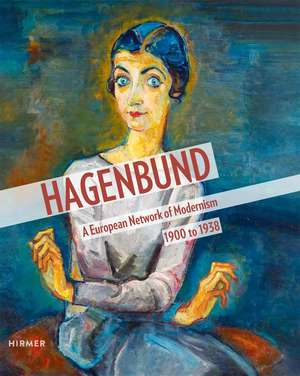
Hagenbund: A European Network of Modernism 1900 to 1938
Editat de Agnes Husslein-Arcoen Limba Engleză Hardback – 15 mar 2015
The Viennese artists’ association Hagenbund played a crucial role in the artistic scene of not only Vienna but of Central Europe in general. Active from 1900 to 1938, the group united several different art movements under its umbrella and helped to introduce a new creative dynamic at a time when the Vienna Secession was slowly losing its impact. In that context, the liberal political and artistic attitude of the Hagenbund membership was revolutionary. The Hagenbund counted more than 250 members, among them Georg Merkel, Oskar Laske, Carry Hauser, Otto Rudolf Schatz, Emil Strecker, and Fritz Schwarz-Waldegg.
This volume traces the history of the Hagenbund and its influence, offering the first sustained analysis of the group in an art-historical context. Packed with more than three hundred color images, it will be the standard work on the Hagenbund for decades to come.
This volume traces the history of the Hagenbund and its influence, offering the first sustained analysis of the group in an art-historical context. Packed with more than three hundred color images, it will be the standard work on the Hagenbund for decades to come.
Preț: 279.70 lei
Preț vechi: 444.29 lei
-37%
Puncte Express: 420
Carte disponibilă
Livrare economică 16-30 noiembrie
Livrare prin curier în România Termenul estimat este afișat lângă disponibilitate.
Transport gratuit de la 400.00 lei Plată online sau ramburs, în funcție de opțiunile comenzii.
Retur gratuit în 14 zile Comandă securizată și suport în română.
Specificații
ISBN-13: 9783777422749
ISBN-10: 3777422746
Pagini: 448
Ilustrații: 462 color plates and halftones
Dimensiuni: 240 x 291 x 42 mm
Greutate: 2.38 kg
Editura: Hirmer Publishers
Colecția Hirmer Publishers
ISBN-10: 3777422746
Pagini: 448
Ilustrații: 462 color plates and halftones
Dimensiuni: 240 x 291 x 42 mm
Greutate: 2.38 kg
Editura: Hirmer Publishers
Colecția Hirmer Publishers
V-ar putea interesa
-
 Constellation of GeniusKevin JacksonPreț: 185.47 lei
 -
 The Sanity of ArtGeorge Bernard ShawPreț: 51.06 lei
 -
 Legitimizing the ArtistLuca SomigliPreț: 347.65 lei
 -
 Le Salon de 1883Henry HoussayePreț: 55.59 lei
 -
 Les Salons de 1890Georges Edouard LafenestrePreț: 58.57 lei
 -
 Preț: 130.81 lei
Notă biografică
Agnes Husslein-Arco is an art historian and director of the Belvedere Gallery in Vienna.
Cuprins
Foreword
Agnes Husselein-Arco
“Promotion of Patriotic Artistic Efforts”
The Hagenbund and the Art Policy Framework from the Monarchy to the Chancellor Dictatorship
Oliver Rathkolb
Intrinsic Dynamics and Extrinsic Influences. The Artists Network Hagenbund
Harald Krejci
AROUND 1908. BEGINNINGS, KAISER-HULDIGUNGS-AUSSTELLUNG
The Hagenbund as Showcase for Central European Modernism in the 1920s and 1930s
Cornelia Cabuk
Pragmatic Modernism. Between Avant-garde and Mainstream. Architectural Practice in the Hagenbund
Matthias Boeckl
AROUND 1912. EXPRESSIONISM AND THE NEUKUNSTGRUPPE
Between Image Building and Pragmatism: On the Hagenbund’s Exhibition Policy
Verena Gamper
Structure, Network, Discourse. Anatomy of an Artists Association
Maximilian Kaiser
Exhibition-Chronology 1899—1938
AROUND 1920. TENDENCIES OF POST-WAR EXPRESSIONISM
Artists Associations in Exchange. Czech Art in the Hagenbund
Vojtech Lahoda
An Undervalued Place of often Unwelcome Painters. Polish Art in the Hagenbund
Dorota Kudelska
Hungarians in the Hagenbund, the Hagenbund in Hungary
Éva Bajkay
AROUND 1925. GIVING FORM AN ACTUAL SHAPE. VARIETIES OF OBJECTIVITY.
Art in the Service of Power
The Cultural Policy of Austrofascism 1934 to 1938 and the Dissolution of the Hagenbund
Elisabeth Klamper
“Extraordinary” Women in the Hagenbund. Female Artists and their Networks
Kerstin Jesse
UNTIL 1934. COSMOPOLITANISM AND SOCIAL CRITICISM
“Miscellaneous”: The Public Sphere and the Hagenbund’s Political and Social Commitment
Axel Köhne
Four Decades of Migration. The Hagenbund and its Artists
Károly Kókai
UNTIL 1938. INNER EMIGRATION AND EXILE.
The Modern Galerie and the Hagenbund
Kerstin Jesse
Appendix
Biograms ~ Verena Gamper, Maximilian Kaiser
Guests of the Hagenbund
List of reviewers
Authors Biographies
Abbreviations
Picture credits
Colophon
Agnes Husselein-Arco
“Promotion of Patriotic Artistic Efforts”
The Hagenbund and the Art Policy Framework from the Monarchy to the Chancellor Dictatorship
Oliver Rathkolb
Intrinsic Dynamics and Extrinsic Influences. The Artists Network Hagenbund
Harald Krejci
AROUND 1908. BEGINNINGS, KAISER-HULDIGUNGS-AUSSTELLUNG
The Hagenbund as Showcase for Central European Modernism in the 1920s and 1930s
Cornelia Cabuk
Pragmatic Modernism. Between Avant-garde and Mainstream. Architectural Practice in the Hagenbund
Matthias Boeckl
AROUND 1912. EXPRESSIONISM AND THE NEUKUNSTGRUPPE
Between Image Building and Pragmatism: On the Hagenbund’s Exhibition Policy
Verena Gamper
Structure, Network, Discourse. Anatomy of an Artists Association
Maximilian Kaiser
Exhibition-Chronology 1899—1938
AROUND 1920. TENDENCIES OF POST-WAR EXPRESSIONISM
Artists Associations in Exchange. Czech Art in the Hagenbund
Vojtech Lahoda
An Undervalued Place of often Unwelcome Painters. Polish Art in the Hagenbund
Dorota Kudelska
Hungarians in the Hagenbund, the Hagenbund in Hungary
Éva Bajkay
AROUND 1925. GIVING FORM AN ACTUAL SHAPE. VARIETIES OF OBJECTIVITY.
Art in the Service of Power
The Cultural Policy of Austrofascism 1934 to 1938 and the Dissolution of the Hagenbund
Elisabeth Klamper
“Extraordinary” Women in the Hagenbund. Female Artists and their Networks
Kerstin Jesse
UNTIL 1934. COSMOPOLITANISM AND SOCIAL CRITICISM
“Miscellaneous”: The Public Sphere and the Hagenbund’s Political and Social Commitment
Axel Köhne
Four Decades of Migration. The Hagenbund and its Artists
Károly Kókai
UNTIL 1938. INNER EMIGRATION AND EXILE.
The Modern Galerie and the Hagenbund
Kerstin Jesse
Appendix
Biograms ~ Verena Gamper, Maximilian Kaiser
Guests of the Hagenbund
List of reviewers
Authors Biographies
Abbreviations
Picture credits
Colophon
Recenzii
“While there is an abundance of scholarship focused on the Vienna Secession, there is far less written about the Hagenbund, the other major Viennese modernist artists' organization of the early twentieth century. . . . Thus Hagenbund: A European Network of Modernism 1900–1938 is an important contribution. . . . The catalog is richly illustrated with reproductions of paintings, sculpture, and graphic work, . . . and it will be of value to any institution that collects books on this period.”
Descriere
The Viennese artists association Hagenbund played a crucial role in the artistic scene of not only Vienna but of Central Europe in general. Active from 1900 to 1938, the group united several different art movements under its umbrella and helped to introduce a new creative dynamic at a time when the Vienna Secession was slowly losing its impact. In that context, the liberal political and artistic attitude of the Hagenbund membership was revolutionary. The Hagenbund counted more than 250 members, among them Georg Merkel, Oskar Laske, Carry Hauser, Otto Rudolf Schatz, Emil Strecker, and Fritz Schwarz-Waldegg. This volume traces the history of the Hagenbund and its influence, offering the first sustained analysis of the group in an art-historical context. Packed with more than three hundred color images, it will be the standard work on the Hagenbund for decades to come."