
Growing Object-Oriented Software, Guided by Tests
Autor Steve Freeman, Nat Pryceen Limba Engleză Paperback – 12 oct 2009
Steve Freeman și Nat Pryce nu sunt doar teoreticieni, ci practicieni care au definit modul în care comunitatea globală înțelege astăzi testarea software. Cu o experiență vastă în consultanță la ThoughtWorks și contribuții fundamentale în comunitatea Agile și XP, autorii aduc în Growing Object-Oriented Software, Guided by Tests expertiza dobândită prin dezvoltarea bibliotecilor jMock și nMock. Putem afirma că această lucrare depășește simpla execuție a testelor unitare, propunând o schimbare de paradigmă: Mock Objects ca instrument de design, nu doar de verificare. Ca și Kent Beck în Test Driven Development: By Example, autorii distilează experiența reală în principii acționabile, însă pun un accent mult mai puternic pe interacțiunile dintre obiecte. Găsim în această carte o demonstrație practică a principiului „Tell, Don't Ask”, unde obiectele sunt definite prin ceea ce fac (comportament), nu prin datele pe care le dețin. Structura este riguros organizată pentru a ghida cititorul de la fundamentele teoretice ale TDD către implementarea unui „Walking Skeleton” — un sistem minim capabil să ruleze end-to-end. Progresia capitolelor reflectă un ciclu de viață real al unui proiect, introducând treptat instrumente precum JUnit 4 și Hamcrest. Față de alte resurse, lucrarea de față excelează în explicarea modului în care testele ghidează arhitectura sistemului spre una decuplată și ușor de întreținut. Merită menționat că autorii nu evită dificultățile, dedicând secțiuni importante capcanelor comune și neînțelegerilor care apar frecvent în proiectele complexe.
Preț: 331.61 lei
Preț vechi: 414.52 lei
-20%
Carte disponibilă
Livrare economică 06-20 noiembrie
Livrare express 23-29 octombrie pentru 42.35 lei
Specificații
ISBN-10: 0321503627
Pagini: 384
Dimensiuni: 178 x 235 x 21 mm
Greutate: 0.67 kg
Ediția:1. Auflage
Editura: Pearson International
Locul publicării:Boston, United States
V-ar putea interesa
-
 HTML5 for iOS and Android: A Beginner's GuideRobin Nixon-20%Preț: 252.71 lei315.89 lei
 -
 -20%Preț: 365.08 lei456.35 lei
 -
 -20%Preț: 279.02 lei348.77 lei
 -
 -20%Preț: 370.60 lei463.25 lei
 -
 Patterns of Enterprise Application ArchitectureMartin Fowler-20%Preț: 396.95 lei496.18 lei
 -
 Implementing Lean Software Development: From Concept to CashTom PoppendieckPreț: 329.78 lei
 -
 -20%Preț: 363.08 lei453.85 lei
 -
 Succeeding with AgileMike Cohn-20%Preț: 309.60 lei387.00 lei
 -
 Managing the Testing ProcessRex Black-20%Preț: 239.17 lei298.97 lei
 -
 The Goal: A Process of Ongoing ImprovementEliyahu M. GoldrattPreț: 220.65 lei
 -
 Learning WCFMichele Leroux Bustamante-20%Preț: 246.72 lei308.40 lei
 -
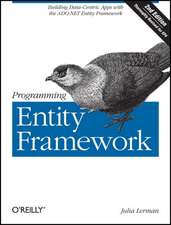 Programming Entity FrameworkLerman-20%Preț: 333.98 lei417.47 lei
 -
 Good to GreatJim Collins-24%Preț: 146.08 lei191.99 lei
 -
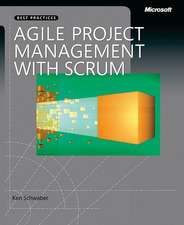 Agile Project Management with ScrumKen Schwaber-20%Preț: 185.61 lei232.02 lei
 -
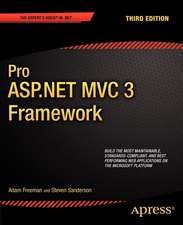 Pro ASP.NET MVC 3 FrameworkAdam Freeman-20%Preț: 302.08 lei377.59 lei
 -
 20 Recipes for Programming MVC 3Jamie Munro-20%Preț: 115.67 lei144.59 lei
 -
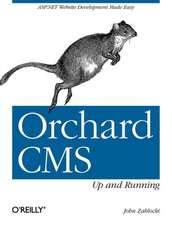 Orchard Cms: Up and RunningJohn Zablocki-20%Preț: 116.07 lei145.09 lei
 -
 -20%Preț: 142.77 lei178.45 lei
De ce să citești această carte
Recomandăm această carte oricărui dezvoltator Java sau C# care dorește să treacă de la scrierea testelor ca simplă formalitate la utilizarea lor ca motor de design software. Veți învăța cum să construiți sisteme complexe prin interacțiuni clare între obiecte, reducând datoria tehnică și îmbunătățind calitatea codului prin feedback constant. Este o resursă esențială pentru lead-uri tehnice care vizează livrarea de software robust și scalabil.
Despre autor
Steve Freeman este consultant și o figură centrală în comunitatea Extreme Programming (XP), având un doctorat în informatică și o vastă experiență în proiecte software complexe. Nat Pryce este cercetător la Imperial College și consultant independent, recunoscut pentru dezvoltarea unora dintre primele framework-uri de Mock Objects. Împreună, au revoluționat Test-Driven Development-ul, transformând Mocking-ul dintr-o tehnică izolată într-o metodologie completă de design orientat pe obiecte.
Textul de pe ultima copertă
Notă biografică
Preface xvii
Acknowledgments xxi
About the Authors xxiii
PART I: INTRODUCTION 1
Chapter 1: What Is the Point of Test-Driven Development? 3
Software Development as a Learning Process 3
Feedback Is the Fundamental Tool 4
Practices That Support Change 5
Test-Driven Development in a Nutshell 6
The Bigger Picture 7
Testing End-to-End 8
Levels of Testing 9
External and Internal Quality 10
Chapter 2: Test-Driven Development with Objects 13
A Web of Objects 13
Values and Objects 13
Follow the Messages 14
Tell, Don’t Ask 17
But Sometimes Ask 17
Unit-Testing the Collaborating Objects 18
Support for TDD with Mock 19
Chapter 3: An Introduction to the Tools 21
Stop Me If You’ve Heard This One Before 21
A Minimal Introduction to JUnit 4 21
Hamcrest Matchers and assertThat() 24
jMock2: Mock Objects 25
PART II: THE PROCESS OF TEST-DRIVEN DEVELOPMENT 29
Chapter 4: Kick-Starting the Test-Driven Cycle 31
Introduction 31
First, Test a Walking Skeleton 32
Deciding the Shape of the Walking Skeleton 33
Build Sources of Feedback 35
Expose Uncertainty Early 36
Chapter 5: Maintaining the Test-Driven Cycle 39
Introduction 39
Start Each Feature with an Acceptance Test 39
Separate Tests That Measure Progress from Those That Catch Regressions 40
Start Testing with the Simplest Success Case 41
Write the Test That You’d Want to Read 42
Watch the Test Fail 42
Develop from the Inputs to the Outputs 43
Unit-Test Behavior, Not Methods 43
Listen to the Tests 44
Tuning the Cycle 45
Chapter 6: Object-Oriented Style 47
Introduction 47
Designing for Maintainability 47
Internals vs. Peers 50
No And’s, Or’s, or But’s 51
Object Peer Stereotypes 52
Composite Simpler Than the Sum of Its Parts 53
Context Independence 54
Hiding the Right Information 55
An Opinionated View 56
Chapter 7: Achieving Object-Oriented Design 57
How Writing a Test First Helps the Design 57
Communication over Classification 58
Value Types 59
Where Do Objects Come From? 60
Identify Relationships with Interfaces 63
Refactor Interfaces Too 63
Compose Objects to Describe System Behavior 64
Building Up to Higher-Level Programming 65
And What about Classes? 67
Chapter 8: Building on Third-Party Code 69
Introduction 69
Only Mock Types That You Own 69
Mock Application Objects in Integration Tests 71
PART III: A WORKED EXAMPLE 73
Chapter 9: Commissioning an Auction Sniper 75
To Begin at the Beginning 75
Communicating with an Auction 78
Getting There Safely 79
This Isn’t Real 81
Chapter 10: The Walking Skeleton 83
Get the Skeleton out of the Closet 83
Our Very First Test 84
Some Initial Choices 86
Chapter 11: Passing the First Test 89
Building the Test Rig 89
Failing and Passing the Test 95
The Necessary Minimum 102
Chapter 12: Getting Ready to Bid 105
An Introduction to the Market 105
A Test for Bidding 106
The AuctionMessageTranslator 112
Unpacking a Price Message 118
Finish the Job 121
Chapter 13: The Sniper Makes a Bid 123
Introducing AuctionSniper 123
Sending a Bid 126
Tidying Up the Implementation 131
Defer Decisions 136
Emergent Design 137
Chapter 14: The Sniper Wins the Auction 139
First, a Failing Test 139
Who Knows about Bidders? 140
The Sniper Has More to Say 143
The Sniper Acquires Some State 144
The Sniper Wins 146
Making Steady Progress 148
Chapter 15: Towards a Real User Interface 149
A More Realistic Implementation 149
Displaying Price Details 152
Simplifying Sniper Events 159
Follow Through 164
Final Polish 168
Observations 171
Chapter 16: Sniping for Multiple Items 175
Testing for Multiple Items 175
Adding Items through the User Interface 183
Observations 189
Chapter 17: Teasing Apart Main 191
Finding a Role 191
Extracting the Chat 192
Extracting the Connection 195
Extracting the SnipersTableModel 197
Observations 201
Chapter 18: Filling In the Details 205
A More Useful Application 205
Stop When We’ve Had Enough 205
Observations 212
Chapter 19: Handling Failure 215
What If It Doesn’t Work? 215
Detecting the Failure 217
Displaying the Failure 218
Disconnecting the Sniper 219
Recording the Failure 221
Observations 225
PART IV: SUSTAINABLE TEST-DRIVEN DEVELOPMENT 227
Chapter 20: Listening to the Tests 229
Introduction 229
I Need to Mock an Object I Can’t Replace (without Magic) 230
Logging Is a Feature 233
Mocking Concrete Classes 235
Don’t Mock Values 237
Bloated Constructor 238
Confused Object 240
Too Many Dependencies 241
Too Many Expectations 242
What the Tests Will Tell Us (If We’re Listening) 244
Chapter 21: Test Readability 247
Introduction 247
Test Names Describe Features 248
Canonical Test Structure 251
Streamline the Test Code 252
Assertions and Expectations 254
Literals and Variables 255
Chapter 22: Constructing Complex Test Data 257
Introduction 257
Test Data Builders 258
Creating Similar Objects 259
Combining Builders 261
Emphasizing the Domain Model with Factory Methods 261
Removing Duplication at the Point of Use 262
Communication First 264
Chapter 23: Test Diagnostics 267
Design to Fail 267
Small, Focused, Well-Named Tests 268
Explanatory Assertion Messages 268
Highlight Detail with Matchers 268
Self-Describing Value 269
Obviously Canned Value 270
Tracer Object 270
Explicitly Assert That Expectations Were Satisfied 271
Diagnostics Are a First-Class Feature 271
Chapter 24: Test Flexibility 273
Introduction 273
Test for Information, Not Representation 274
Precise Assertions 275
Precise Expectations 277
“Guinea Pig” Objects 284
PART V: ADVANCED TOPICS 287
Chapter 25: Testing Persistence 289
Introduction 289
Isolate Tests That Affect Persistent State 290
Make Tests Transaction Boundaries Explicit 292
Testing an Object That Performs Persistence Operations 294
Testing That Objects Can Be Persisted 297
But Database Tests Are S-l-o-w! 300
Chapter 26: Unit Testing and Threads 301
Introduction 301
Separating Functionality and Concurrency Policy 302
Unit-Testing Synchronization 306
Stress-Testing Passive Objects 311
Synchronizing the Test Thread with Background Threads 312
The Limitations of Unit Stress Tests 313
Chapter 27: Testing Asynchronous Code 315
Introduction 315
Sampling or Listening 316
Two Implementations 318
Runaway Tests 322
Lost Updates 323
Testing That an Action Has No Effect 325
Distinguish Synchronizations and Assertions 326
Externalize Event Sources 326
Afterword: A Brief History of Mock Objects 329
Appendix A: jMock2 Cheat Sheet 335
Appendix B: Writing a Hamcrest Matcher 343
Bibliography 347
Index 349
Cuprins
Preface xvii
Acknowledgments xxi
About the Authors xxiii
PART I: INTRODUCTION 1
Chapter 1: What Is the Point of Test-Driven Development? 3
Software Development as a Learning Process 3
Feedback Is the Fundamental Tool 4
Practices That Support Change 5
Test-Driven Development in a Nutshell 6
The Bigger Picture 7
Testing End-to-End 8
Levels of Testing 9
External and Internal Quality 10
Chapter 2: Test-Driven Development with Objects 13
A Web of Objects 13
Values and Objects 13
Follow the Messages 14
Tell, Don't Ask 17
But Sometimes Ask 17
Unit-Testing the Collaborating Objects 18
Support for TDD with Mock 19
Chapter 3: An Introduction to the Tools 21
Stop Me If You've Heard This One Before 21
A Minimal Introduction to JUnit 4 21
Hamcrest Matchers and assertThat() 24
jMock2: Mock Objects 25
PART II: THE PROCESS OF TEST-DRIVEN DEVELOPMENT 29
Chapter 4: Kick-Starting the Test-Driven Cycle 31
Introduction 31
First, Test a Walking Skeleton 32
Deciding the Shape of the Walking Skeleton 33
Build Sources of Feedback 35
Expose Uncertainty Early 36
Chapter 5: Maintaining the Test-Driven Cycle 39
Introduction 39
Start Each Feature with an Acceptance Test 39
Separate Tests That Measure Progress from Those That Catch Regressions 40
Start Testing with the Simplest Success Case 41
Write the Test That You'd Want to Read 42
Watch the Test Fail 42
Develop from the Inputs to the Outputs 43
Unit-Test Behavior, Not Methods 43
Listen to the Tests 44
Tuning the Cycle 45
Chapter 6: Object-Oriented Style 47
Introduction 47
Designing for Maintainability 47
Internals vs. Peers 50
No And's, Or's, or But's 51
Object Peer Stereotypes 52
Composite Simpler Than the Sum of Its Parts 53
Context Independence 54
Hiding the Right Information 55
An Opinionated View 56
Chapter 7: Achieving Object-Oriented Design 57
How Writing a Test First Helps the Design 57
Communication over Classification 58
Value Types 59
Where Do Objects Come From? 60
Identify Relationships with Interfaces 63
Refactor Interfaces Too 63
Compose Objects to Describe System Behavior 64
Building Up to Higher-Level Programming 65
And What about Classes? 67
Chapter 8: Building on Third-Party Code 69
Introduction 69
Only Mock Types That You Own 69
Mock Application Objects in Integration Tests 71
PART III: A WORKED EXAMPLE 73
Chapter 9: Commissioning an Auction Sniper 75
To Begin at the Beginning 75
Communicating with an Auction 78
Getting There Safely 79
This Isn't Real 81
Chapter 10: The Walking Skeleton 83
Get the Skeleton out of the Closet 83
Our Very First Test 84
Some Initial Choices 86
Chapter 11: Passing the First Test 89
Building the Test Rig 89
Failing and Passing the Test 95
The Necessary Minimum 102
Chapter 12: Getting Ready to Bid 105
An Introduction to the Market 105
A Test for Bidding 106
The AuctionMessageTranslator 112
Unpacking a Price Message 118
Finish the Job 121
Chapter 13: The Sniper Makes a Bid 123
Introducing AuctionSniper 123
Sending a Bid 126
Tidying Up the Implementation 131
Defer Decisions 136
Emergent Design 137
Chapter 14: The Sniper Wins the Auction 139
First, a Failing Test 139
Who Knows about Bidders? 140
The Sniper Has More to Say 143
The Sniper Acquires Some State 144
The Sniper Wins 146
Making Steady Progress 148
Chapter 15: Towards a Real User Interface 149
A More Realistic Implementation 149
Displaying Price Details 152
Simplifying Sniper Events 159
Follow Through 164
Final Polish 168
Observations 171
Chapter 16: Sniping for Multiple Items 175
Testing for Multiple Items 175
Adding Items through the User Interface 183
Observations 189
Chapter 17: Teasing Apart Main 191
Finding a Role 191
Extracting the Chat 192
Extracting the Connection 195
Extracting the SnipersTableModel 197
Observations 201
Chapter 18: Filling In the Details 205
A More Useful Application 205
Stop When We've Had Enough 205
Observations 212
Chapter 19: Handling Failure 215
What If It Doesn't Work? 215
Detecting the Failure 217
Displaying the Failure 218
Disconnecting the Sniper 219
Recording the Failure 221
Observations 225
PART IV: SUSTAINABLE TEST-DRIVEN DEVELOPMENT 227
Chapter 20: Listening to the Tests 229
Introduction 229
I Need to Mock an Object I Can't Replace (without Magic) 230
Logging Is a Feature 233
Mocking Concrete Classes 235
Don't Mock Values 237
Bloated Constructor 238
Confused Object 240
Too Many Dependencies 241
Too Many Expectations 242
What the Tests Will Tell Us (If We're Listening) 244
Chapter 21: Test Readability 247
Introduction 247
Test Names Describe Features 248
Canonical Test Structure 251
Streamline the Test Code 252
Assertions and Expectations 254
Literals and Variables 255
Chapter 22: Constructing Complex Test Data 257
Introduction 257
Test Data Builders 258
Creating Similar Objects 259
Combining Builders 261
Emphasizing the Domain Model with Factory Methods 261
Removing Duplication at the Point of Use 262
Communication First 264
Chapter 23: Test Diagnostics 267
Design to Fail 267
Small, Focused, Well-Named Tests 268
Explanatory Assertion Messages 268
Highlight Detail with Matchers 268
Self-Describing Value 269
Obviously Canned Value 270
Tracer Object 270
Explicitly Assert That Expectations Were Satisfied 271
Diagnostics Are a First-Class Feature 271
Chapter 24: Test Flexibility 273
Introduction 273
Test for Information, Not Representation 274
Precise Assertions 275
Precise Expectations 277
"Guinea Pig" Objects 284
PART V: ADVANCED TOPICS 287
Chapter 25: Testing Persistence 289
Introduction 289
Isolate Tests That Affect Persistent State 290
Make Tests Transaction Boundaries Explicit 292
Testing an Object That Performs Persistence Operations 294
Testing That Objects Can Be Persisted 297
But Database Tests Are S-l-o-w! 300
Chapter 26: Unit Testing and Threads 301
Introduction 301
Separating Functionality and Concurrency Policy 302
Unit-Testing Synchronization 306
Stress-Testing Passive Objects 311
Synchronizing the Test Thread with Background Threads 312
The Limitations of Unit Stress Tests 313
Chapter 27: Testing Asynchronous Code 315
Introduction 315
Sampling or Listening 316
Two Implementations 318
Runaway Tests 322
Lost Updates 323
Testing That an Action Has No Effect 325
Distinguish Synchronizations and Assertions 326
Externalize Event Sources 326
Afterword: A Brief History of Mock Objects 329
Appendix A: jMock2 Cheat Sheet 335
Appendix B: Writing a Hamcrest Matcher 343
Bibliography 347
Index 349