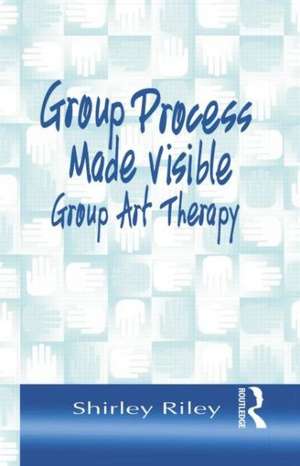
Group Process Made Visible: The Use of Art in Group Therapy
Autor Shirley Rileyen Limba Engleză Paperback – 11 sep 2014
Preț: 458.34 lei
Preț vechi: 482.46 lei
-5%
Puncte Express: 688
Carte indisponibilă temporar
Livrare prin curier în România Termenul estimat este afișat lângă disponibilitate.
Transport gratuit pentru acest produs Plată online sau ramburs, în funcție de opțiunile comenzii.
Retur gratuit în 14 zile Comandă securizată și suport în română.
Specificații
ISBN-13: 9781138011892
ISBN-10: 1138011894
Pagini: 296
Ilustrații: black & white illustrations, figures
Dimensiuni: 152 x 229 x 20 mm
Greutate: 0.47 kg
Ediția:1
Editura: Taylor & Francis
Colecția Routledge
Locul publicării:Oxford, United Kingdom
ISBN-10: 1138011894
Pagini: 296
Ilustrații: black & white illustrations, figures
Dimensiuni: 152 x 229 x 20 mm
Greutate: 0.47 kg
Ediția:1
Editura: Taylor & Francis
Colecția Routledge
Locul publicării:Oxford, United Kingdom
V-ar putea interesa
-
 Williams Manual of Pregnancy ComplicationsKenneth Leveno-34%Preț: 464.31 lei707.89 lei
 -
 Love''s ExecutionerIrvin YalomPreț: 92.82 lei
 -
 Experiences in Groups: and Other PapersW. R. Bion-5%Preț: 361.50 lei380.53 lei
 -
 Sandplay: Past, Present and FutureHarriet S. FriedmanPreț: 419.51 lei
 -
 The Handbook of PsychodramaMarcia Karp-5%Preț: 409.46 lei431.00 lei
 -
 -5%Preț: 282.20 lei297.05 lei
 -
 -5%Preț: 530.96 lei558.91 lei
 -
 -18%Preț: 1094.86 lei1335.20 lei
 -
 -26%Preț: 231.31 lei312.56 lei
 -
 -30%Preț: 90.40 lei128.23 lei
 -
 Contemporary Art Therapy with AdolescentsMs Cathy A Malchiodi-28%Preț: 245.59 lei342.45 lei
Cuprins
Forward (by Shaun McNiff). Introduction: Philosophy and Approaches. Group Process Made Visible. Group Therapy with Burn Injured Youngsters. Art as an Instrument for Creating Social Reciprocity: Social Skills for Autistic Children. Adolescent Group Treatment. Advantage of the Language of Art in a Cognitive/Behavioral Group with Behavior Disordered Boys. Translating the Theory of Expressive Art to Interns and Staff in an Early Childhood Program. Group in a Psychiatric Hospital or Day Treatment Programs: Art as an Entrée into Unfamiliar Realities. Working with the Elderly Population with a Serious Loss of Cognition. Complimentary Use of Art, Movement, and Verbal Therapies within an Eating Disorders Program. A Women's Group Created around a Theme of Bereavement. Group for Therapists Dealing with Secondary Post Traumatic Stress Syndrome Induced by Art Products of Severely Abused Clients. Some Final Thoughts
Recenzii
"[This book] demonstrates the usefulness of the language of art in enabling group therapists and their clients to understand group members' perceptions of constructs and realities. . . .the approach encourages a cooperative focus that leans toward a contemporary theory suitable for today's mental world." -- Family Therapy: The Journal of the California Graduate School of Family Psychology