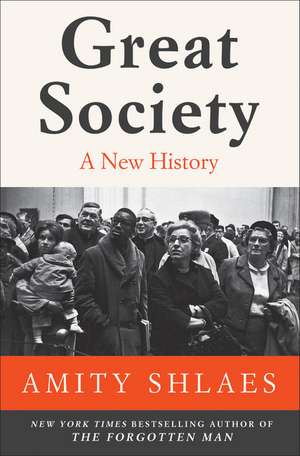
Great Society
Autor Amity Shlaesen Limba Engleză Hardback – 19 noi 2019
În volumul Great Society, Amity Shlaes aduce o perspectivă revizionistă necesară asupra idealismului american din anii '60, demontând mitul conform căruia eșecurile acelei perioade au fost cauzate doar de războiul din Vietnam. Observăm cum Shlaes mută accentul de pe frontul extern către politicile interne de planificare tehnocratică, demonstrând că promisiunile de eradicare a sărăciei și acces universal la sănătate au creat, în fapt, o dependență guvernamentală pe termen lung. Ceea ce aduce nou această lucrare este analiza economică riguroasă aplicată unei perioade adesea tratate doar prin prisma mișcărilor culturale sau a drepturilor civile. Great Society acoperă aceeași arie istorică precum The Great Society and the High Tide of Liberalism de Sidney M. Milkis, dar cu o abordare mult mai critică la adresa intervenționismului statal. În timp ce studiile clasice tind să vadă în această eră apogeul liberalismului american, Shlaes subliniază consecințele economice neintenționate care au prefigurat crizele deceniilor următoare. Stilul narativ este alert, transformând datele despre Rezerva Federală și negocierile sindicale într-o cronică ce se citește cu fluiditatea unui roman, fără a sacrifica însă rigoarea academică. Această lucrare se poziționează ca o continuare firească a cercetărilor anterioare ale autoarei. Dacă în The Forgotten Man Shlaes reinterpreta Marea Depresiune, iar în Coolidge explora virtuțile unui guvern restrâns, în Great Society ea analizează momentul în care America a abandonat prudența fiscală în favoarea unor experimente sociale de amploare. Apreciem modul în care sunt portretizați actorii epocii, de la președinți la vizionari din Silicon Valley, oferind o imagine completă a forțelor care au modelat Statele Unite moderne.
Preț: 214.72 lei
Carte disponibilă
Livrare economică 02-16 noiembrie
Specificații
ISBN-10: 0061706426
Pagini: 528
Dimensiuni: 167 x 239 x 43 mm
Greutate: 0.75 kg
Editura: Harpercollins
De ce să citești această carte
Recomandăm Great Society cititorilor interesați de istoria politică și economică a SUA care doresc să înțeleagă rădăcinile dezbaterilor contemporane despre socialism și capitalism. Cartea oferă o lecție valoroasă despre limitele ingineriei sociale și modul în care idealismul politic poate genera rezultate economice contraproductive, fiind esențială pentru înțelegerea mecanismelor puterii executive americane.
Despre autor
Amity Shlaes este o reputată autoare de bestselleruri New York Times, cunoscută pentru analizele sale istorice din perspectivă economică. În prezent, semnează o rubrică permanentă în revista Forbes și ocupă funcția de președinte al Calvin Coolidge Presidential Foundation. Expertiza sa este recunoscută și prin coordonarea juriului pentru Premiul Hayek al Institutului Manhattan. Prin lucrări precum The Forgotten Man și Coolidge, Shlaes s-a impus ca o voce critică la adresa politicilor intervenționiste, aducând la lumină figuri și evenimente din istoria americană care contrazic narativele tradiționale.
Descriere scurtă
"Great Society is accurate history that reads like a novel, covering the high hopes and catastrophic missteps of our well-meaning leaders." —Alan Greenspan
Today, a battle rages in our country. Many Americans are attracted to socialism and economic redistribution while opponents of those ideas argue for purer capitalism. In the 1960s, Americans sought the same goals many seek now: an end to poverty, higher standards of living for the middle class, a better environment and more access to health care and education. Then, too, we debated socialism and capitalism, public sector reform versus private sector advancement. Time and again, whether under John F. Kennedy, Lyndon Johnson, or Richard Nixon, the country chose the public sector. Yet the targets of our idealism proved elusive. What’s more, Johnson’s and Nixon’s programs shackled millions of families in permanent government dependence. Ironically, Shlaes argues, the costs of entitlement commitments made a half century ago preclude the very reforms that Americans will need in coming decades.
In Great Society, Shlaes offers a powerful companion to her legendary history of the 1930s, The Forgotten Man, and shows that in fact there was scant difference between two presidents we consider opposites: Johnson and Nixon. Just as technocratic military planning by “the Best and the Brightest” made failure in Vietnam inevitable, so planning by a team of the domestic best and brightest guaranteed fiasco at home. At once history and biography, Great Society sketches moving portraits of the characters in this transformative period, from U.S. Presidents to the visionary UAW leader Walter Reuther, the founders of Intel, and Federal Reserve chairmen William McChesney Martin and Arthur Burns. Great Society casts new light on other figures too, from Ronald Reagan, then governor of California, to the socialist Michael Harrington and the protest movement leader Tom Hayden. Drawing on her classic economic expertise and deep historical knowledge, Shlaes upends the traditional narrative of the era, providing a damning indictment of the consequences of thoughtless idealism with striking relevance for today. Great Society captures a dramatic contest with lessons both dark and bright for our own time.
Recenzii
"Great Society is accurate history that reads like a novel, covering the high hopes and catastrophic missteps of our well-meaning leaders." — Alan Greenspan
"Shlaes’s account of America in the 1960s recalls her 2007 The Forgotten Man about America in the 1930s, and finds — guess what? — a complicated nation. The author writes with a free style, including information on lesser-known figures of the era, as well as an interesting assessment of Presidents Lyndon B. Johnson and Richard Nixon." — Washington Post
“A provocative, well-argued take on a turbulent era.” — Kirkus Reviews
“An illuminating alternative to sentimental reminiscences of liberals’ attempts in the 1960s...to banish poverty in America. Her account is original and persuasive, presenting the leading poverty warriors not with scorn but with sympathy and piercing insight….Ms. Shlaes’s chronicle is not just a story of how good people’s good intentions went wrong. It is also a story of how the assumption that the near future will closely resemble the recent past can lead even the best intentioned and most well-informed people to pursue policies that turn out to be mostly counterproductive and often destructive.” — Wall Street Journal
"Gripping...the lesson for the future could not be clearer." — John Taylor, Wall Street Journal
Notă biografică
Shlaes chairs the board of the Calvin Coolidge Presidential Foundation and the Manhattan Institute's Hayek Book Prize, and serves as a scholar at the King's College. Twitter: @amityshlaes