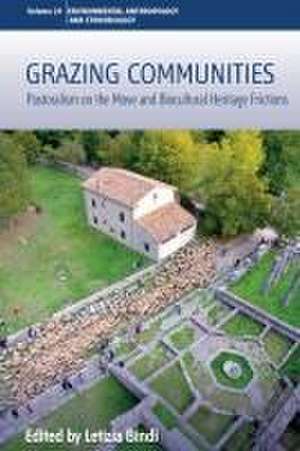
Grazing Communities: Environmental Anthropology and Ethnobiology, cartea 29
Editat de Letizia Bindien Limba Engleză Paperback – 5 iul 2024
Din seria Environmental Anthropology and Ethnobiology
-
 Preț: 203.56 lei
 - 23%
 Preț: 776.27 lei
 -
 Preț: 261.84 lei
 -
 Preț: 232.17 lei
 -
 Preț: 267.07 lei
 - 23%
 Preț: 761.47 lei
 -
 Preț: 259.88 lei
 -
 Preț: 309.52 lei
 - 23%
 Preț: 759.92 lei
 -
 Preț: 234.71 lei
 - 23%
 Preț: 758.62 lei
 -
 Preț: 255.69 lei
 - 23%
 Preț: 775.12 lei
 - 23%
 Preț: 757.91 lei
 -
 Preț: 308.31 lei
 -
 Preț: 266.19 lei
 - 23%
 Preț: 758.47 lei
 -
 Preț: 308.58 lei
 -
 Preț: 249.72 lei
 -
 Preț: 248.76 lei
 -
 Preț: 135.51 lei
 - 23%
 Preț: 760.17 lei
 - 23%
 Preț: 756.52 lei
 -
 Preț: 126.43 lei
 - 19%
 Preț: 710.44 lei
 - 23%
 Preț: 774.91 lei
 -
 Preț: 231.95 lei
 -
 Preț: 229.18 lei
Preț: 138.22 lei
Puncte Express: 207
Carte disponibilă
Livrare economică 13-27 noiembrie
Livrare express 30 octombrie-05 noiembrie pentru 32.01 lei
Livrare prin curier în România Termenul estimat este afișat lângă disponibilitate.
Transport gratuit de la 400.00 lei Plată online sau ramburs, în funcție de opțiunile comenzii.
Retur gratuit în 14 zile Comandă securizată și suport în română.
Specificații
ISBN-13: 9781805393337
ISBN-10: 1805393332
Pagini: 328
Dimensiuni: 152 x 229 x 18 mm
Greutate: 0.48 kg
Editura: BERGHAHN BOOKS
Colecția Environmental Anthropology and Ethnobiology
Seria Environmental Anthropology and Ethnobiology
ISBN-10: 1805393332
Pagini: 328
Dimensiuni: 152 x 229 x 18 mm
Greutate: 0.48 kg
Editura: BERGHAHN BOOKS
Colecția Environmental Anthropology and Ethnobiology
Seria Environmental Anthropology and Ethnobiology
Notă biografică
Letizia Bindi has been a professor of Cultural and Social Anthropology at several Italian Universities and a visiting scholar in Spanish, French, Polish and other non-European Universities. In 2009 received the Tanturri Foundation Prix for Anthropological and Popular Traditions Studies. She is presently a professor at the University of Molise, Italy.
Descriere
The present critical discourse on sustainable and responsible development implies a change of practices, a huge socio-economic transformation, and the return of new shepherds and herders in different European regions. This book is an occasion to reconsider grazing communities’ frictions in the new global heritage scenario.