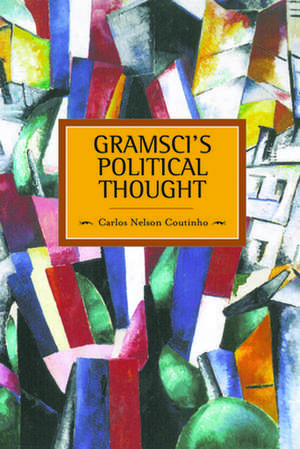
Gramsci's Political Thought: Historical Materialism
Autor Carlos Nelson Coutinhoen Limba Engleză Paperback – 13 aug 2013
| Toate formatele și edițiile | Preț | Express |
|---|---|---|
| Paperback (2) | 215.01 lei 6-8 săpt. | |
| Haymarket Books – 13 aug 2013 | 215.01 lei 6-8 săpt. | |
| Brill – 25 iul 2012 | 881.72 lei 6-8 săpt. |
Din seria Historical Materialism
-
 Preț: 508.92 lei
 -
 Preț: 338.19 lei
 -
 Preț: 215.91 lei
 -
 Preț: 259.77 lei
 -
 Preț: 224.22 lei
 -
 Preț: 257.73 lei
 -
 Preț: 215.01 lei
 -
 Preț: 183.89 lei
 -
 Preț: 222.39 lei
 -
 Preț: 214.61 lei
 -
 Preț: 218.67 lei
 -
 Preț: 215.91 lei
 -
 Preț: 177.62 lei
 -
 Preț: 218.67 lei
 -
 Preț: 495.44 lei
 -
 Preț: 219.62 lei
 -
 Preț: 259.41 lei
 -
 Preț: 259.45 lei
 -
 Preț: 181.09 lei
 -
 Preț: 219.62 lei
 -
 Preț: 186.88 lei
 - 11%
 Preț: 421.76 lei
 -
 Preț: 219.62 lei
 -
 Preț: 221.46 lei
 -
 Preț: 216.84 lei
 -
 Preț: 216.84 lei
 -
 Preț: 215.01 lei
 -
 Preț: 291.56 lei
 -
 Preț: 179.45 lei
 -
 Preț: 217.79 lei
 -
 Preț: 181.33 lei
 -
 Preț: 278.57 lei
 -
 Preț: 187.98 lei
 -
 Preț: 223.32 lei
 -
 Preț: 217.79 lei
 -
 Preț: 225.69 lei
 -
 Preț: 181.33 lei
 -
 Preț: 219.62 lei
 -
 Preț: 226.98 lei
 -
 Preț: 219.62 lei
 -
 Preț: 339.09 lei
 -
 Preț: 258.10 lei
 -
 Preț: 258.83 lei
 -
 Preț: 218.67 lei
 -
 Preț: 214.61 lei
 -
 Preț: 495.07 lei
 -
 Preț: 219.62 lei
 -
 Preț: 219.78 lei
 -
 Preț: 258.83 lei
 -
 Preț: 179.45 lei
Preț: 215.01 lei
Puncte Express: 323
Preț estimativ în valută:
38.00€ • 44.71$ • 33.17£
38.00€ • 44.71$ • 33.17£
Carte tipărită la comandă
Livrare economică 07-21 aprilie
Specificații
ISBN-13: 9781608462773
ISBN-10: 1608462773
Pagini: 198
Dimensiuni: 154 x 228 x 15 mm
Greutate: 0.32 kg
Editura: Haymarket Books
Seria Historical Materialism
Locul publicării:Chicago, United States
ISBN-10: 1608462773
Pagini: 198
Dimensiuni: 154 x 228 x 15 mm
Greutate: 0.32 kg
Editura: Haymarket Books
Seria Historical Materialism
Locul publicării:Chicago, United States
V-ar putea interesa
-
 Karl Marx's Theory of History: A DefenceG. A. Cohen-6%Preț: 489.20 lei520.65 lei
 -
 Ideology and Superstructure in Historical MaterialismFranz JakubowskiPreț: 221.87 lei
 -
 Preț: 96.07 lei
 -
 The Crosland Legacy: The Future of British Social DemocracyPatrick DiamondPreț: 175.40 lei
 -
 Between Reform and RevolutionDavid E. BarclayPreț: 338.72 lei
 -
 Marx's Concept of the Alternative to CapitalismPeter HudisPreț: 215.64 lei
 -
 Building the CommuneGeo MaherPreț: 104.45 lei
 -
 The S WordJohn NicholsPreț: 123.85 lei
 -
 Preț: 150.08 lei
 -
 The ABCs of SocialismBhaskar SunkaraPreț: 79.48 lei
 -
 On Practice and ContradictionMao Tse-TungPreț: 130.19 lei
 -
 Siete Ensayos de Interpretacion de La Realidad Peruana: Fragmentos de la AustriadaJosé Carlos MariáteguiPreț: 136.81 lei
Notă biografică
Carlos Nelson Coutinho is Professor Emeritus of Political Theory at Universidade Federal do Rio de Janeiro, Brasil. He is the author of several books on political theory, such as: Marxismo e política (São Paulo, Cortez, 2008; Santiago de Chile, Lom Ediciones, 2011) and De Rousseau a Gramsci (São Paulo, Boitempo, 2011). Professor Coutinho is editor of the Brazilian version of The Complete Works of Antonio Gramsci (Obras de Antonio Gramsci), published in ten volumes (1999-2004)
Cuprins
Preface
Introduction by Joseph A. Buttigieg
1. Youth, a Contradictory Formation: 1910–18
1.1. Sardinia
1.2. The encounter with Croce and Gentile
1.3. Gramsci turns away from the Marxism of the Second International
2. Workers’ Democracy and Factory-Councils: 1919–20
2.1. L’Ordine Nuovo
2.2. Gramsci and Bordiga
2.3. The defeat of the councils
3. The Passage to Maturity: 1921–6
3.1. From the foundation of the PCd’I to the fight against Fascism
3.2. The struggle against sectarianism
3.3. The first formulations of the concept of hegemony
4. Methodological Observations on the Prison Notebooks
4.1. The systematic nature of the Notebooks
4.2. Gramsci’s place in the evolution of Marxism
4.3. Gramsci as a critic of politics
4.4. On the relations between politics, economics and social totality
4.5. Gramsci’s philosophical conceptions
5. The ‘Extended’ Theory of the State
5.1. The concept of ‘civil society’
5.2. ‘Regulated society’ and the end of the state
6. Socialist Strategy in the ‘West’
6.1. War of movement and war of position
6.2. On the concept of passive revolution
6.3. From Gramsci’s proposal of a ‘constituent assembly’ to Togliatti’s 'progressive democracy’
7. The Party as ‘Collective Intellectual’
8. The Current Relevance and Universality of Gramsci
8.1. Another socialist model
8.2. A radical conception of democracy
8.3. With Gramsci, beyond Gramsci
Appendix One: General Will and Democracy in Rousseau, Hegel and Gramsci
1.1. The priority of the public
1.2. Rousseau and the general will
1.3. Hegel and the determinations of will
1.4. Gramsci and hegemony as contract
Appendix Two: The Neoliberal Age: Passive Revolution or Counter-Reformation?
2.1. Passive revolution
2.2. Counter-reformation
2.3. The welfare-state as passive revolution
2.4. Neoliberalism as counter-reformation
2.5. Transformism
Appendix Three: Gramsci and Brazil
3.1. Reception
3.2. Uses
References
Index
Introduction by Joseph A. Buttigieg
1. Youth, a Contradictory Formation: 1910–18
1.1. Sardinia
1.2. The encounter with Croce and Gentile
1.3. Gramsci turns away from the Marxism of the Second International
2. Workers’ Democracy and Factory-Councils: 1919–20
2.1. L’Ordine Nuovo
2.2. Gramsci and Bordiga
2.3. The defeat of the councils
3. The Passage to Maturity: 1921–6
3.1. From the foundation of the PCd’I to the fight against Fascism
3.2. The struggle against sectarianism
3.3. The first formulations of the concept of hegemony
4. Methodological Observations on the Prison Notebooks
4.1. The systematic nature of the Notebooks
4.2. Gramsci’s place in the evolution of Marxism
4.3. Gramsci as a critic of politics
4.4. On the relations between politics, economics and social totality
4.5. Gramsci’s philosophical conceptions
5. The ‘Extended’ Theory of the State
5.1. The concept of ‘civil society’
5.2. ‘Regulated society’ and the end of the state
6. Socialist Strategy in the ‘West’
6.1. War of movement and war of position
6.2. On the concept of passive revolution
6.3. From Gramsci’s proposal of a ‘constituent assembly’ to Togliatti’s 'progressive democracy’
7. The Party as ‘Collective Intellectual’
8. The Current Relevance and Universality of Gramsci
8.1. Another socialist model
8.2. A radical conception of democracy
8.3. With Gramsci, beyond Gramsci
Appendix One: General Will and Democracy in Rousseau, Hegel and Gramsci
1.1. The priority of the public
1.2. Rousseau and the general will
1.3. Hegel and the determinations of will
1.4. Gramsci and hegemony as contract
Appendix Two: The Neoliberal Age: Passive Revolution or Counter-Reformation?
2.1. Passive revolution
2.2. Counter-reformation
2.3. The welfare-state as passive revolution
2.4. Neoliberalism as counter-reformation
2.5. Transformism
Appendix Three: Gramsci and Brazil
3.1. Reception
3.2. Uses
References
Index
Recenzii
"Gramsci’s Political Thought [...] offers a unique vantage point into South American Gramscian studies not previously afforded to the Anglophone scholar." – Chris Walsh, in: Communiqué, 19 December 2012 [published by the International Socialist Group]
"[This publication] provides a wonderful opportunity to draw some attention to the debates on Gramsci in Latin America [...]. and is an essential window through which to view debates in and beyond Brazil." – Adam David Mortom, in: For the Desk Drawer
"[This publication] provides a wonderful opportunity to draw some attention to the debates on Gramsci in Latin America [...]. and is an essential window through which to view debates in and beyond Brazil." – Adam David Mortom, in: For the Desk Drawer