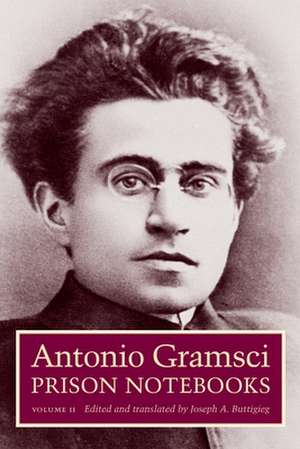
Gramsci, A: Prison Notebooks
Autor Antonio Gramscien Limba Engleză Paperback – 3 ian 2011
În acest al doilea volum al ediției Prison Notebooks, publicat de Columbia University Press, descoperim o cronică intimă și intelectuală a ultimilor șase ani din viața lui Antonio Gramsci. Lucrarea extinde documentarea începută în primul volum, concentrându-se pe intervalul 1931-1937. Subliniem modul în care scrisorile transcend simpla corespondență personală, devenind un laborator pentru ideile ce aveau să definească teoria politică modernă. Ediția documentează riguros transferurile autorului între închisorile din Turi, Civitavecchia și Formia, până la sfârșitul său prematur în Roma.
Ne-a atras atenția profunzimea dialogului cu Tania Schucht și mentorul său, Piero Sraffa, prin care Gramsci analizează critic idealismul lui Benedetto Croce. De asemenea, volumul include perspective fragmentare, dar valoroase, despre freudism și psihanaliză în scrisorile către soția sa, Giulia. Spre deosebire de An Introduction to Antonio Gramsci de Dr George Hoare, care oferă o privire de ansamblu teoretică aplicată contextului secolului XXI, acest volum oferă acces direct la sursa primară a gândirii gramsciene. Dacă Gramsci: Pre-Prison Writings explorează geneza conceptelor de hegemonie culturală în jurnalismul său timpuriu, lucrarea de față ne arată maturizarea acestor idei sub presiunea opresiunii administrative și a declinului fizic.
Structura narativă a scrisorilor dezvăluie o luptă constantă cu înstrăinarea față de familie și efortul de a educa, de la distanță, nepoții din Sardinia. Este o resursă indispensabilă pentru înțelegerea relației dintre individ și societate în perioade de criză politică profundă.
Preț: 251.09 lei
Carte disponibilă
Livrare economică 03-17 noiembrie
Livrare express 20-24 octombrie pentru 59.34 lei
Specificații
ISBN-10: 0231105932
Pagini: 752
Dimensiuni: 156 x 235 x 40 mm
Greutate: 1.04 kg
Editura: Columbia University Press
V-ar putea interesa
-
 Prison Notebooks - Volume 1Antonio GramsciPreț: 258.34 lei
 -
 Letters from Prison – Volume 1Antonio GramsciPreț: 264.14 lei
 -
 Prison Notebooks – Volume 2Antonio Gramsci-23%Preț: 615.88 lei799.84 lei
 -
 Factory of Strategy – Thirty–Three Lessons on LeninAntonio Negri-27%Preț: 779.41 lei1067.68 lei
 -
 Preț: 463.71 lei
 -
 Economics and Power: A Marxist critiqueGiulio PalermoPreț: 434.64 lei
 -
 The Soviet Transition: From Gorbachev to YeltsinOttorino Cappelli-18%Preț: 1254.81 lei1530.26 lei
 -
 Prison LettersAntonio GramsciPreț: 236.19 lei
 -
 -24%Preț: 251.10 lei332.49 lei
 -
 The Secret War for China: Espionage, Revolution and the Rise of MaoPanagiotis Dimitrakis-24%Preț: 252.31 lei333.13 lei
 -
 A Gramsci ReaderAntonio GramsciPreț: 264.60 lei
 -
 Revolution and ReactionKurt Gerhard WeylandPreț: 292.34 lei
 -
 -18%Preț: 1114.32 lei1358.93 lei
 -
 A Marxist History of CapitalismHenry HellerPreț: 400.07 lei
 -
 The Transformation of Italian CommunismLeonard WeinbergPreț: 464.26 lei
 -
 -22%Preț: 324.61 lei418.26 lei
 -
 Socio-Political Dynamics within the Crisis of the Left: Argentina and BrazilJuan Pablo Ferrero-34%Preț: 696.49 lei1062.77 lei
 -
 -18%Preț: 939.96 lei1146.30 lei
 -
 Preț: 232.73 lei
De ce să citești această carte
Această ediție oferă acces la ultimele reflecții ale lui Antonio Gramsci, fiind esențială pentru cercetătorii în științe politice și sociologie. Cititorul câștigă o înțelegere nuanțată a legăturii dintre viața personală a unui intelectual martir și conceptele sale despre hegemonie și educație. Este un document istoric ce demonstrează rezistența spiritului critic în condiții de izolare extremă.
Despre autor
Antonio Gramsci (1891–1937) a fost un filosof politic, jurnalist și lider al Partidului Comunist Italian, considerat unul dintre cei mai importanți gânditori marxiști ai secolului XX. Născut în Sardinia, s-a remarcat prin analizele sale asupra culturii și puterii, introducând conceptul de „hegemonie culturală”. Arestat în 1926 de regimul fascist al lui Mussolini, și-a petrecut restul vieții în închisoare, unde a scris celebrele sale „Caiete”, care au influențat decisiv teoria critică și studiile postcoloniale contemporane.
Notă biografică
Joseph A. Buttigieg (1947¿2019) was professor emeritus of English at the University of Notre Dame. He was the author and editor of a number of books, including A Portrait of the Artist in Different Perspective, The Legacy of Antonio Gramsci, Criticism Without Boundaries, Gramsci and Education, European Christian Democracy, and most notably the complete critical edition of Antonio Gramsci¿s Prison Notebooks (Columbia, 1992¿2007). He was also founding member and president of the International Gramsci Society.