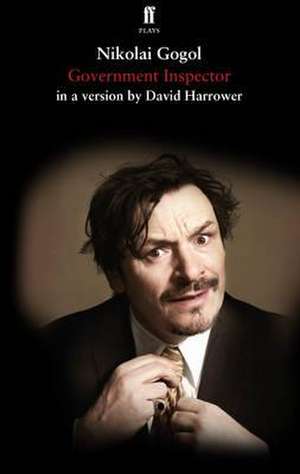
Government Inspector
Autor Nikolai Gogolen Limba Engleză Paperback – 16 iun 2011
| Toate formatele și edițiile | Preț | Express |
|---|---|---|
| Paperback (7) | 55.62 lei 3-5 săpt. | +12.12 lei 6-12 zile |
| Alma Books COMMIS – 26 oct 2019 | 55.62 lei 3-5 săpt. | +12.12 lei 6-12 zile |
| FABER & FABER – 16 iun 2011 | 73.86 lei 3-5 săpt. | +4.65 lei 6-12 zile |
| CreateSpace Independent Publishing Platform – | 61.84 lei 6-8 săpt. | |
| Bloomsbury Publishing – 10 iul 2025 | 75.30 lei 3-5 săpt. | +16.80 lei 6-12 zile |
| Bloomsbury Publishing – 7 aug 2003 | 76.51 lei 6-8 săpt. | |
| Bloomsbury Publishing – 22 iun 2005 | 81.87 lei 6-8 săpt. | |
| Les prairies numériques – 27 noi 2020 | 103.71 lei 3-5 săpt. |
Preț: 73.86 lei
Puncte Express: 111
Preț estimativ în valută:
13.06€ • 15.13$ • 11.29£
13.06€ • 15.13$ • 11.29£
Carte disponibilă
Livrare economică 16-30 aprilie
Livrare express 01-07 aprilie pentru 14.64 lei
Specificații
ISBN-13: 9780571280490
ISBN-10: 0571280498
Pagini: 120
Dimensiuni: 126 x 197 x 12 mm
Greutate: 0.1 kg
Ediția:Main
Editura: FABER & FABER
ISBN-10: 0571280498
Pagini: 120
Dimensiuni: 126 x 197 x 12 mm
Greutate: 0.1 kg
Ediția:Main
Editura: FABER & FABER
V-ar putea interesa
-
 PlaysAnton Chekhov-26%Preț: 56.44 lei76.18 lei
 -
 -19%Preț: 56.17 lei69.38 lei
 -
 The NoseNikolay Gogol-40%Preț: 16.31 lei27.12 lei
 -
 Plays and Petersburg Tales: Petersburg Tales, Marriage, The Government InspectorNikolai Vasilyevich Gogol-18%Preț: 51.29 lei62.88 lei
 -
 The Collected Tales of Nikolai GogolNikolai GogolPreț: 106.96 lei
 -
 The Overcoat and Other Short StoriesNikolai Gogol-20%Preț: 27.23 lei34.18 lei
 -
 Ubu RoiAlfred JarryPreț: 25.93 lei
 -
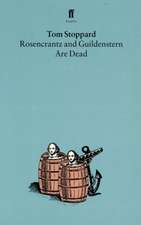 Rosencrantz and Guildenstern Are DeadTom StoppardPreț: 74.01 lei
 -
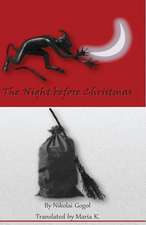 The Night Before ChristmasNikolai GogolPreț: 56.14 lei
 -
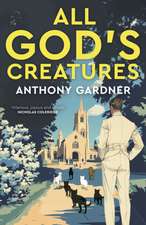 All God's CreaturesAnthony GardnerPreț: 102.62 lei
 -
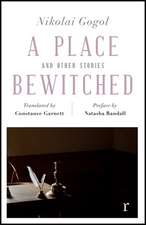 -28%Preț: 64.08 lei88.80 lei
 -
 The Country WifeWilliam Wycherley-36%Preț: 58.59 lei91.84 lei
 -
 Dead SoulsNikolai GogolPreț: 37.09 lei
 -
 Gogol Collected TalesNikolai GogolPreț: 119.45 lei
 -
 Nikolai GogolVladimir Nabokov-20%Preț: 54.28 lei68.27 lei
 -
 Petersburg Tales: New TranslationNikolai Gogol-10%Preț: 49.85 lei55.12 lei
 -
 Diaboliad and Other Stories: New TranslationMikhail BulgakovPreț: 54.65 lei
 -
 The Village of Stepanchikovo and Its InhabitantsFyodor DostoevskyPreț: 62.52 lei
 -
 The Importance of Being EarnestOscar WildePreț: 31.83 lei
 -
 RevizorNikolaj GogolPreț: 44.21 lei
Recenzii
Roger Cockrell's freer and livelier versions, of which there
are many more examples, mean that any company planning
a new production of the play would be well advised to use
this fresh, highly actable (and, for good measure, attractively
produced) translation of Gogol's timeless classic.
Roger Cockrell goes straight for the funny bone. His characters speak their truths in intoxicating, colourful English. [.] This reader of Roger Cockrell's lively and hilarious Government Inspector cannot wait to see it staged.
are many more examples, mean that any company planning
a new production of the play would be well advised to use
this fresh, highly actable (and, for good measure, attractively
produced) translation of Gogol's timeless classic.
Roger Cockrell goes straight for the funny bone. His characters speak their truths in intoxicating, colourful English. [.] This reader of Roger Cockrell's lively and hilarious Government Inspector cannot wait to see it staged.
Notă biografică
Nikolai Gogol (1809-1852) was a Russian short story writer, playwright and novelist born in the Ukrainian Cossack town of Sorochyntsi. Often referred to as the Father of the Golden Age of Russian Literature, Gogol was the author of the first great Russian novel, Dead Souls, 1842. He was one of the first writers to use the grotesque in his work, and the famous trope can be seen in his well-known short story, The Overcoat, 1842.