Cantitate/Preț
Produs

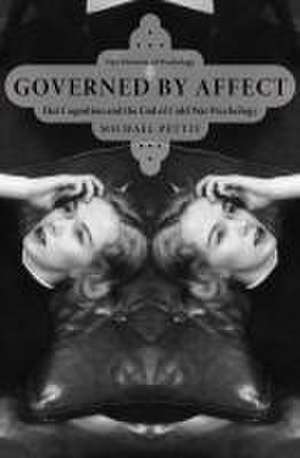
Governed By Affect: Hot Cognition and the End of Cold War Psychology: New Histories of Psychology

Autor Michael Pettit
en Limba Engleză Hardback – 26 sep 2024
În volumul Governed By Affect, Michael Pettit analizează tema centrală a „cogniției fierbinți” (hot cognition), marcând momentul în care psihologia americană a abandonat modelul raționalității reci din perioada Războiului Rece în favoarea unei viziuni în care indivizii sunt guvernați de pasiuni și impulsuri. Reținem din această analiză o genealogie critică a modului în care psihologia a încetat să fie doar o disciplină academică de laborator, devenind un instrument omniprezent în politicile publice și în industria de self-help. Autorul demonstrează cum, începând cu anii '70, atenția și voința au început să fie tratate ca resurse deficitare, justificând astfel intervențiile comportamentale menite să optimizeze sănătatea și fericirea cetățenilor.

Structura narativă a cărții urmărește trei transformări majore: redefinirea economiei politice a psihologiei, angajamentul său public și evoluția teoriilor despre sine. Cititorii familiarizați cu Psychologists on the March de James H. Capshew vor aprecia modul în care Pettit continuă firul istoric, arătând cum expansiunea profesională postbelică a dus la crizele de legitimitate de astăzi. Dacă lucrarea lui Capshew se concentra pe impactul celui de-al Doilea Război Mondial, Governed By Affect investighează perioada mai recentă, în care expertiza psihologică este simultan indispensabilă și contestată.

De asemenea, volumul oferă un dialog teoretic necesar cu lucrări precum Psychology and Health de Wade Pickren. În timp ce Pickren urmărește relația istorică dintre sănătate și psihologie, Michael Pettit pune accent pe dimensiunea politică a acestei fuziuni, explicând cum transformarea psihologiei într-o „știință a sănătății” a servit unor scopuri de guvernare neoliberală. Este o lectură densă, publicată în seria New Histories of Psychology, care deconstruiește imaginea de sine a disciplinei ca profesie neutră de ajutorare.

Citește tot Restrânge

Preț: 24664 lei

Preț vechi: 31626 lei
-22%

Puncte Express: 370

Carte disponibilă

Livrare economică 29 mai-09 iunie
Livrare express 16-22 mai pentru 11346 lei


Specificații

ISBN-13: 9780197621851
ISBN-10: 0197621856
Pagini: 376
Dimensiuni: 152 x 221 x 36 mm
Greutate: 0.68 kg
Editura: Oxford University Press
Colecția OUP USA
Seria New Histories of Psychology

Locul publicării:New York, United States

De ce să citești această carte

Recomandăm această carte cercetătorilor și studenților la psihologie sau sociologie care doresc să înțeleagă rădăcinile istorice ale obsesiei actuale pentru „well-being” și optimizare personală. Cititorul câștigă o perspectivă critică asupra modului în care teoriile despre afect influențează deciziile politice și viața cotidiană. Este un instrument esențial pentru a înțelege de ce psihologia a devenit, dintr-o știință socială, un pilon central al sănătății publice moderne.


Despre autor

Michael Pettit este profesor asistent de istorie și teorie a psihologiei la Universitatea York din Toronto. Expertiza sa se concentrează pe evoluția culturală a științelor comportamentale și pe intersecția dintre psihologie și societate. Deși în lucrările sale anterioare, precum Artists of New Mexico Traditions sau Riding for the Brand, a explorat teme legate de patrimoniul cultural și istoria regională din New Mexico și Texas, în Governed By Affect autorul revine la nucleul cercetării sale academice, oferind o analiză riguroasă a transformărilor epistemologice din psihologia americană postbelică.


Descriere

Governed by Affect offers a new history of psychology's contradictory and contested public life in the United States and beyond since World War II, with a special emphasis on a series of transformations which have occurred since the 1970s. For both policymakers and ordinary people, the discipline of psychology has come to furnish a seemingly inexhaustible array of tools and concepts for making individuals healthier, wealthier, and happier. At the heart of this psychologized neo-liberalism is the notion that attention or the will exists as a scarce resource in a distracted and tempting world. Breaking with the austere and deliberative rationality of Cold War cognitive science, the new psychology depicts individuals as beholden to their unbridled passions and wants. At the same time as this unprecedented cultural influence, psychologists' expertise came under greater scrutiny than ever before, with the discipline finding itself mired in a pair of moral and epistemological crises which threaten to overturn the field's self-image as an objective science and a helping profession. The book traces a series of key transformations: a switch from psychology identifying as a social science to a health science; the greater engagement of psychological scientists in the realms of self-help and public policy; and the overshadowing of cognitive science by theories of affect. These three transformations--in psychology's political economy, in its public engagement, and in its theories of the self--constitute distinct but interconnected areas of analysis for constructing a new history of the psychological society. Such a perspective offers a critical genealogy of the stakes and public face of psychology at a time when the provision of mental health services and the use of behavioral interventions to improve both personal and social well-being are acute matters of concern.

Recenzii

The volume recounts the history of psychological thought and practice involving affect (so-called "hot cognition") since World War II. Pettit details psychology's move from a generally basic scientific approach to a domain focused on theory and application to people's everyday lives, explicating that psychology didn't evolve in a vacuum.

Notă biografică

Michael Pettit received his PhD in history from the University of Toronto. He is currently a professor of Psychology at York University in Toronto, affiliated with their Historical, Theoretical, and Critical Studies of Psychology graduate area.