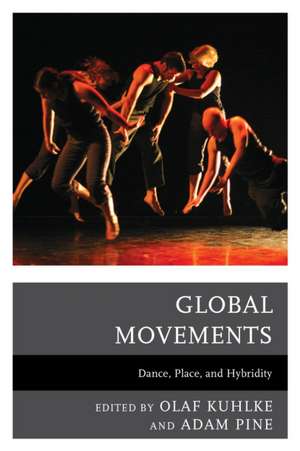
Global Movements: Dance, Place, and Hybridity
Editat de Olaf Kuhlke, Adam M. Pine Contribuţii de Yuko Aoyama, Mary Lynn Babcock, France Joyal, Lynnette Young Overby, Steve Smith, Kristin Harris Walsh, Carla Walteren Limba Engleză Paperback – 29 aug 2016
Preț: 328.48 lei
Preț vechi: 425.91 lei
-23%
Puncte Express: 493
Carte tipărită la comandă
Livrare economică 17 noiembrie-01 decembrie
Livrare prin curier în România Termenul estimat este afișat lângă disponibilitate.
Transport gratuit de la 400.00 lei Plată online sau ramburs, în funcție de opțiunile comenzii.
Retur gratuit în 14 zile Comandă securizată și suport în română.
Specificații
ISBN-13: 9781498507622
ISBN-10: 149850762X
Pagini: 210
Ilustrații: 31 BW Photos, 2 Tables
Dimensiuni: 151 x 231 x 15 mm
Greutate: 0.32 kg
Editura: Bloomsbury Publishing
Colecția Lexington Books
Locul publicării:New York, United States
ISBN-10: 149850762X
Pagini: 210
Ilustrații: 31 BW Photos, 2 Tables
Dimensiuni: 151 x 231 x 15 mm
Greutate: 0.32 kg
Editura: Bloomsbury Publishing
Colecția Lexington Books
Locul publicării:New York, United States
V-ar putea interesa
-
 The Meaning Of TangoChristine DennistonPreț: 70.42 lei
 -
 The Oxford Handbook of Indian DanceAnurima Banerji-32%Preț: 966.27 lei1425.95 lei
 -
 The Oxford Handbook of Black Dance StudiesThomas F. DeFrantz-32%Preț: 852.54 lei1250.54 lei
 -
 Funny Moves: Dance Humor PoliticsMarta E. Savigliano-21%Preț: 215.27 lei273.15 lei
 -
 Preț: 155.60 lei
 -
 Power MovesSeika BoyePreț: 236.32 lei
 -
 The Body in Crisis: New Pathways and Short Circuits in RepresentationChristine Greiner-19%Preț: 454.40 lei560.99 lei
 -
 Of the Presence of the BodyAndré LepeckiPreț: 160.24 lei
 -
 Lives in Motion: Celebrating Dance in ThailandPornrat DamrhungPreț: 346.86 lei
 -
 (Post)Socialist Dance: A Search for Hidden LegaciesAnnelies Van Assche-36%Preț: 551.25 lei863.76 lei
 -
 Place-Keepers: Latina/x Art, Performance, and Organizing in the Twin CitiesJessica Lopez LymanPreț: 136.27 lei
 -
 The Intellect Handbook of Dance Education ResearchLynnette Young Overby-23%Preț: 1058.45 lei1374.61 lei
 -
 Dancing Place: Scores of the City, Scores of the ShoreAdesola AkinleyePreț: 369.55 lei
 -
 Transatlantic DriftKatie MilestonePreț: 93.20 lei
 -
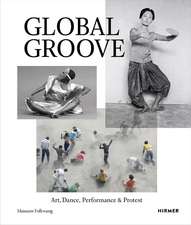 Global Groove: Art, Dance, Performance & ProtestMuseum Folkwang-17%Preț: 290.40 lei348.60 lei
 -
 Moving (Across) Borders: Performing Translation, Intervention, ParticipationGabriele Brandstetter-17%Preț: 301.46 lei363.77 lei
 -
 -18%Preț: 309.95 lei380.00 lei
 -
 Dance Spaces: Practices of MovementSusanne Ravn-17%Preț: 155.86 lei188.00 lei
 -
 New Geographies of Music 2Séverin GuillardPreț: 336.23 lei
Cuprins
Introduction, Olaf Kuhlke and Adam M. Pine
Chapter 1: Cultural Survival as a Geographic Paradox: The Case of Flamenco, Yuko Aoyama
Chapter 2: Irishness and Step Dancing in Newfoundland and Labrador, Kristin Harris Walsh
Chapter 3: Dancing in Foam City: Berlin and the Viscous Embodiment of German National Identity at the Love Parade, 1989-2006, Olaf Kuhlke
Chapter 4: Human Kind in the Apex of Borders: Artistic and Expressive Communication in Projected Images, Dance, and Narrative, Mary Lynn Babcock and Lynnette Young Overby
Chapter 5: Tango: A Cognitive Companionship from the Street to the Classroom, France Joyal
Chapter 6: Salsa Cosmopolitanism: Situating the Dancing Body as Part of the Global Cosmopolitan Project, Adam M. Pine
Chapter 7: From Streetlights to Stagelights to Cyberity and Back: Dance in (Geographic) Space, Carla Walter and Steve Smith
Conclusion: Valorizing the Many Different Spaces of Dance: Co-opting the Cultural Choreography of Globalization, Adam M. Pine and Olaf Kuhlke
Chapter 1: Cultural Survival as a Geographic Paradox: The Case of Flamenco, Yuko Aoyama
Chapter 2: Irishness and Step Dancing in Newfoundland and Labrador, Kristin Harris Walsh
Chapter 3: Dancing in Foam City: Berlin and the Viscous Embodiment of German National Identity at the Love Parade, 1989-2006, Olaf Kuhlke
Chapter 4: Human Kind in the Apex of Borders: Artistic and Expressive Communication in Projected Images, Dance, and Narrative, Mary Lynn Babcock and Lynnette Young Overby
Chapter 5: Tango: A Cognitive Companionship from the Street to the Classroom, France Joyal
Chapter 6: Salsa Cosmopolitanism: Situating the Dancing Body as Part of the Global Cosmopolitan Project, Adam M. Pine
Chapter 7: From Streetlights to Stagelights to Cyberity and Back: Dance in (Geographic) Space, Carla Walter and Steve Smith
Conclusion: Valorizing the Many Different Spaces of Dance: Co-opting the Cultural Choreography of Globalization, Adam M. Pine and Olaf Kuhlke
Recenzii
This book underscores the fact that dance is a geography and geography is a dance. By cross-pollinating the two disciplines, the authors produce a third wondrous hybrid. Their book is compulsory reading for all those who want to understand the place of dance.
We all know globalization is a process of cultural amalgamation, but what does this imply at the level of bodies? This book breaks new ground in both dance/performance studies and cultural geography by asking how the global and the (inter)national are danced. Clearly, dancing is not only an eruption of sensual pleasure but condenses some of the most important sociopolitical processes at work in today's world.
Brimming with engaging ethnographic insight, Global Movements offers a series of sure-footed and lively explorations of the charged zone between identity, geography, and dance. It is essential reading for anyone interested in thinking critically about what is at stake when the cultural and the corporeal are choreographed through the spaces of moving bodies.
We all know globalization is a process of cultural amalgamation, but what does this imply at the level of bodies? This book breaks new ground in both dance/performance studies and cultural geography by asking how the global and the (inter)national are danced. Clearly, dancing is not only an eruption of sensual pleasure but condenses some of the most important sociopolitical processes at work in today's world.
Brimming with engaging ethnographic insight, Global Movements offers a series of sure-footed and lively explorations of the charged zone between identity, geography, and dance. It is essential reading for anyone interested in thinking critically about what is at stake when the cultural and the corporeal are choreographed through the spaces of moving bodies.