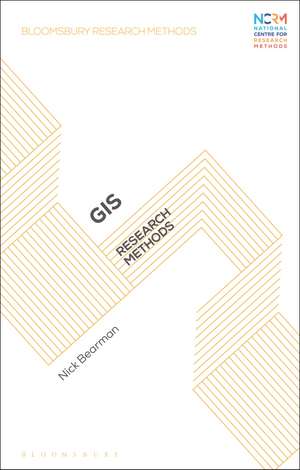
GIS: Research Methods: Bloomsbury Research Methods
Autor Nick Bearmanen Limba Engleză Paperback – 10 dec 2020
The book covers the history of GIS, from John Snow's Cholera map (1854) right up to today's software and data and cutting-edge analysis techniques. Bearman goes on to cover how to find, use and evaluate the latest data sets to critiquing existing maps, highlighting limitations and common mistakes.
A variety of different GIS methods including Google Maps, GPS, big data, context and choropleth maps are discussed and the pros and cons of each are highlighted allowing you to choose the appropriate method or piece of software for your own research. This is the ideal book for anyone thinking about using GIS in their own research.
Din seria Bloomsbury Research Methods
- 16%
 Preț: 127.24 lei
 - 21%
 Preț: 129.35 lei
 - 11%
 Preț: 128.92 lei
 - 11%
 Preț: 128.68 lei
 - 11%
 Preț: 130.58 lei
 -
 Preț: 133.47 lei
 - 23%
 Preț: 134.54 lei
 - 23%
 Preț: 134.68 lei
 - 16%
 Preț: 137.07 lei
 - 15%
 Preț: 138.21 lei
 - 16%
 Preț: 137.58 lei
 - 16%
 Preț: 136.41 lei
 - 21%
 Preț: 134.54 lei
 - 10%
 Preț: 128.07 lei
 - 16%
 Preț: 127.97 lei
 - 22%
 Preț: 123.85 lei
 - nou
 Preț: 133.47 lei
 - nou
 Preț: 133.47 lei
 - nou
 Preț: 127.48 lei
 - nou
 Preț: 135.64 lei
Preț: 153.09 lei
Preț vechi: 183.88 lei
-17%
Puncte Express: 230
Carte tipărită la comandă
Livrare economică 26 noiembrie-10 decembrie
Livrare prin curier în România Termenul estimat este afișat lângă disponibilitate.
Transport gratuit de la 400.00 lei Plată online sau ramburs, în funcție de opțiunile comenzii.
Retur gratuit în 14 zile Comandă securizată și suport în română.
Specificații
ISBN-13: 9781350129559
ISBN-10: 1350129550
Pagini: 192
Dimensiuni: 136 x 214 x 10 mm
Greutate: 0.94 kg
Editura: Bloomsbury Publishing
Colecția Bloomsbury Academic
Seria Bloomsbury Research Methods
Locul publicării:London, United Kingdom
ISBN-10: 1350129550
Pagini: 192
Dimensiuni: 136 x 214 x 10 mm
Greutate: 0.94 kg
Editura: Bloomsbury Publishing
Colecția Bloomsbury Academic
Seria Bloomsbury Research Methods
Locul publicării:London, United Kingdom
Cuprins
Acknowledgements
Series Editor Introduction
Introduction: Using GIS in Social Science
1. History
2. Creating Maps
3. Cartography
4. How is Spatial Data Structured?
5. GIS Software
6. Next Steps
References
Glossary
Index
Series Editor Introduction
Introduction: Using GIS in Social Science
1. History
2. Creating Maps
3. Cartography
4. How is Spatial Data Structured?
5. GIS Software
6. Next Steps
References
Glossary
Index
Recenzii
Using straightforward language that is easily accessible for all audiences, this book covers the foundational concepts and rigor necessary to understand the importance that GIS has in research. Readers will appreciate the mostly software-agnostic approach and the tips and tricks to address common snags one might stumble across. I would highly recommend this book to anyone who is considering getting started with GIS or works with GIS professionals and wants to have a better, high-level understanding of the technology.