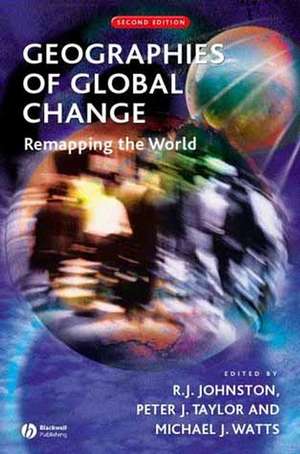
Geographies Global Change 2e
Autor Johnston, Taylor, Wattsen Limba Engleză Paperback – 9 sep 2002
Preț: 495.73 lei
Puncte Express: 744
Carte tipărită la comandă
Livrare economică 09-23 noiembrie
Livrare prin curier în România Termenul estimat este afișat lângă disponibilitate.
Transport gratuit pentru acest produs Plată online sau ramburs, în funcție de opțiunile comenzii.
Retur gratuit în 14 zile Comandă securizată și suport în română.
Specificații
ISBN-13: 9780631222866
ISBN-10: 0631222863
Pagini: 540
Dimensiuni: 170 x 244 x 29 mm
Greutate: 0.92 kg
Ediția:2. Auflage
Editura: Wiley
Locul publicării:Chichester, United Kingdom
ISBN-10: 0631222863
Pagini: 540
Dimensiuni: 170 x 244 x 29 mm
Greutate: 0.92 kg
Ediția:2. Auflage
Editura: Wiley
Locul publicării:Chichester, United Kingdom
V-ar putea interesa
-
 ExodusPaul Collier-19%Preț: 63.27 lei78.07 lei
 -
 The Sociology of GlobalizationLuke MartellPreț: 175.69 lei
 -
 Violent EnvironmentsNancy Lee Peluso-27%Preț: 777.53 lei1065.11 lei
 -
 Social Psychology of GlobalizationChi-Yue ChiuPreț: 413.38 lei
 -
 After GlobalizationEric CazdynPreț: 228.93 lei
 -
 The Globalization and Development ReaderJ. Timmons RobertsPreț: 302.51 lei
 -
 Global Issues: An IntroductionKristen A. HitePreț: 421.07 lei
 -
 Blackwell Companion to GlobaliGeorge RitzerPreț: 366.57 lei
 -
 Preț: 384.57 lei
 -
 Globalizing South ChinaCarolyn Cartier-8%Preț: 548.67 lei596.38 lei
 -
 Global Crises and the Challenges of the 21st CenturyThomas ReiferPreț: 158.01 lei
 -
 -30%Preț: 136.39 lei194.93 lei
 -
 The New Rulers of the WorldJohn PilgerPreț: 155.96 lei
Public țintă
students of globalisation or human geographyNotă biografică
Adam Johnston is a chartered surveyor with over thirty years of experience in the property sector.
Cuprins
List of Figures. List of Tables.
List of Contributors.
Preface.
Acknowledgement.
1. Geography/Globalization. (Peter J. Taylor, Michael J Watts, and R J Johnston).
Part I: Geoeconomic Change.
2. A Hyperactive World. (Nigel Thrift).
3. Trading Worlds. (Peter Dicken).
4. From Farming to Agribusiness: Global Agri-food Networks. (Sarah Whatmore).
5. Transnational Corporations and Global Divisions of Labor. (Richard Wright).
6. Global Change in a World of Organized Labor. (Andrew Herod).
7. Trajectories of Development Theory: Capitalism, Socialism and Beyond. (David Slater).
Part II: Geopolitical Change.
8. Democracy and Human Rights After the Cold War. (John Agnew).
9. The Renaissance of Nationalism. (Nuala C. Johnson).
10. Global Regulation and Trans-state Organization. (Susan M. Roberts).
11. The Rise of the Workfare State. (Joe Painter).
12. Post-Cold War Geopolitics: Contrasting Superpowers in a World of Global Dangers. (Gerard OTualhail).
Part III: Geosocial Change.
13. Population Crisis: From Global to Local. (Elspeth Graham and Paul Boyle).
14. Global Change and Patterns of Death and Disease. (John Eyles).
15. Changing Women's Status in a Global Economy. (Susan Christopherson).
16. Stuck in Place: Children in the Globalization of Social Reproduction. (Cindi Katz).
17. Race and Globalization. (Ruth Wilson Gilmore).
Part IV: Geocultural Change.
18. Consumption in the Globalizing World. (Peter Jackson).
19. Understanding Diversity: The Problem of/for "Theory". (Linda McDowell).
20. Resisting and Reshaping Destructive Development: Social Movements and Globalizing Networks. (Paul Routledge).
21. World Cities and the Organization of Global Space. (Paul L. Knox).
22. The Emerging Geographies of Cyberspace. (Rob Kitchin and Martin Dodge).
Part V: Geoenvironmental Change.
23.The Earth Transformed: Trends, Trajectories, and Patterns. (William B. Meyer and B. L. Turner II).
24.The Earth as Input: Resources. (Jody Emel, Gavin Bridge, and Rob Krueger).
25.The Earth as Output: Pollution. (David K. C. Jones).
26.Sustainable Development? (W.M Adams).
27.Environmental Governance. (Simon Dalby).
Part VI: Conclusion.
28. Remapping the World. What sort of map? What sort of world? (Peter J Taylor, Michael J Watts, and R J Johnston).
Bibliography.
Index.
List of Contributors.
Preface.
Acknowledgement.
1. Geography/Globalization. (Peter J. Taylor, Michael J Watts, and R J Johnston).
Part I: Geoeconomic Change.
2. A Hyperactive World. (Nigel Thrift).
3. Trading Worlds. (Peter Dicken).
4. From Farming to Agribusiness: Global Agri-food Networks. (Sarah Whatmore).
5. Transnational Corporations and Global Divisions of Labor. (Richard Wright).
6. Global Change in a World of Organized Labor. (Andrew Herod).
7. Trajectories of Development Theory: Capitalism, Socialism and Beyond. (David Slater).
Part II: Geopolitical Change.
8. Democracy and Human Rights After the Cold War. (John Agnew).
9. The Renaissance of Nationalism. (Nuala C. Johnson).
10. Global Regulation and Trans-state Organization. (Susan M. Roberts).
11. The Rise of the Workfare State. (Joe Painter).
12. Post-Cold War Geopolitics: Contrasting Superpowers in a World of Global Dangers. (Gerard OTualhail).
Part III: Geosocial Change.
13. Population Crisis: From Global to Local. (Elspeth Graham and Paul Boyle).
14. Global Change and Patterns of Death and Disease. (John Eyles).
15. Changing Women's Status in a Global Economy. (Susan Christopherson).
16. Stuck in Place: Children in the Globalization of Social Reproduction. (Cindi Katz).
17. Race and Globalization. (Ruth Wilson Gilmore).
Part IV: Geocultural Change.
18. Consumption in the Globalizing World. (Peter Jackson).
19. Understanding Diversity: The Problem of/for "Theory". (Linda McDowell).
20. Resisting and Reshaping Destructive Development: Social Movements and Globalizing Networks. (Paul Routledge).
21. World Cities and the Organization of Global Space. (Paul L. Knox).
22. The Emerging Geographies of Cyberspace. (Rob Kitchin and Martin Dodge).
Part V: Geoenvironmental Change.
23.The Earth Transformed: Trends, Trajectories, and Patterns. (William B. Meyer and B. L. Turner II).
24.The Earth as Input: Resources. (Jody Emel, Gavin Bridge, and Rob Krueger).
25.The Earth as Output: Pollution. (David K. C. Jones).
26.Sustainable Development? (W.M Adams).
27.Environmental Governance. (Simon Dalby).
Part VI: Conclusion.
28. Remapping the World. What sort of map? What sort of world? (Peter J Taylor, Michael J Watts, and R J Johnston).
Bibliography.
Index.
Descriere
This text aims to provides students with a series of challenging and revealing perspectives on the trends, trajectories and ideas of geographical thought leading into the new millennium.