
Genome, Transcriptome and Proteome Analysis
Autor Alain Bernoten Limba Engleză Paperback – oct 2004
Preț: 578.98 lei
Preț vechi: 629.33 lei
-8%
Carte tipărită la comandă
Livrare economică 25 decembrie 26 - 08 ianuarie 27
Specificații
ISBN-10: 047084955X
Pagini: 248
Dimensiuni: 152 x 229 x 15 mm
Greutate: 0.41 kg
Editura: Wiley
Locul publicării:Chichester, United Kingdom
V-ar putea interesa
-
 The AntsB Holldobler-15%Preț: 966.68 lei1137.26 lei
-
 The Confidence Booster WorkbookMartin PerryPreț: 120.10 lei
-
 -5%Preț: 535.77 lei563.97 lei
-
 Preț: 108.20 lei
-
 Preț: 102.94 lei
-
 Preț: 115.72 lei
-
 Preț: 114.44 lei
-
 Preț: 110.86 lei
-
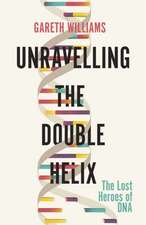 Preț: 81.61 lei
-
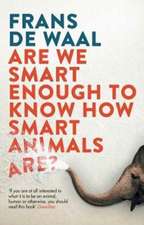 Are We Smart Enough to Know How Smart Animals Are?Frans De WaalPreț: 79.82 lei
-
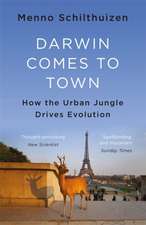 Darwin Comes to TownProfessor Menno Schilthuizen-26%Preț: 69.60 lei93.84 lei
-
 The Equations of LifeCharles Cockell-28%Preț: 67.60 lei94.43 lei
Public țintă
Undergraduates taking courses in Bioinformatics, Human Genetics, Biochemistry and Molecular Biology. Postgraduates and researchers.Notă biografică
Alain Bernot is a graduate of the École normale supérieure, PHD, and Professor at the Université d'Evry. He is currently working in a genetic therapy programme at Genethon. He previously directed the sequencing and analysis of a vertebrate genome (Tetraodon nigroviridis), and contributed to the identification of a gene responsible for a human genetic disease (Mediterranean familial fever).
Cuprins
Introduction.
1 General introduction.
1.1 Revision of molecular genetics.
1.2 The tools of molecular biology.
1.3 Specifics of the genome programmes.
1.4 The species analysed.
2 Linkage maps.
2.1. Tools and methods in genetic mapping.
2.2 The development of genetic maps.
2.3 Radiation hybrid maps.
2.4 Conclusion.
3 Physical maps.
3.1 Local maps or small genomes.
3.2 Strategies for physical mapping of the human genome.
3.3 Maps of the human genome.
3.4 Conclusion.
4 Genome sequencing .
4.1 Strategic choices.
4.2 Prokaryotic genomes.
4.3 Genomes of model eukaryotes.
4.4 The human genome.
4.5 Conclusion.
5 Sequencing cDNA and the transcriptome.
5.1 Strategies of cDNA sequencing.
5.2 The economic stakes.
5.3 The analysis of cDNA sequences.
5.4 The transcriptome.
5.5 Conclusion.
6 The proteome.
6.1 Basic techniques.
6.2 Transgenesis .
6.3 Mutagenesis.
6.4 Two-dimensional electrophoresis and identification of proteins.
6.5 Identification of protein interactions by twin hybrids.
6.6 Chip technology.
6.7 Analysis of three-dimensional structure.
6.8 Conclusions.
7 Identification of genes responsible for disease.
7.1 Genetic diseases.
7.2 Functional cloning and chromosomal anomalies.
7.3 Strategy for positional cloning.
7.4 What is the future for the cloning of disease-causing genes?
7.5 Conclusion.
General conclusion.
Bibliography.