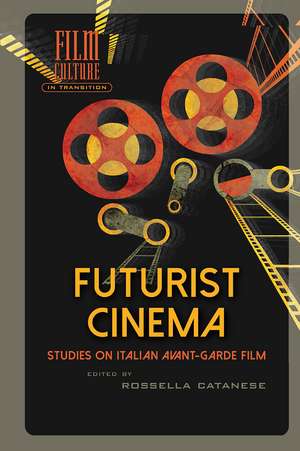
Futurist Cinema: Studies on Italian Avant-garde Film: Film Culture in Transition
Editat de Rossella Cataneseen Limba Engleză Hardback – 13 dec 2017
Din seria Film Culture in Transition
-
 Preț: 422.83 lei
 -
 Preț: 416.36 lei
 -
 Preț: 425.85 lei
 - 59%
 Preț: 602.54 lei
 -
 Preț: 529.58 lei
 - 18%
 Preț: 1095.64 lei
 - 18%
 Preț: 897.79 lei
 -
 Preț: 432.42 lei
 - 15%
 Preț: 515.12 lei
 -
 Preț: 455.80 lei
 -
 Preț: 416.47 lei
 - 18%
 Preț: 928.45 lei
 - 18%
 Preț: 787.87 lei
 - 55%
 Preț: 556.33 lei
 -
 Preț: 449.61 lei
 - 18%
 Preț: 900.22 lei
 -
 Preț: 420.10 lei
 - 18%
 Preț: 900.43 lei
 - 18%
 Preț: 901.97 lei
 - 18%
 Preț: 787.87 lei
 - 18%
 Preț: 787.22 lei
 - 18%
 Preț: 904.88 lei
 - 15%
 Preț: 565.18 lei
 - 18%
 Preț: 785.07 lei
 - 18%
 Preț: 987.09 lei
 - 18%
 Preț: 790.03 lei
 - 18%
 Preț: 958.32 lei
 - 18%
 Preț: 1025.65 lei
 - 15%
 Preț: 554.41 lei
 - 18%
 Preț: 1012.04 lei
 - 57%
 Preț: 630.38 lei
 - 57%
 Preț: 627.59 lei
 -
 Preț: 400.39 lei
 - 18%
 Preț: 955.18 lei
 - 18%
 Preț: 959.34 lei
 - 18%
 Preț: 1274.76 lei
 - 18%
 Preț: 795.89 lei
 - 18%
 Preț: 1135.75 lei
 - 18%
 Preț: 1014.14 lei
 -
 Preț: 431.98 lei
 - 18%
 Preț: 1012.74 lei
Preț: 602.54 lei
Preț vechi: 1241.98 lei
-51%
Puncte Express: 904
Carte indisponibilă temporar
Doresc să fiu notificat când acest titlu va fi disponibil:
Se trimite...
Specificații
ISBN-13: 9789089647528
ISBN-10: 908964752X
Pagini: 258
Ilustrații: 2 color plates, 5 halftones, 1 line drawing
Dimensiuni: 156 x 234 x 19 mm
Greutate: 0.64 kg
Ediția:1
Editura: Taylor & Francis
Colecția Routledge
Seria Film Culture in Transition
Locul publicării:Oxford, United Kingdom
ISBN-10: 908964752X
Pagini: 258
Ilustrații: 2 color plates, 5 halftones, 1 line drawing
Dimensiuni: 156 x 234 x 19 mm
Greutate: 0.64 kg
Ediția:1
Editura: Taylor & Francis
Colecția Routledge
Seria Film Culture in Transition
Locul publicării:Oxford, United Kingdom
Public țintă
AcademicCuprins
Acknowledgements, Preface, Section 1: Joyful Deformation Of The Universe, Section 2: Daily Filmed Exercises Designed To Free Us From Logic, Section 3: Shopwindows Of Filmed Ideas, Events, Types, Objects, Index
Notă biografică
Rossella Catanese (PhD) is an associate professor at the University of Tuscia, Viterbo, Italy, and adjunct professor at NYU Florence. Her publications focus on avant-garde, experimental cinema, found footage, film heritage, and film restoration. She also received the Sixth Marcel Duchamp Research Grant from the Staatliches Museum Schwerin, Germany (2023).
Descriere
Rossella Catanese brings in avant-garde artists and their manifestos to show how painters and other artists turned to cinema as a model for overcoming the inherently static nature of painting in order to rethink it for a new era.