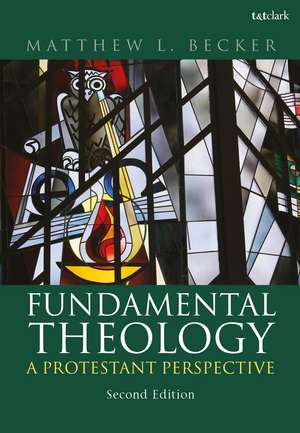
Fundamental Theology: A Protestant Perspective
Autor Dr. Matthew L. Beckeren Limba Engleză Paperback – 8 feb 2024
Part I provides an overview of some of these routes, then presents an historical survey of Christianity's major traditions. Part II unpacks some of the character of that revelation, focusing particularly on epistemological and procedural questions. Finally, Part III looks at Christian theology in a university setting: the possibility and shape of theology as a university discipline, its major subfields, and its relations with humanities and the sciences respectively.
Fundamental Theology: A Protestant Perspective, 2nd edition, includes a wide range of pedagogical features:
- each chapter begins with an outline thesis statement, highlighted in bold
- charts and graphs
- relevant headings and subheadings employed throughout the book
- keywords
- provides a survey of pertinent reference literature
- questions for review and discussion
- annotated suggestions for further reading
Preț: 263.19 lei
Preț vechi: 330.90 lei
-20%
Puncte Express: 395
Carte disponibilă
Livrare economică 10-24 noiembrie
Livrare express 24-30 octombrie pentru 147.42 lei
Livrare prin curier în România Termenul estimat este afișat lângă disponibilitate.
Transport gratuit de la 400.00 lei Plată online sau ramburs, în funcție de opțiunile comenzii.
Retur gratuit în 14 zile Comandă securizată și suport în română.
Specificații
ISBN-13: 9780567705693
ISBN-10: 0567705692
Pagini: 760
Dimensiuni: 170 x 244 x 42 mm
Greutate: 1.3 kg
Ediția:2
Editura: Bloomsbury Publishing
Colecția T&T Clark
Locul publicării:London, United Kingdom
ISBN-10: 0567705692
Pagini: 760
Dimensiuni: 170 x 244 x 42 mm
Greutate: 1.3 kg
Ediția:2
Editura: Bloomsbury Publishing
Colecția T&T Clark
Locul publicării:London, United Kingdom
V-ar putea interesa
-
 Anti-Calvinists: The Rise of English Arminianism c.1590-1640Nicholas Tyacke-34%Preț: 683.13 lei1030.58 lei
 -
 Jonathan Edwards and the ChurchRhys S. Bezzant-32%Preț: 479.88 lei706.45 lei
 -
 Open to Judgement (new edition)Rowan WilliamsPreț: 79.80 lei
 -
 Ready to Share One BreadSandra MillarPreț: 105.78 lei
 -
 A Quaker Astronomer ReflectsJocelyn Bell BurnellPreț: 77.51 lei
 -
 Using the Book of Common PrayerPaul ThomasPreț: 109.55 lei
 -
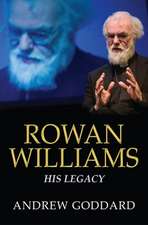 Rowan Williams – His legacyAndrew GoddardPreț: 76.86 lei
 -
 QuakersPeter Furtado-32%Preț: 47.33 lei69.12 lei
 -
 Episcopal Questions, Episcopal AnswersC K RobertsonPreț: 94.73 lei
 -
 Universe as RevelationJo FarrowPreț: 101.21 lei
 -
 Risk Is RightJohn PiperPreț: 41.26 lei
 -
 Saving Karl BarthD. Stephen LongPreț: 370.65 lei
 -
 Saints, Sacrilege and Sedition: Religion and Conflict in the Tudor ReformationsProfessor Eamon Duffy-37%Preț: 121.88 lei194.68 lei
 -
 A Short History of the ReformationDr Helen L. Parish-23%Preț: 106.60 lei138.33 lei
 -
 Quaker Way, The - a rediscoveryRex AmblerPreț: 90.79 lei
 -
 Our ChurchRoger Scruton-26%Preț: 62.46 lei84.65 lei
Cuprins
Preface
Acknowledgments
Abbreviations
Introduction: Ways into Theology
Part I: Christian Theology
1. Traditions of Christianity
An historical overview
The distribution of Christian traditions
Apostolic tradition and the traditions of Christendom
2. Traditions of Christian Theology
Ancient Greek theology
Ancient Jewish theology
Early and medieval Christian theology
Reformation and post-Reformation theology
Modern Christian theology
The last century of Christian theology
3. What Is Christian Theology?
Part II: The Subject of Christian Theology
4. The Natural Knowledge of God
5. Natural and Philosophical Theology
6. Atheisms
Critiques of God and religion
The issue of theodicy
Skepticism about the skeptics
The persistence of God in human experience
7. Special Revelation and Christian Faith
The hidden God
The gospel and Christian faith
Special revelation in Christian theology
Believing and knowing
The basic structures of faith-statement
8. Sources and Norms of Christian Theology
The issue of sources and norms
Sources and norms of Christian theology
9. Interpreting the Scriptures
Avoiding extremes
Theological hermeneutics
Excursus: Martin Luther, "Concerning the Study of Theology"
10. Jesus of Nazareth as the Center of Salvation History
A salvation-historical approach to the Bible
Sources for the historical Jesus
The quest for the historical Jesus
The actions and teaching of Jesus
Opposition to Jesus, the death of Jesus, and his resurrection
The re-creating Spirit and the new creation
11. Key Themes in Special Revelation
God the Creator
Christ the Redeemer
The Holy Spirit
Trinitarian theology
The church
Last things
The promise of the gospel
Part III: Christian Theology within the University
12. The Shape of Christian Theology as a University Discipline
Placing Christian theology within a university
Theological encyclopedia
Dividing theology
The aim of theology as a whole
13. The Sub-disciplines of Christian Theology
Fundamental theology
Historical theology
Practical theology
14. Christian Theology and the Humanities
Christ and culture
Christian theology within the humanities
15. Christian Theology and the Sciences
Modern encounters between theology and the sciences
Theology and the human sciences
The anthropic principle
Creationism and Intelligent Design
Rethinking the Christian doctrines of creation and sin
Barbour's four models
Christianity and the ecological crisis
Leading figures
Postscript
Glossary of Names
Glossary of Terms
Bibliography
Biblical Index
Index of Persons
Index of Subjects
Acknowledgments
Abbreviations
Introduction: Ways into Theology
Part I: Christian Theology
1. Traditions of Christianity
An historical overview
The distribution of Christian traditions
Apostolic tradition and the traditions of Christendom
2. Traditions of Christian Theology
Ancient Greek theology
Ancient Jewish theology
Early and medieval Christian theology
Reformation and post-Reformation theology
Modern Christian theology
The last century of Christian theology
3. What Is Christian Theology?
Part II: The Subject of Christian Theology
4. The Natural Knowledge of God
5. Natural and Philosophical Theology
6. Atheisms
Critiques of God and religion
The issue of theodicy
Skepticism about the skeptics
The persistence of God in human experience
7. Special Revelation and Christian Faith
The hidden God
The gospel and Christian faith
Special revelation in Christian theology
Believing and knowing
The basic structures of faith-statement
8. Sources and Norms of Christian Theology
The issue of sources and norms
Sources and norms of Christian theology
9. Interpreting the Scriptures
Avoiding extremes
Theological hermeneutics
Excursus: Martin Luther, "Concerning the Study of Theology"
10. Jesus of Nazareth as the Center of Salvation History
A salvation-historical approach to the Bible
Sources for the historical Jesus
The quest for the historical Jesus
The actions and teaching of Jesus
Opposition to Jesus, the death of Jesus, and his resurrection
The re-creating Spirit and the new creation
11. Key Themes in Special Revelation
God the Creator
Christ the Redeemer
The Holy Spirit
Trinitarian theology
The church
Last things
The promise of the gospel
Part III: Christian Theology within the University
12. The Shape of Christian Theology as a University Discipline
Placing Christian theology within a university
Theological encyclopedia
Dividing theology
The aim of theology as a whole
13. The Sub-disciplines of Christian Theology
Fundamental theology
Historical theology
Practical theology
14. Christian Theology and the Humanities
Christ and culture
Christian theology within the humanities
15. Christian Theology and the Sciences
Modern encounters between theology and the sciences
Theology and the human sciences
The anthropic principle
Creationism and Intelligent Design
Rethinking the Christian doctrines of creation and sin
Barbour's four models
Christianity and the ecological crisis
Leading figures
Postscript
Glossary of Names
Glossary of Terms
Bibliography
Biblical Index
Index of Persons
Index of Subjects
Recenzii
Matthew Becker offers college students a crucial book for their study of theology. Fundamental Theology not only provides much of the background material needed to orient students to the study of theology, introducing them to the diversity, practice, and history of Christian traditions, but also provides incisive accounts of basic questions in theology. Becker does this with care to the ecumenical, historical, and present day needs of theological work. Every student can find a place to start and continue the study of theology. In each chapter, Becker does more than summarize or arrange theological positions. He provides important insight while providing connections to the often forgotten theological past. This is the rare book that can play a role on the reference shelf when needed as well as the main text for discussion in an undergraduate theology classroom.
This work represents the state of the art in systematic theology; it is a major intellectual achievement that responds to all the stronger and many of the weaker challenges with a persuasive and careful method of argumentation, including both exegesis, historical theology and contemporary philosophy of religion. In a mode of traditional and progressive systematics, and always attentive to contemporary debates, Becker moves outside the established lines of conflict on many of the issues by proposing cutting-edge new readings of, and often forgotten interpretive options, to long-standing theological problems. In ecumenical terms, this promising account of Christian thought outshines the simpler but apparently quite tempting and somewhat successful approach of polarization and radical exclusion (religious or otherwise).
This work represents the state of the art in systematic theology; it is a major intellectual achievement that responds to all the stronger and many of the weaker challenges with a persuasive and careful method of argumentation, including both exegesis, historical theology and contemporary philosophy of religion. In a mode of traditional and progressive systematics, and always attentive to contemporary debates, Becker moves outside the established lines of conflict on many of the issues by proposing cutting-edge new readings of, and often forgotten interpretive options, to long-standing theological problems. In ecumenical terms, this promising account of Christian thought outshines the simpler but apparently quite tempting and somewhat successful approach of polarization and radical exclusion (religious or otherwise).