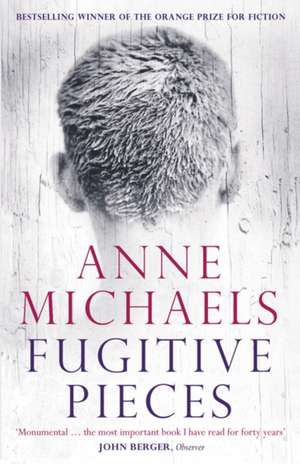
Fugitive Pieces: Winner of the Orange Prize for Fiction: Bloomsbury Paperbacks
Autor Anne Michaelsen Limba Engleză Paperback – 2 mar 2009
Suntem de părere că Fugitive Pieces transfigurează genul ficțiunii istorice despre Holocaust într-o meditație lirică despre memorie și regenerare. În loc să se rezume la cronica atrocităților, romanul de debut al lui Anne Michaels subversează așteptările prin limbajul său de o densitate poetică rară, unde fiecare frază pare sculptată cu precizia unui geolog. Povestea începe cu Jakob Beer, un copil de șapte ani care supraviețuiește masacrului familiei sale în Polonia, fiind salvat de Athos, un cercetător grec care îl ascunde și, ulterior, îl adoptă. Apreciem modul în care Michaels folosește metafora stratificării pământului pentru a descrie procesul prin care traumele sunt îngropate și, decenii mai târziu, excavate. Ritmul narativ amintește de Markus Zusak în The Book Thief prin perspectiva fragilității umane în fața istoriei, dar structura lui Michaels este mult mai introspectivă, fiind puternic ancorată în relația dintre limbaj și identitate. Subliniem că această operă nu este doar un roman despre pierdere, ci și despre modul în care iubirea și disciplina intelectuală pot restaura un spirit zdrobit. În contextul operei sale, această carte stabilește temele recurente ale autoarei — legătura dintre peisaj și destinul uman — pe care le vom regăsi explorate și în The Winter Vault. Este o lectură care cere răbdare, dar care oferă în schimb o experiență senzorială și filozofică profundă, transformând suferința în ceva aproape luminos prin forța cuvântului scris.
Din seria Bloomsbury Paperbacks
- 26%
 Preț: 53.14 lei
 - 27%
 Preț: 57.43 lei
 - 27%
 Preț: 56.98 lei
 - 26%
 Preț: 52.88 lei
 - 23%
 Preț: 62.39 lei
 - 26%
 Preț: 53.15 lei
 - 32%
 Preț: 53.45 lei
 - 26%
 Preț: 69.00 lei
 - 27%
 Preț: 67.79 lei
 - 31%
 Preț: 54.80 lei
 - 26%
 Preț: 54.06 lei
 - 31%
 Preț: 55.04 lei
 - 25%
 Preț: 53.74 lei
 - 25%
 Preț: 59.11 lei
 - 25%
 Preț: 92.45 lei
 - 26%
 Preț: 58.61 lei
 - 32%
 Preț: 63.00 lei
 - 22%
 Preț: 41.21 lei
 - 27%
 Preț: 68.42 lei
 - 25%
 Preț: 54.58 lei
 - 26%
 Preț: 53.66 lei
 - 25%
 Preț: 54.60 lei
 - 25%
 Preț: 71.22 lei
 - 15%
 Preț: 42.87 lei
 - 36%
 Preț: 59.93 lei
 - 25%
 Preț: 81.84 lei
 - 27%
 Preț: 57.81 lei
 - 25%
 Preț: 37.92 lei
 - 25%
 Preț: 54.03 lei
 - 36%
 Preț: 60.24 lei
 - 25%
 Preț: 71.51 lei
 - 24%
 Preț: 55.08 lei
 - 24%
 Preț: 55.99 lei
 - 43%
 Preț: 61.34 lei
 - 23%
 Preț: 51.32 lei
 - 21%
 Preț: 53.50 lei
Preț: 53.75 lei
Preț vechi: 72.32 lei
-26%
Carte disponibilă
Livrare economică 17 noiembrie-01 decembrie
Livrare express 31 octombrie-06 noiembrie pentru 39.28 lei
Specificații
ISBN-10: 0747599254
Pagini: 294
Dimensiuni: 128 x 196 x 24 mm
Greutate: 0.23 kg
Ediția:New edition.
Editura: Bloomsbury Publishing
Colecția Bloomsbury Paperbacks
Seriile Bloomsbury Paperbacks, Methuen Modern Classics
Locul publicării:London, United Kingdom
V-ar putea interesa
-
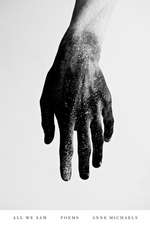 All We SawAnne MichaelsPreț: 107.24 lei
 -
 Shadow Over BabylonDavid Mason-36%Preț: 95.62 lei149.01 lei
 -
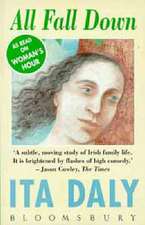 All Fall DownIta Daly-30%Preț: 71.10 lei100.89 lei
 -
 Under the VulcaniaMaureen Freely-29%Preț: 61.88 lei87.50 lei
 -
 Final PaymentsMary Gordon-28%Preț: 83.85 lei116.34 lei
 -
 The Art FairDavid Lipsky-27%Preț: 78.22 lei106.49 lei
 -
 How to Save Your Own LifeErica Jong-27%Preț: 74.89 lei103.05 lei
 -
 Sister JosephineJoanna Traynor-29%Preț: 71.37 lei101.05 lei
 -
 Paranoia in the LaunderetteBruce Robinson-31%Preț: 60.07 lei86.50 lei
 -
 -28%Preț: 75.49 lei104.67 lei
 -
 The Smiling School for CalvinistsBill Duncan-28%Preț: 76.52 lei105.68 lei
 -
 -59%Preț: 49.41 lei121.22 lei
 -
 The Winter VaultAnne Michaels-27%Preț: 77.96 lei107.09 lei
 -
 The Secret AlchemistCaroline a. ConnellPreț: 74.30 lei
 -
 Amazing GraceOdie HawkinsPreț: 73.19 lei
 -
 The Queen's NecklaceAlexandre Dumas pèrePreț: 253.78 lei
 -
 In the Days of My YouthAmelia Ann Blanford EdwardsPreț: 253.78 lei
 -
 Preț: 140.53 lei
 -
![The True George Washington [10th Ed.]](https://i3.books-express.ro/bt/9783842446588/the-true-george-washington-10th-ed.jpg) The True George Washington [10th Ed.]Paul Leicester FordPreț: 195.86 lei
The True George Washington [10th Ed.]Paul Leicester FordPreț: 195.86 lei -
 The Grip of DesireHector FrancePreț: 216.77 lei
 -
 North, South and Over the Sea: JapanMrs. Francis Blundell FrancisPreț: 178.44 lei
 -
 New Irish ComediesLady GregoryPreț: 152.43 lei
 -
 Grimm's Fairy StoriesJacob GrimmPreț: 148.82 lei
 -
 The High School Pitcher Dick & Co. on the Gridley DiamondHarrie Irving HancockPreț: 142.20 lei
 -
 The High School Boys' Fishing TripHarrie Irving HancockPreț: 142.20 lei
De ce să citești această carte
Recomandăm această carte cititorilor care caută o proză de o frumusețe dureroasă, unde limbajul este la fel de important ca intriga. Este o alegere ideală pentru cei care au apreciat profunzimea emoțională din The Book Thief și doresc să exploreze modul în care arta și știința pot ajuta la procesarea traumelor istorice. Veți câștiga o perspectivă unică asupra rezilienței umane, filtrată prin sensibilitatea unei poete de calibru mondial.
Despre autor
Anne Michaels este o figură centrală a literaturii canadiene contemporane, fiind numită în 2015 al cincilea „Poet Laureate” al orașului Toronto. Înainte de a atrage atenția internațională cu Fugitive Pieces, Michaels s-a impus ca o voce poetică de excepție prin volume precum The Weight of Oranges și Miner's Pond. Această sensibilitate lirică se regăsește în toată proza sa, inclusiv în romanul The Winter Vault. Opera sa, tradusă în peste patruzeci de limbi, a fost distinsă cu numeroase premii, printre care Lannan Literary Award și Giller Prize, confirmându-i statutul de maestru al explorării condiției umane prin prisma memoriei.
Descriere
'This is a novel to lose yourself in' The Times
'Essential reading' Spectator
'Extraordinarily magical' New York Times
'The most important book I have read for forty years' Observer
_________________
Athos and I stood together on deck and looked across the water at the bright city. From this distance no one would guess the turmoil that had torn apart Greece . The sea began to darken, and Athens, glowing in the distance, seemed to float on the horizon like a bright ship.
Jakob Beer is seven years old when he is rescued from the ruins of a buried village in Nazi-occupied Poland. He is the only one of his family to have survived the invasion. Adopted by his saviour, the Greek geologist Athos, Jakob must steel himself to excavate the horrors of his own history.
A novel of astounding beauty and wisdom, Fugitive Pieces is a profound meditation on the resilience of the human spirit and love's ability to restore even the most damaged of hearts.
Recenzii
This is a novel to lose yourself in; let the language pour over you, depositing its richness like waves lapping sand onto a beach. Michaels is a novelist of unusual and compelling power
Essential reading, both for its exceptional literary craft and for its exemplary and inspiring humanity
All except a handful of contemporary novels are dwarfed by its reach, its compassion, its wisdom ... A book to read many times
Extraordinarily magical
Lovely ... Musical and magical ... Put this book alongside The English Patient
This extraordinarily beautiful novel is a world. A book miraculously created because it mends the hopeless and dances with loss. Trust and read it
An utterly mesmerizing novel told from the core of a poet's soul focusing upon our very prosaic world. It does what all great novels do: illuminate through the lights of language and intelligence the heart of a hitherto hidden human landscape
Anne Michaels has created a world of stunning, heartbreaking clarity where even the unspeakable is captured in the light-web of her words. She is a superb poet, a breath-stopping storyteller
Searing the mind with stunning images while seducing with radiant prose, this brilliant first novel is a story of damaged lives and the indestructibility of the human spirit. The novel will make readers yearn to share it with others, to read sentences and entire passages out loud, to debate its message, to acknowledge its wisdom
Notă biografică
Extras
Since those minutes inside the wall, I've imagined the dean lose every sense except hearing. The burst door. Wood ripped from hinges, cracking like ice under the shouts. Noises never heard before, torn from my father's mouth. Then silence. My mother had been sewing a button on my shirt. She kept her buttons in a chipped saucer. I heard the rim of the saucer in circles on the floor. I heard the spray of buttons, little white teeth.
Blackness filled me, spread from the back of my head into my eyes as if my brain has been punctured. Spread from stomach to legs. I gulped and gulped, swallowing it whole. The wall filled with smoke. I struggled out and stared while the air caught fire.
I wanted to go to my parents, to touch them. But I couldn't, unless I stepped on their blood.
The soul leaves the body instantly, as if it can hardly wait to be free: my mother's face was not her own. My father was twisted with falling. Two shapes in the flesh-heap, his hands.
I ran and fell, ran and fell. Then the river: so cold it felt sharp.
The river was the same blackness that was inside me; only the thin membrane of my skin kept me floating.
From the other bank, I watched darkness turn to purple-orange light above the town; the color of flesh transforming to spirit. They flew up. The dead passed above me, weird haloes and arcs smothering the stars. The trees bent under their weight. I'd never been alone in the night forest, the wild bare branches were frozen snakes. The ground tilted and I didn't hold on. I strained to join them, to rise with them, to peel from the ground like paper ungluing at its edges. I know why we bury our dead and mark the place with stone, with the heaviest, most permanent thing we can think of: because the dead are everywhere but the ground. I stayed where I was. Clammy with cold, stuck to the ground. I begged: If I can't rise, then let me sink, sink into the forest floor like a seal into wax.
Then -- as if she'd pushed the hair from my forehead, as if I'd heard her voice--I knew suddenly my mother was inside me. Moving along sinews, under my skin the way she used to move through the house at night, putting things away, putting things in order. She was stopping to say goodbye and was caught, in such pain, wanting to rise, wanting to stay. It was my responsibility to release her, a sin to keep her from ascending. I tore at my clothes, my hair. She was gone. My own fast breath around my head.
I ran from the sound of the river into the woods, dark as the inside of a box. I ran until the first light wrung the last grayness out of the stars, dripping dirty light between the trees. I knew what to do. I took a stick and dug. I planted myself like a turnip and hid my face with leaves.
My head between the branches, bristling points like my father's beard. I was safely buried, my wet clothes cold as armor. Panting like a dog. My arms tight up against my chest, my neck stretched back, tears crawling like insects into my ears. I had no choice but to look straight up. The dawn sky was milky with new spirits. Soon I couldn't avoid the absurdity of daylight even by closing my eyes. It poked down, pinned me like the broken branches, like my father's beard.
Then I felt the worst shame of my life: I was pierced with hunger. And suddenly I realized, my throat aching without sounds -- Bella.