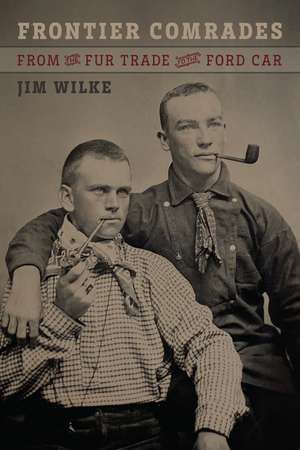
Frontier Comrades: From the Fur Trade to the Ford Car
Autor Jim Wilkeen Limba Engleză Paperback – aug 2025
Jim Wilke provides the first comprehensive accounts of figures such as transgender stage driver Charley Parkhurst; transgender Seventh Cavalry laundress Mrs. Noonan (also known as Mrs. Nash); and the extraordinary Clara Dietrich and Ora Chatfield, known by the contemporary press as “lady lovers.” Frontier Comrades also offers glimpses of individual personalities: the cool and detached grandeur of William Stewart as he traversed the West during the fur trade era; the stubborn determination of Charley Parkhurst after California’s gold rush; the careful, giddy energy of Mrs. Noonan; the hidden passions of Tombstone sheriff William Breakenridge for a Vanderbilt and a local rustler; the desperate bravery of Dietrich and Chatfield as they sought to elope from Victorian Aspen; and the masculine, matter-of-fact comradeship of loggers and miners as they worked the distant Sierras.
The maelstrom of opportunities and conflicts that made up the West affected lesbian, gay, bisexual, and transgender westerners in intrinsically personal ways. The accounts in Frontier Comrades provide an intimate yet expansive view of the American West.
Preț: 145.02 lei
Nou
Puncte Express: 218
Preț estimativ în valută:
25.66€ • 30.09$ • 22.54£
25.66€ • 30.09$ • 22.54£
Carte disponibilă
Livrare economică 21 ianuarie-04 februarie 26
Livrare express 06-10 ianuarie 26 pentru 48.45 lei
Preluare comenzi: 021 569.72.76
Specificații
ISBN-13: 9781496242228
ISBN-10: 149624222X
Pagini: 302
Ilustrații: 7 photographs, index
Dimensiuni: 152 x 229 x 19 mm
Greutate: 0.4 kg
Editura: BISON BOOKS
Colecția Bison Books
Locul publicării:United States
ISBN-10: 149624222X
Pagini: 302
Ilustrații: 7 photographs, index
Dimensiuni: 152 x 229 x 19 mm
Greutate: 0.4 kg
Editura: BISON BOOKS
Colecția Bison Books
Locul publicării:United States
Notă biografică
Jim Wilke is a former curator of technology at the Autry Museum of the American West and is a consulting historian on railroad and Western history for numerous organizations. He is the coauthor of Stagecoach! The Romantic Western Vehicle.
Extras
1
William Stewart and the Great West
For tens of thousands of years, herds of bison dominated the North American
plains. They are among the largest animals on the continent and
once numbered in the tens of millions, roaming the landscape in gigantic
herds up to several miles wide, a constant parade of rutting, mating, and
searching for fresh grass. Migrating herds moved along familiar paths
worn into the ground by generations of animals that preceded them,
and this in turn dictated the movements of people who hunted them.
At that time, all hunters pursued the bison on foot, and skilled hunters
earned respect among their peers while ensuring the spiritual balance
of life through the act of the hunt. The calendar of their lives and the
lives of their families followed these seasonal transformations of meat,
sinew, bones, and hide into food, shelter, tools, and clothing, in a pattern
as regular as the movements of sun and moon. This ancient pace of
life had quickened dramatically by the eighteenth century, when horses
brought into North America by the Spanish and French offered a new,
fast, and nimble platform for tribes and hunters, enabling them to hunt
more efficiently. Mastery of the horse meant mastery of the plains, thereby
increasing the scale of the hunt along with the wealth and status of
tribes, as well as the measure of a hunter’s personal capacity, and all of
this within the predetermined spiritual path of their world.
For sporting Europeans such as William Stewart, the North American
buffalo hunt was at once a primal and compelling spectacle. It possessed
a sphere of influence, he thought, akin to a ritual or spiritual presence,
distinct from the rest of the world, especially from his native Scotland.
“There is a religion in hunting,” he later wrote, “and like the fire worshippers,
or any other culte [sic], it should form its own government
and its own laws; nothing gives cause to strife like disputes in hunting
grounds, death ensues, and the race of man having fought for their prey,
rendering their chase, that of the hunter being hunted.” This sense of
intense power appears to have appealed to him immensely. He portrayed
it in his later semiautobiographical novels as a rite of passage within a
kind of mysterious and powerful drama, in effect a late Romantic-era
measure of capacity and strength, established and enacted upon a distant
and heroic stage, unsullied by the mundane rituals and restraints
of daily life. “The dust was now suffocating,” he wrote of hunting while
trapped on his horse within a stampeding herd, and “to choose a mark
would be impossible, or to distinguish sufficiently to follow up the
choice—the thunder of so many thousand feet over the hollow sounding
prairie—the ominous look, and threatening approach of those on
whom I pressed, the bewilderment of being carried along on the cloud
of monsters and a whirlwind of dust, on an animal, though of whatever
merit of speed and endurance, was of a height which added dread of
being overwhelmed to the other perils of this extraordinary chase.”
He pursued this experience for several years in the 1830s, annually
traveling into the western North American plains and mountains to
seek out and deliberately engage its contest of endurance, testing and
proving himself in the process.
The hunt brought something else as well—a pragmatic way of wilderness
life that allowed him to foster relationships with men, the most important
of these forged in hunting. Doing so was possible on the frontier of
the American West but dangerously illegal in Stewart’s Scotland and Great
Britain overall. The American West brought Stewart some of the best years
of his life, and it also brought a challenge in his ultimately unsuccessful
attempt to interweave the freedoms of the West with the responsibilities
of Great Britain, a challenge he was never able to fully reconcile.
In the early nineteenth century, Europeans such as Stewart looked to
buffalo hunting in North America as a distant, dangerous, and visceral
sport whose vitality had not yet been diluted through the management
of gamekeepers and private preserves. Hunting in Europe had evolved
into a formalized activity, in effect a ritual demonstration of the hunting
and martial prowess that once made up the nascent aristocracies of
ancient Europe; now relegated to demonstrations of tradition and taste,
the hunt on European soil was almost completely free of danger. For a
Great Britain exhausted from the decadence of George IV and wary of
the Industrial Revolution, stories of buffalo and the American Indians
who hunted them paralleled and sometimes merged with romantic tales
of ancient European chivalry, pretending to the ideal of an age when
aristocracy was earned and men were men, not voluptuaries propped
up in the saddle while someone else shot their trophy for them. Stewart
transferred this impression of vitality to the American plains, creating
in effect a vast stage setting for an imaginary drama that resurrected the
origins of prowess, manhood, and strength, enacted in blood on a vast
and completely real scale.
Stewart’s own path to the West drew as much from his willful personality
as from his self-perception,
one that was founded and shaped in accordance
with and defiance of the aristocratic social norms of Great Britain.
He was born in 1795 to a member of the minor nobility, Sir George
Stewart, fifth Baronet of Murthly and seventeenth Lord of Grandtully, and
was the second son of six children. The Stewarts had occupied Murthly
since 1615, gradually building it up into the comfortable and unassuming
estate that Stewart had grown into, but by virtue of an ancient tradition
of primogeniture, the estate’s lands would automatically pass to the oldest
son, John, while the heir’s younger brothers were expected to take up
positions in the clergy or, in Stewart’s case, the military. In 1813 Stewart’s
father purchased an entry rank for him within the Sixth Dragoon Guards
and then, at Stewart’s request, a transfer to the Fifteenth King’s Hussars as
a lieutenant, which required further expenditure and sent him to Spain,
where he fought Napoleon’s army during the Peninsular Campaign. A
year later he was back in action, as a lieutenant during Napoleon’s defeat
by the Duke of Wellington during the Battle of Waterloo in June 1815.
He prospered within the military structure and considered its training
in duty, endurance, persistence, and obedience to be essential for the
qualities of manhood, and he employed its training in marksmanship
and horsemanship throughout his hunting trips.
William Stewart and the Great West
For tens of thousands of years, herds of bison dominated the North American
plains. They are among the largest animals on the continent and
once numbered in the tens of millions, roaming the landscape in gigantic
herds up to several miles wide, a constant parade of rutting, mating, and
searching for fresh grass. Migrating herds moved along familiar paths
worn into the ground by generations of animals that preceded them,
and this in turn dictated the movements of people who hunted them.
At that time, all hunters pursued the bison on foot, and skilled hunters
earned respect among their peers while ensuring the spiritual balance
of life through the act of the hunt. The calendar of their lives and the
lives of their families followed these seasonal transformations of meat,
sinew, bones, and hide into food, shelter, tools, and clothing, in a pattern
as regular as the movements of sun and moon. This ancient pace of
life had quickened dramatically by the eighteenth century, when horses
brought into North America by the Spanish and French offered a new,
fast, and nimble platform for tribes and hunters, enabling them to hunt
more efficiently. Mastery of the horse meant mastery of the plains, thereby
increasing the scale of the hunt along with the wealth and status of
tribes, as well as the measure of a hunter’s personal capacity, and all of
this within the predetermined spiritual path of their world.
For sporting Europeans such as William Stewart, the North American
buffalo hunt was at once a primal and compelling spectacle. It possessed
a sphere of influence, he thought, akin to a ritual or spiritual presence,
distinct from the rest of the world, especially from his native Scotland.
“There is a religion in hunting,” he later wrote, “and like the fire worshippers,
or any other culte [sic], it should form its own government
and its own laws; nothing gives cause to strife like disputes in hunting
grounds, death ensues, and the race of man having fought for their prey,
rendering their chase, that of the hunter being hunted.” This sense of
intense power appears to have appealed to him immensely. He portrayed
it in his later semiautobiographical novels as a rite of passage within a
kind of mysterious and powerful drama, in effect a late Romantic-era
measure of capacity and strength, established and enacted upon a distant
and heroic stage, unsullied by the mundane rituals and restraints
of daily life. “The dust was now suffocating,” he wrote of hunting while
trapped on his horse within a stampeding herd, and “to choose a mark
would be impossible, or to distinguish sufficiently to follow up the
choice—the thunder of so many thousand feet over the hollow sounding
prairie—the ominous look, and threatening approach of those on
whom I pressed, the bewilderment of being carried along on the cloud
of monsters and a whirlwind of dust, on an animal, though of whatever
merit of speed and endurance, was of a height which added dread of
being overwhelmed to the other perils of this extraordinary chase.”
He pursued this experience for several years in the 1830s, annually
traveling into the western North American plains and mountains to
seek out and deliberately engage its contest of endurance, testing and
proving himself in the process.
The hunt brought something else as well—a pragmatic way of wilderness
life that allowed him to foster relationships with men, the most important
of these forged in hunting. Doing so was possible on the frontier of
the American West but dangerously illegal in Stewart’s Scotland and Great
Britain overall. The American West brought Stewart some of the best years
of his life, and it also brought a challenge in his ultimately unsuccessful
attempt to interweave the freedoms of the West with the responsibilities
of Great Britain, a challenge he was never able to fully reconcile.
In the early nineteenth century, Europeans such as Stewart looked to
buffalo hunting in North America as a distant, dangerous, and visceral
sport whose vitality had not yet been diluted through the management
of gamekeepers and private preserves. Hunting in Europe had evolved
into a formalized activity, in effect a ritual demonstration of the hunting
and martial prowess that once made up the nascent aristocracies of
ancient Europe; now relegated to demonstrations of tradition and taste,
the hunt on European soil was almost completely free of danger. For a
Great Britain exhausted from the decadence of George IV and wary of
the Industrial Revolution, stories of buffalo and the American Indians
who hunted them paralleled and sometimes merged with romantic tales
of ancient European chivalry, pretending to the ideal of an age when
aristocracy was earned and men were men, not voluptuaries propped
up in the saddle while someone else shot their trophy for them. Stewart
transferred this impression of vitality to the American plains, creating
in effect a vast stage setting for an imaginary drama that resurrected the
origins of prowess, manhood, and strength, enacted in blood on a vast
and completely real scale.
Stewart’s own path to the West drew as much from his willful personality
as from his self-perception,
one that was founded and shaped in accordance
with and defiance of the aristocratic social norms of Great Britain.
He was born in 1795 to a member of the minor nobility, Sir George
Stewart, fifth Baronet of Murthly and seventeenth Lord of Grandtully, and
was the second son of six children. The Stewarts had occupied Murthly
since 1615, gradually building it up into the comfortable and unassuming
estate that Stewart had grown into, but by virtue of an ancient tradition
of primogeniture, the estate’s lands would automatically pass to the oldest
son, John, while the heir’s younger brothers were expected to take up
positions in the clergy or, in Stewart’s case, the military. In 1813 Stewart’s
father purchased an entry rank for him within the Sixth Dragoon Guards
and then, at Stewart’s request, a transfer to the Fifteenth King’s Hussars as
a lieutenant, which required further expenditure and sent him to Spain,
where he fought Napoleon’s army during the Peninsular Campaign. A
year later he was back in action, as a lieutenant during Napoleon’s defeat
by the Duke of Wellington during the Battle of Waterloo in June 1815.
He prospered within the military structure and considered its training
in duty, endurance, persistence, and obedience to be essential for the
qualities of manhood, and he employed its training in marksmanship
and horsemanship throughout his hunting trips.
Cuprins
List of Illustrations
Acknowledgments
Introduction
1. William Stewart and the Great West
2. Charley Parkhurst and the Gold Rush Scene
3. Mrs. Noonan and the Seventh Cavalry
4. William Breakenridge and the Human Borderlands
5. The “Lady Lovers” of Victorian Aspen
6. An Anonymous Logger in the Industrial Frontier
Afterword
Notes
Bibliography
Index
Acknowledgments
Introduction
1. William Stewart and the Great West
2. Charley Parkhurst and the Gold Rush Scene
3. Mrs. Noonan and the Seventh Cavalry
4. William Breakenridge and the Human Borderlands
5. The “Lady Lovers” of Victorian Aspen
6. An Anonymous Logger in the Industrial Frontier
Afterword
Notes
Bibliography
Index
Recenzii
"An illuminating survey of the past's hidden queer lives."—Publishers Weekly
“Frontier Comrades places the life stories of six LGBTQ individuals squarely at the center of the history of the American frontier, bringing to life the times and places where these different individuals found opportunities in the West to live on their own terms.”—Carolyn Brucken, senior curator at the Autry Museum of the American West
“Jim Wilke’s vividly drawn histories evoke sexual and cultural borderlands. . . . Readers will encounter here a West that is both familiar from countless frontier narratives and yet unfamiliar in its well-documented accounts of LGBTQ stories. Together these portraits reinstate complexity and humanity to storied times and places—gay, lesbian, and transgender lives that were there all along.”—Josh Garrett-Davis, H. Russell Smith Foundation Curator of Western American History at the Huntington
“With careful storytelling Jim Wilke’s Frontier Comrades follows the complex lives of gay, queer, and transgender individuals who inhabited the borderlands of the U.S. West. With engaging prose this work helps paint a much more detailed portrait of desire and identity in American history than previously seen.”—Rebecca Scofield, author of Outriders: Rodeo at the Fringes of the American West
Descriere
Frontier Comrades examines LGBTQ+ experience in the American West through six accounts of lesbian, gay, bisexual, and transgender lives, each in a different part of the West, moving chronologically from the fur trade era to the dawn of the automobile age.