
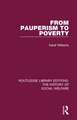
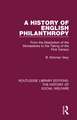
From Pauperism to Poverty: Routledge Library Editions: The History of Social Welfare
Autor Karel Williamsen Limba Engleză Hardback – 8 sep 2016
This book will be of interest to those studying the history of social welfare and poverty.


Preț: 1211.14 lei
Preț vechi: 1477.00 lei
-18%
Puncte Express: 1817
Carte tipărită la comandă
Livrare economică 11-25 iunie
Specificații
ISBN-13: 9781138698574
ISBN-10: 1138698571
Pagini: 398
Dimensiuni: 138 x 216 x 27 mm
Greutate: 0.74 kg
Ediția:1
Editura: Taylor & Francis
Colecția Routledge
Seria Routledge Library Editions: The History of Social Welfare
Locul publicării:Oxford, United Kingdom
ISBN-10: 1138698571
Pagini: 398
Dimensiuni: 138 x 216 x 27 mm
Greutate: 0.74 kg
Ediția:1
Editura: Taylor & Francis
Colecția Routledge
Seria Routledge Library Editions: The History of Social Welfare
Locul publicării:Oxford, United Kingdom
V-ar putea interesa
-
 The Devil That Danced on the WaterAminatta FornaPreț: 89.51 lei
 -
 Country Of My SkullAntjie Krog-20%Preț: 72.17 lei89.73 lei
 -
 The Multiculturalism of FearJacob T. Levy-34%Preț: 676.55 lei1020.89 lei
 -
 -14%Preț: 350.26 lei409.06 lei
 -
 -14%Preț: 646.46 lei751.70 lei
 -
 Multiculturalism in AsiaWill Kymlicka-11%Preț: 402.06 lei451.76 lei
 -
 -15%Preț: 377.76 lei444.73 lei
 -
 -10%Preț: 357.56 lei395.54 lei
 -
 West of Kabul, East of New YorkTamim AnsaryPreț: 119.50 lei
 -
 Asian American DreamsHelen ZiaPreț: 106.40 lei
 -
 The Other Side of the RiverAlex KotlowitzPreț: 109.71 lei
 -
 -15%Preț: 402.91 lei474.01 lei
 -
 There Ain't No Black in the Union JackPaul GilroyPreț: 161.31 lei
 -
 Preț: 440.45 lei
 -
 -15%Preț: 441.15 lei518.99 lei
 -
 Keeping Faith: Philosophy and Race in AmericaCornel WestPreț: 199.44 lei
 -
 Preț: 106.25 lei
 -
 Democracy and Human Rights in Multicultural SocietiesPaul de Guchteneire-15%Preț: 501.10 lei589.52 lei
Cuprins
Acknowledgements; Introduction; Part One: The Poor Law; 1. The poor law before 1834: Appendix – The 1834 Report 2. The poor law after 1834 3. The poor law 1870-1914 4. Statistical appendix: Pauperism in England and Wales c. 1800-1939; Part Two: Social Investigations; 5. Mayhew 6. Engels: Appendix – The Condition has no other 7. Booth: Appendix – Booth and pauperism 8. Rowntree; Bibliography; Index
Descriere
First published in 1981, From Pauperism to Poverty consists of seven essays, three of which focus on the English poor law between 1800 and 1914 and four of which examine texts of social investigation by Mayhew, Engels, Booth and Rowntree. Rather than making a specialist contribution to the history of social thought and policy, the essays raise general questions about current ways of writing history and alternative analyses of specific texts or institutions are developed. In doing so, the previous histories of the relief of pauperism and the discovery of poverty are revised at many points. Most notably, it is demonstrated for the first time that relief to unemployed men was virtually abolished after 1850.
This book will be of interest to those studying the history of social welfare and poverty.
This book will be of interest to those studying the history of social welfare and poverty.