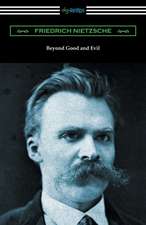
Cărți de Friedrich Nietzsche

Friedrich Wilhelm Nietzsche (; German: [ˈfʁiːdʁɪç ˈvɪlhɛlm ˈniːtʃə] (listen) or [ˈniːtsʃə]; 15 October 1844 – 25 August 1900) was a German philosopher, cultural critic and philologist whose work has exerted a profound influence on modern intellectual history. He began his career as a classical philologist before turning to philosophy. He became the youngest person ever to hold the Chair of Classical Philology at the University of Basel in 1869 at the age of 24. Nietzsche resigned in 1879 due to health problems that plagued him most of his life; he completed much of his core writing in the following decade. In 1889, at age 45, he suffered a collapse and afterward a complete loss of his mental faculties. He lived his remaining years in the care of his mother until her death in 1897 and then with his sister Elisabeth Förster-Nietzsche. Nietzsche died in 1900.
Nietzsche's writing spans philosophical polemics, poetry, cultural criticism, and fiction while displaying a fondness for aphorism and irony. Prominent elements of his philosophy include his radical critique of truth in favor of perspectivism; a genealogical critique of religion and Christian morality and a related theory of master–slave morality; the aesthetic affirmation of life in response to both the "death of God" and the profound crisis of nihilism; the notion of Apollonian and Dionysian forces; and a characterization of the human subject as the expression of competing wills, collectively understood as the will to power. He also developed influential concepts such as the Übermensch and his doctrine of eternal return. In his later work, he became increasingly preoccupied with the creative powers of the individual to overcome cultural and moral mores in pursuit of new values and aesthetic health. His body of work touched a wide range of topics, including art, philology, history, music, religion, tragedy, culture, and science, and drew inspiration from figures such as Socrates, Zoroaster, Arthur Schopenhauer, Ralph Waldo Emerson, Richard Wagner and Johann Wolfgang von Goethe.
After his death, his sister Elisabeth became the curator and editor of Nietzsche's manuscripts. She edited his unpublished writings to fit her German ultranationalist ideology while often contradicting or obfuscating Nietzsche's stated opinions, which were explicitly opposed to antisemitism and nationalism. Through her published editions, Nietzsche's work became associated with fascism and Nazism; 20th-century scholars such as Walter Kaufmann, R.J. Hollingdale, and Georges Bataille defended Nietzsche against this interpretation, and corrected editions of his writings were soon made available. Nietzsche's thought enjoyed renewed popularity in the 1960s and his ideas have since had a profound impact on 20th and early-21st century thinkers across philosophy—especially in schools of continental philosophy such as existentialism, postmodernism and post-structuralism—as well as art, literature, poetry, politics, and popular culture.
Why I am So Wise
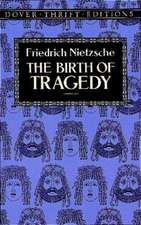
The Birth of Tragedy
The Birth of Tragedy and The Case of Wagner
Unpublished Fragments from the Period of Dawn (Winter 1879/80-Spring 1881)
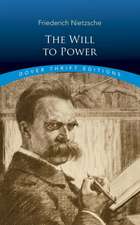
The Will to Power
On the Genealogy of Morality
Selected Letters of Friedrich Nietzsche
The Gay Science
On the Genealogy of Morals: A Polemic. By way of clarification and supplement to my last book Beyond Good and Evil
Beyond Good & Evil
Basic Writings
A Nietzsche Reader
Twilight of the Idols with The Antichrist and Ecce Homo
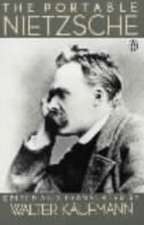
The Portable Nietzsche
Twilight of Idols and Anti-Christ
The Pre-Platonic Philosophers
Aphorisms on Love and Hate
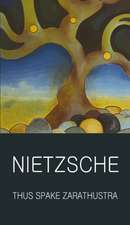
Thus Spoke Zarathustra (Signature Editions)
The Birth of Tragedy / Unpublished Basel Writings (Winter 1869/70-Fall 1873)
The Joyous Science
Why I Am so Clever
Human, All Too Human & Beyond Good and Evil
Basic Writings of Nietzsche
On the Genealogy of Morals and Ecce Homo
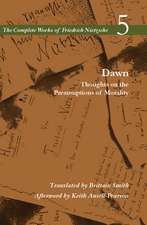
Dawn: Thoughts on the Presumptions of Morality, Volume 5
Man Alone with Himself
Thus Spake Zarathustra
The Greek Music Drama
On the Advantage and Disadvantage of History for Life
Unpublished Fragments (Summer 1886-Fall 1887)
The Genealogy of Morals
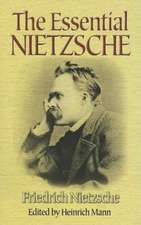
The Essential Nietzsche
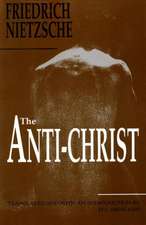
The Anti-Christ
The Birth of Tragedy & The Genealogy of Morals
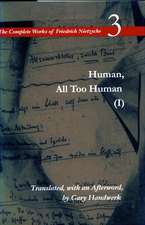
Human, All Too Human

Meine Schwester und ich

Human, All Too Human by Friedrich Nietzsche (Annotated with Author Bio and Published by Polis & Praxis Classics)
Human, All Too Human I / A Book For Free Spirits: A Book for Free Spirits, Volume 3
Ecce homo
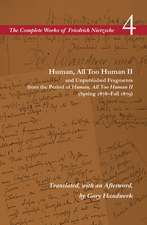
Human, All Too Human II and Unpublished Fragments from the Period of Human, All Too Human II (Spring 1878–Fall 1879): Volume 4
The Untimely Meditations (Thoughts Out of Season Parts I and II)
Unfashionable Observations: Volume 2
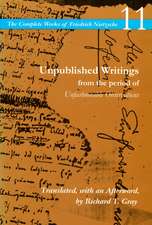
Unpublished Writings from the Period of Unfashionable Observations – Volume 11
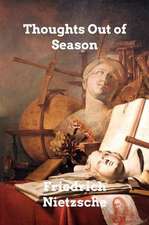
Thoughts Out of Season
The Birth of Tragedy / Unpublished Basel Writings (Winter 1869/70-Fall 1873)
Beyond Good and Evil / On the Genealogy of Morality – Volume 8
God Is Dead. God Remains Dead. And We Have Killed Him.
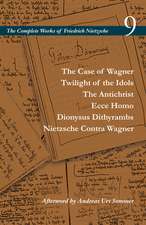
The Case of Wagner / Twilight of the Idols / The Antichrist / Ecce Homo / Dionysus Dithyrambs / Nietzsche Contra Wagner
Unpublished Fragments from the Period of Human, All Too Human I (Winter 1874/75-Winter 1877/78)
The Joyful Science / Idylls from Messina / Unpublished Fragments from the Period of The Joyful Science (Spring 1881-Summer 1882): Volume 6
Anti-Education
Thus Spoke Zarathustra
Unpublished Fragments from the Period of Thus Spoke Zarathustra: Spring 1884-Winter 1884/85: Volume 15
The Will to Power by Friedrich Nietzsche
Will to Power an Attempted Transvaluation of All Values
Beyond Good and Evil
The Peacock and the Buffalo: The Poetry of Nietzsche
We Philologists Vol 8 (of 18)
The Antichrist
Beyond Good and Evil, by Friedrich Nietzsche
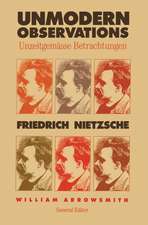
Unmodern Observations (Unzeitgemässe Betrachtungen)
Hammer of the Gods: Apocalyptic Texts for the Criminally Insane
On Truth and Untruth: Selected Writings
Beyond Good an Evil
Thus Spoke Zarathustra - Classics
The Greek Worship of the Gods

Nietzsche on Christianity as a Life-Denying Force

Nihilism and Nietzsche

The Complete Works of Nietzsche

Nietzsche's Notebook of 1887-1888

The Problem of Evil as Described by Nietzsche

XBEYOND GOOD &_CLASSICS PB
On the Future of Our Educational Institutions: West Indian Fables
Human, All Too Human Part II
Human, All Too Human
Beyond Good and Evil (Squashed Edition)
Thoughts out of Season Part One
Writings of Nietzsche
Satanic Classics
Beyond Good and Evil (Hardcover)
On the Genealogy of Morality
The Antichrist
The Case of Wagner, Nietzsche Contra Wagner, Selected Aphorisms, and The Antichrist
The Joyful Wisdom (Hardcover)
The Joyful Wisdom
The Untimely Meditations (Thoughts Out of Season -The Four Essays, Complete) (Hardcover)
The Untimely Meditations (Thoughts Out of Season -The Four Essays, Complete)
The Will to Power, Volume I
The Will to Power, Volume II
Beyond Good and Evil (Translated by Helen Zimmern with Introductions by Willard Huntington Wright and Thomas Common)
Thus Spoke Zarathustra (Translated by Thomas Common with Introductions by Willard Huntington Wright and Elizabeth Forster-Nietzsche and Notes by Anthony M. Ludovici)
The Genealogy of Morals (Translated by Horace B. Samuel with an Introduction by Willard Huntington Wright)
Twilight of the Idols and The Anti-Christ (Translated by Thomas Common with Introductions by Willard Huntington Wright)
- 1
- 2