Cărți de Friedrich Nietzsche

Friedrich Wilhelm Nietzsche (; German: [ˈfʁiːdʁɪç ˈvɪlhɛlm ˈniːtʃə] (listen) or [ˈniːtsʃə]; 15 October 1844 – 25 August 1900) was a German philosopher, cultural critic and philologist whose work has exerted a profound influence on modern intellectual history. He began his career as a classical philologist before turning to philosophy. He became the youngest person ever to hold the Chair of Classical Philology at the University of Basel in 1869 at the age of 24. Nietzsche resigned in 1879 due to health problems that plagued him most of his life; he completed much of his core writing in the following decade. In 1889, at age 45, he suffered a collapse and afterward a complete loss of his mental faculties. He lived his remaining years in the care of his mother until her death in 1897 and then with his sister Elisabeth Förster-Nietzsche. Nietzsche died in 1900.
Nietzsche's writing spans philosophical polemics, poetry, cultural criticism, and fiction while displaying a fondness for aphorism and irony. Prominent elements of his philosophy include his radical critique of truth in favor of perspectivism; a genealogical critique of religion and Christian morality and a related theory of master–slave morality; the aesthetic affirmation of life in response to both the "death of God" and the profound crisis of nihilism; the notion of Apollonian and Dionysian forces; and a characterization of the human subject as the expression of competing wills, collectively understood as the will to power. He also developed influential concepts such as the Übermensch and his doctrine of eternal return. In his later work, he became increasingly preoccupied with the creative powers of the individual to overcome cultural and moral mores in pursuit of new values and aesthetic health. His body of work touched a wide range of topics, including art, philology, history, music, religion, tragedy, culture, and science, and drew inspiration from figures such as Socrates, Zoroaster, Arthur Schopenhauer, Ralph Waldo Emerson, Richard Wagner and Johann Wolfgang von Goethe.
After his death, his sister Elisabeth became the curator and editor of Nietzsche's manuscripts. She edited his unpublished writings to fit her German ultranationalist ideology while often contradicting or obfuscating Nietzsche's stated opinions, which were explicitly opposed to antisemitism and nationalism. Through her published editions, Nietzsche's work became associated with fascism and Nazism; 20th-century scholars such as Walter Kaufmann, R.J. Hollingdale, and Georges Bataille defended Nietzsche against this interpretation, and corrected editions of his writings were soon made available. Nietzsche's thought enjoyed renewed popularity in the 1960s and his ideas have since had a profound impact on 20th and early-21st century thinkers across philosophy—especially in schools of continental philosophy such as existentialism, postmodernism and post-structuralism—as well as art, literature, poetry, politics, and popular culture.
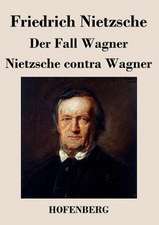
Friedrich Nietzsche: Der Fall Wagner. Vollständige Neuausgabe
The Genealogy of Morals
Beyond Good And Evil
Thus Spoke Zarathustra
Thus Spake Zarathustra
The Birth of Tragedy / Unpublished Basel Writings (Winter 1869/70-Fall 1873)
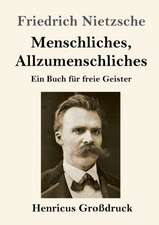
Menschliches, Allzumenschliches
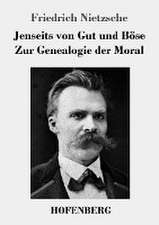
Jenseits von Gut und Böse
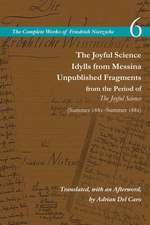
Die fröhliche Wissenschaft
Zur Genealogie der Moral
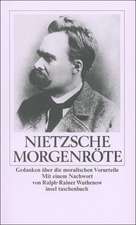
Morgenröte
Ecce homo
Twilight of the Idols
Gott ist tot
Der Wanderer Und Sein Schatten
On the Genealogy of Morality
Basic Writings of Nietzsche
Unpublished Fragments (Summer 1886–Fall 1887) – Volume 17
The Birth of Tragedy
Nietzsche: The Gay Science: With a Prelude in German Rhymes and an Appendix of Songs
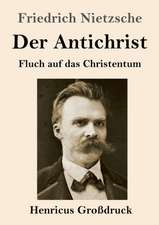
Der Antichrist
Friedrich Nietzsche - Gesammelte Werke
Die Geburt der Tragödie
Unzeitgemäße Betrachtungen
Sämtliche Gedichte
Ecce homo. Wie man wird, was man ist
Jenseits von Gut und Böse. Zur Genealogie der Moral. (1886 - 1887): aus: Werke, Abt. 6, Bd. 2

The Antichrist
Morgenröthe. Nachgelassene Fragmente Anfang 1880 - Frühjahr 1881
Der Fall Wagner. Götzen-Dämmerung. - Nachgelassene Schriften (August 1888 - Anfang Januar 1889): Der Antichrist. Ecce homo. Dionysos-Dithyramben. - Nietzsche contra Wagner
Richard Wagner in Bayreuth (Unzeitgemäße Betrachtungen IV). Nachgelassene Fragmente Anfang 1875 - Frühling 1876
Menschliches, Allzumenschliches. Band 1, Nachgelassene Fragmente, 1876 bis Winter 1877-1878
Menschliches, Allzumenschliches, Band 2: Nachgelassene Fragmente, Frühling 1878 bis November 1879

Friedrich Nietzsche: Po tu storonu dobra i zla. Chelovecheskoe, slishkom chelovecheskoe. Tak govoril Zaratustra
Friedrich Nietzsche - Philosophie & Prosa
Friedrich Nietzsche, Der tanzende Stern. Weisheiten und Erkenntnisse
The Case of Wagner / Twilight of the Idols / The – Volume 9
Friedrich Nietzsche, Werke in vier Bänden (Menschliches, Allzu Menschliches - Also sprach Zarathustra - Jenseits von Gut und Böse - Götzendämmerung/Der Antichrist/Ecce Homo) (4 Bände im Schuber)
Mit einer Bosheit beginne ich jeden Tag
Götzendämmerung. Wagner-Schriften. Der Antichrist. Ecce Homo. Gedichte
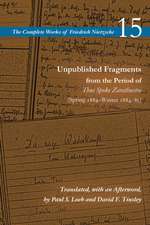
Unpublished Fragments from the Period of Thus Spoke Zarathustra: Spring 1884-Winter 1884/85: Volume 15

Ecce Homo
The Peacock and the Buffalo: The Poetry of Nietzsche
The Will to Power - An Attempted Transvaluation of All Values - Vol II Books III and IV: Butterflies Vol I
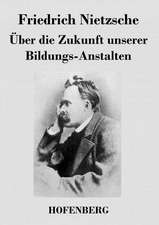
Über die Zukunft unserer Bildungs-Anstalten
Nichts ist wahr, alles ist erlaubt
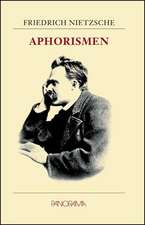
Aphorismen
Der tanzende Stern
The Greek Worship of the Gods
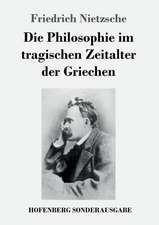
Die Philosophie im tragischen Zeitalter der Griechen
Nachgelassene Fragmente Frühjahr 1884 - Herbst 1885
Writings of Nietzsche
Satanic Classics
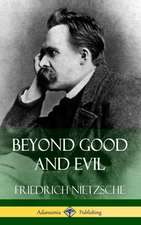
Beyond Good and Evil (Hardcover)
On the Genealogy of Morality
The Antichrist
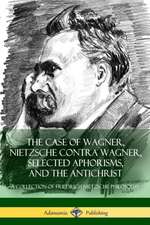
The Case of Wagner, Nietzsche Contra Wagner, Selected Aphorisms, and The Antichrist
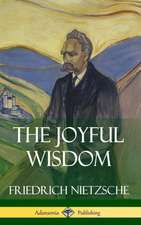
The Joyful Wisdom (Hardcover)
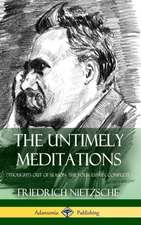
The Untimely Meditations (Thoughts Out of Season -The Four Essays, Complete) (Hardcover)
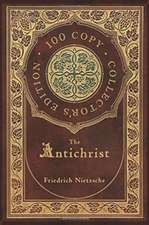
The Antichrist (100 Copy Collector's Edition)
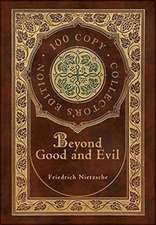
Beyond Good and Evil (100 Copy Collector's Edition)
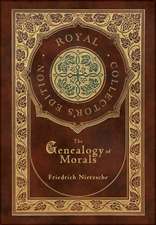
The Genealogy of Morals (Royal Collector's Edition) (Case Laminate Hardcover with Jacket)
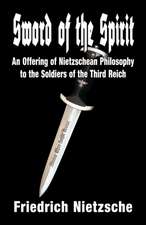
Sword of the Spirit
Nachgelassene Schriften 1870 - 1873
Nachgelassene Fragmente Frühjahr - Herbst 1884
Januar 1875 - Juni 1877
Juli 1877 - Dezember 1879
Philologische Schriften: (1867 - 1873)
Vorlesungsaufzeichnungen (SS 1869 - WS 1869/70). Anhang: Nachschriften von Vorlesungen Nietzsches
Vorlesungsaufzeichnungen (WS 1870/71 - WS 1874/75)
Vorlesungsaufzeichnungen (WS 1874/75 - WS 1878/79)
Vorlesungsaufzeichnungen (SS 1870 - SS 1871)
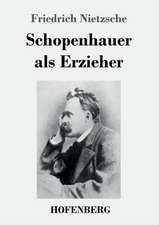
Schopenhauer als Erzieher
Ecce Auctor - Die Vorreden Von 1886: Uber Die Grunde Der Entmutigung Auf Philosophischem Gebiet
Jenseits von Gut und Böse / Zur Genealogie der Moral
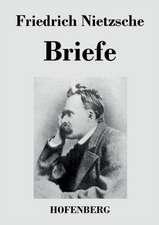
Briefe
Der Fall Wagner / Nietzsche contra Wagner
Vom Nutzen und Nachteil der Historie für das Leben
Richard Wagner in Bayreuth / Der Fall Wagner / Nietzsche contra Wagner
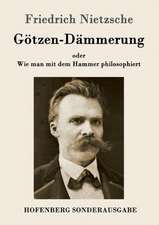
Götzen-Dämmerung
Die Geburt Der Tragodie Und Unzeitgemasse Betrachtungen: Mit Ungedruckten Briefen, Gedichten Und Einer Autobiographie Geibels
Morgenrothe: Mit Ungedruckten Briefen, Gedichten Und Einer Autobiographie Geibels
Also sprach Zarathustra (Großdruck)
Der Antichrist (Großdruck)
Menschliches, Allzumenschliches (Großdruck)
Zur Genealogie der Moral (Großdruck)
Jenseits von Gut und Böse / Zur Genealogie der Moral (Großdruck)
Vom Nutzen und Nachteil der Historie für das Leben (Großdruck)
Die fröhliche Wissenschaft (Großdruck)
Schopenhauer als Erzieher (Großdruck)
Ecce Homo (Großdruck)
Jenseits von Gut und Böse (Großdruck)
- 1
- 2