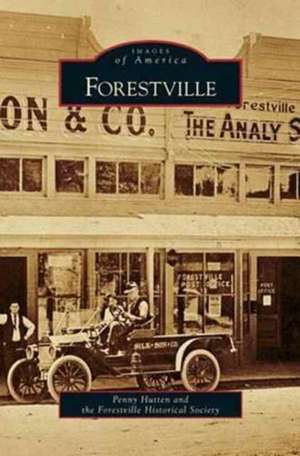
Forestville
Autor Penny Hutten, Forestville Historical Societyen Limba Engleză Hardback – 28 mai 2008
Preț: 176.73 lei
Puncte Express: 265
Carte tipărită la comandă
Livrare economică 03-17 decembrie
Livrare prin curier în România Termenul estimat este afișat lângă disponibilitate.
Transport gratuit de la 400.00 lei Plată online sau ramburs, în funcție de opțiunile comenzii.
Retur gratuit în 14 zile Comandă securizată și suport în română.
Specificații
ISBN-13: 9781531637255
ISBN-10: 1531637256
Pagini: 130
Dimensiuni: 175 x 250 x 12 mm
Greutate: 0.42 kg
Editura: Arcadia Publishing Library Editions
ISBN-10: 1531637256
Pagini: 130
Dimensiuni: 175 x 250 x 12 mm
Greutate: 0.42 kg
Editura: Arcadia Publishing Library Editions
V-ar putea interesa
-
 Preț: 183.99 lei
 -
 Preț: 142.99 lei
 -
 Preț: 163.68 lei
 -
 Notes of a Russian SniperVassili ZaitsevPreț: 108.89 lei
 -
 Fred Harvey Houses of the SouthwestRichard MelzerPreț: 174.74 lei
 -
 Silver: The Spy Who Fooled the NazisMihir Bose-18%Preț: 152.30 lei184.98 lei
 -
 Axis Suicide SquadsJusto Miranda-13%Preț: 201.86 lei232.52 lei
 -
 Preț: 147.05 lei
 -
 The History of Irish Book PublishingTony FarmarPreț: 192.15 lei
Descriere
Descriere de la o altă ediție sau format:
Visitors to Forestville are taken aback by its picturesque valleys laden with roaming vineyards. However, Forestville is more than a gateway to the Russian River; it is a diverse array of businesses, wineries, farming, and recreation. Forestville grew from the Spanish land grant traded by Capt. Juan Bautista Rogers Cooper from his brother-in-law Gen. Mariano Vallejo in 1834 into the town known by passing travelers as "Swindle Rig." In 1867, the town was named Forestville after Andrew Jackson Forrister, a saloon owner. It was set apart from other settlements by having the first powered sawmill in California and the FaudrAA(c) Chair factory, the largest manufacturing plant in Sonoma County of that era. Collectors still seek out the factory's rawhide-bottom chairs. As a popular stop on the railway line, many vacationers from San Francisco passed through on their journeys to the Russian River. In 1963, the town continued to be different, setting aside land for a community youth park, so it is no wonder the town's slogan is "Forestville the Great Life."
Visitors to Forestville are taken aback by its picturesque valleys laden with roaming vineyards. However, Forestville is more than a gateway to the Russian River; it is a diverse array of businesses, wineries, farming, and recreation. Forestville grew from the Spanish land grant traded by Capt. Juan Bautista Rogers Cooper from his brother-in-law Gen. Mariano Vallejo in 1834 into the town known by passing travelers as "Swindle Rig." In 1867, the town was named Forestville after Andrew Jackson Forrister, a saloon owner. It was set apart from other settlements by having the first powered sawmill in California and the FaudrAA(c) Chair factory, the largest manufacturing plant in Sonoma County of that era. Collectors still seek out the factory's rawhide-bottom chairs. As a popular stop on the railway line, many vacationers from San Francisco passed through on their journeys to the Russian River. In 1963, the town continued to be different, setting aside land for a community youth park, so it is no wonder the town's slogan is "Forestville the Great Life."
Notă biografică
Author Penny Hutten is a 35-year resident and founder of the Forestville Historical Society in 1999. After retiring as a Web site developer, she wrote the story of Forestville from its early land grant days. This volume is a collection of photographs gath