
Flexible Syntax: Studies in Natural Language and Linguistic Theory, cartea 47
Autor A. Neeleman, F. Weermanen Limba Engleză Paperback – 30 sep 2001
Din seria Studies in Natural Language and Linguistic Theory
- 18%
 Preț: 758.19 lei
 - 18%
 Preț: 917.70 lei
 - 18%
 Preț: 905.13 lei
 - 15%
 Preț: 649.44 lei
 - 18%
 Preț: 699.13 lei
 - 18%
 Preț: 909.21 lei
 - 15%
 Preț: 635.82 lei
 - 18%
 Preț: 904.96 lei
 - 15%
 Preț: 615.84 lei
 - 18%
 Preț: 1171.27 lei
 - 15%
 Preț: 610.96 lei
 - 18%
 Preț: 2322.83 lei
 - 18%
 Preț: 915.89 lei
 - 18%
 Preț: 1166.87 lei
 - 15%
 Preț: 661.94 lei
 - 18%
 Preț: 907.54 lei
 - 15%
 Preț: 616.95 lei
 - 18%
 Preț: 909.51 lei
 - 18%
 Preț: 1749.78 lei
 - 15%
 Preț: 638.32 lei
 -
 Preț: 372.46 lei
 - 18%
 Preț: 912.85 lei
 - 18%
 Preț: 909.67 lei
 -
 Preț: 374.84 lei
 - 15%
 Preț: 662.05 lei
 - 18%
 Preț: 1172.17 lei
 - 15%
 Preț: 671.43 lei
 - 18%
 Preț: 908.61 lei
 - 18%
 Preț: 916.93 lei
 - 15%
 Preț: 620.55 lei
 - 18%
 Preț: 1174.28 lei
 - 15%
 Preț: 665.88 lei
 -
 Preț: 379.38 lei
 - 18%
 Preț: 911.64 lei
 - 18%
 Preț: 906.64 lei
 - 15%
 Preț: 662.95 lei
 - 18%
 Preț: 913.32 lei
 - 18%
 Preț: 910.71 lei
 - 18%
 Preț: 855.52 lei
 - 15%
 Preț: 632.00 lei
Preț: 633.28 lei
Preț vechi: 745.03 lei
-15%
Puncte Express: 950
Carte tipărită la comandă
Livrare economică 19 noiembrie-03 decembrie
Livrare prin curier în România Termenul estimat este afișat lângă disponibilitate.
Transport gratuit pentru acest produs Plată online sau ramburs, în funcție de opțiunile comenzii.
Retur gratuit în 14 zile Comandă securizată și suport în română.
Specificații
ISBN-13: 9780792371991
ISBN-10: 0792371992
Pagini: 272
Ilustrații: XI, 253 p.
Dimensiuni: 156 x 234 x 15 mm
Greutate: 0.42 kg
Ediția:1999
Editura: Springer
Colecția Studies in Natural Language and Linguistic Theory
Seria Studies in Natural Language and Linguistic Theory
Locul publicării:Dordrecht, Netherlands
ISBN-10: 0792371992
Pagini: 272
Ilustrații: XI, 253 p.
Dimensiuni: 156 x 234 x 15 mm
Greutate: 0.42 kg
Ediția:1999
Editura: Springer
Colecția Studies in Natural Language and Linguistic Theory
Seria Studies in Natural Language and Linguistic Theory
Locul publicării:Dordrecht, Netherlands
V-ar putea interesa
-
 Can You Eat, Shoot and Leave? (Workbook)Clare DignallPreț: 56.27 lei
 -
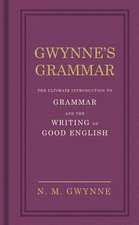 Gwynne's GrammarNevile Gwynne-29%Preț: 86.00 lei120.76 lei
 -
 Oxford A-Z of English UsageJeremy Butterfield-20%Preț: 56.25 lei70.42 lei
 -
 Oxford A-Z of Better SpellingCharlotte Buxton-20%Preț: 56.06 lei70.16 lei
 -
 The Oxford Handbook of CaseAndrej Malchukov-17%Preț: 380.03 lei460.29 lei
 -
 -31%Preț: 765.28 lei1104.85 lei
 -
 Plain WordsErnest Gowers-19%Preț: 63.30 lei78.30 lei
 -
 YES, I COULD CARE LESSBill WalshPreț: 124.11 lei
 -
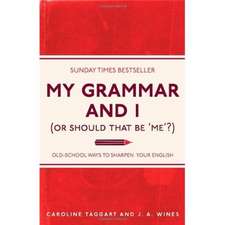 My Grammar and I (Or Should That Be 'Me'?)Caroline Taggart-12%Preț: 41.74 lei47.23 lei
 -
 The Language WarsHenry Hitchings-27%Preț: 72.80 lei99.08 lei
 -
 Preț: 134.90 lei
Public țintă
ResearchCuprins
1: Prologue.- 1. Introduction.- 2. Case Theory.- 3. ?-Theory.- 4. Word Order.- 5. Overview.- Bibliographical Note.- 2: The OV/VO Parameter.- 1. Introduction.- 2. The Domain of ?-role Assignment.- 3. The Domains of Head Government.- 4. The Formation of VP Shells.- 5. Particles.- 6. Scrambling.- 7. Double Object Constructions.- 8. Exceptional Case Marking.- 9. Concluding Remarks.- 3: Morphological Case.- 1. Introduction.- 2. Asymmetries between Nominative and Case.- 3. Syntactic Effects of Morphological Case.- 4. Toward a Theory of Case Features.- 5. Concluding Remarks.- 4: Prepositional Complements.- 1. Introduction.- 2. The Problem.- 3. Indirect ?-Role Assignment.- 4. LF Incorporation.- 5. Empirical Consequences.- 6. PP Complements to Nouns.- 7. Concluding Remarks.- 5: Raising to Subject.- 1. Introduction.- 2. ?-Role Promotion as A’-Movement.- 3. NP Raising as Null Operator Movement.- 4. Short versus Long Null Operator Movement.- 5. Improper Movement.- 6. Concluding Remarks.- 6: Head Marking.- 1. Introduction.- 2. Head-Marking Affixes.- 3. Absolutive-Ergative Languages.- 4. VSO Languages.- 5. The Linearization of Subjects.- 6. Concluding Remarks.- 7: Epilogue.- 1. Introduction.- 2. Falsifiability.- 3. Flexibility.- References.
Recenzii
`This book presents very innovative and original ideas, and an impressive variety of data and problems to be accounted for.'
Alex Alsina
`I enjoyed the book a lot and found it very stimulating. In my opinion, it is a very good piece of work.'
Denis Bouchard
Alex Alsina
`I enjoyed the book a lot and found it very stimulating. In my opinion, it is a very good piece of work.'
Denis Bouchard