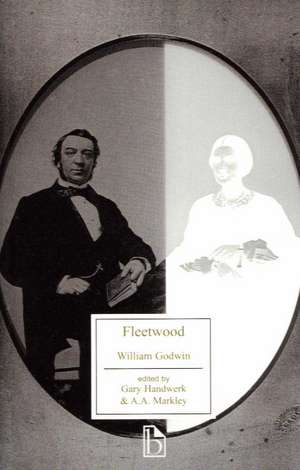
Fleetwood
Autor William Godwin Editat de Gary Handwerk, A.A. Markleyen Limba Engleză Paperback – 20 dec 2000
Preț: 242.07 lei
Preț vechi: 269.91 lei
-10%
Puncte Express: 363
Carte disponibilă
Livrare economică 06-20 noiembrie
Livrare prin curier în România Termenul estimat este afișat lângă disponibilitate.
Transport gratuit de la 400.00 lei Plată online sau ramburs, în funcție de opțiunile comenzii.
Retur gratuit în 14 zile Comandă securizată și suport în română.
Specificații
ISBN-13: 9781551112329
ISBN-10: 1551112329
Pagini: 541
Dimensiuni: 140 x 216 x 27 mm
Greutate: 0.71 kg
Editura: BROADVIEW PR
Colecția Broadview Press
Locul publicării:Peterborough, Canada
ISBN-10: 1551112329
Pagini: 541
Dimensiuni: 140 x 216 x 27 mm
Greutate: 0.71 kg
Editura: BROADVIEW PR
Colecția Broadview Press
Locul publicării:Peterborough, Canada
V-ar putea interesa
-
 NetherlandJoseph O'NeillPreț: 79.63 lei
 -
 Devil BonesKathy Reichs-24%Preț: 61.32 lei80.53 lei
 -
 Bleeding Heart SquareAndrew Taylor-26%Preț: 58.50 lei78.60 lei
 -
 Stick Or TwistEleanor MoranPreț: 116.51 lei
 -
 Enquiry Concerning Political JusticeWilliam GodwinPreț: 145.90 lei
 -
 Caleb WilliamsWilliam Godwin-18%Preț: 71.41 lei87.05 lei
 -
 An Enquiry Concerning Political JusticeWilliam Godwin-18%Preț: 89.20 lei108.74 lei
 -
 Country PursuitsJo CarnegiePreț: 123.44 lei
 -
 NorthlineWilly VlautinPreț: 71.52 lei
 -
 FactotumCharles Bukowski-20%Preț: 62.45 lei78.00 lei
 -
 The Eagle and the Wolves (Eagles of the Empire 4)Simon Scarrow-26%Preț: 59.00 lei79.22 lei
 -
 Towards Another SummerJanet FramePreț: 128.65 lei
 -
 The Clothes On Their BacksLinda Grant-27%Preț: 56.87 lei77.66 lei
 -
 Murder in BellevilleCara Black-26%Preț: 59.27 lei79.65 lei
Recenzii
Fleetwood is a pivotal novel of early English Romanticism and a powerful critique of the Romantic emotionalism being spread across Europe in Rousseau’s name. Godwin’s “new man of feeling” chronicles the impact of his “natural” education in the wilds of Wales, and his behavior allows Godwin to draw attention to an array of contemporary social issues. Godwin attacks the inhumanity of the early factory system, and indicts British society for its patriarchal inequities. His portrayal of Fleetwood’s obsessive and devastating jealousy contributed significantly to the development of psychological realism in English fiction. As essential historical background, the editors provide reviews, and excerpts from Rousseau’s writing and from Godwin’s other works.
“Fleetwood has long deserved a wider audience. Its pioneering explorations—of factory labour, of the role of manipulation in pedagogy, and of obsession and spousal abuse—show Godwin ranging beyond the questions of rationality and justice that marked his earlier works. Handwerk and Markley have provided a clear and thorough account of Godwin’s career and intellectual milieu. Their introduction and their well-chosen supplementary materials demonstrate Godwin’s contributions to debates about politics, marriage, the rights of women, education, and travel. The appearance of Fleetwood in this scholarly edition will help readers understand Godwin’s formidable reputation for good and for evil among his contemporaries, and will invite a re-evaluation in our time of his power as a thinker and a novelist.” — Jeanne Moskal, University of North Carolina at Chapel Hill
“Fleetwood has long deserved a wider audience. Its pioneering explorations—of factory labour, of the role of manipulation in pedagogy, and of obsession and spousal abuse—show Godwin ranging beyond the questions of rationality and justice that marked his earlier works. Handwerk and Markley have provided a clear and thorough account of Godwin’s career and intellectual milieu. Their introduction and their well-chosen supplementary materials demonstrate Godwin’s contributions to debates about politics, marriage, the rights of women, education, and travel. The appearance of Fleetwood in this scholarly edition will help readers understand Godwin’s formidable reputation for good and for evil among his contemporaries, and will invite a re-evaluation in our time of his power as a thinker and a novelist.” — Jeanne Moskal, University of North Carolina at Chapel Hill
Cuprins
Acknowledgments
Introduction
William Godwin: A Brief Chronology
A Note on the Text
Preface to the First Edition (1805)
Appendix A: Foundations of the Novel
Introduction
William Godwin: A Brief Chronology
A Note on the Text
Preface to the First Edition (1805)
Appendix A: Foundations of the Novel
- William Godwin, Enquiry Concerning Political Justice and Its Influence on Morals and Happiness (1797)
- “Of Political Imposture”
- “Of Cooperation, Cohabitation and Marriage”
- William Godwin, The Enquirer: Reflections on Education, Manners and Literature in a Series of Essays (1797)
- “Of Public and Private Education”
- “Of Deception and Frankness”
- “Of the Obtaining of Confidence”
- “Of Choice in Reading”
- “Of Difference of Opinion”
- Mary Wollstonecraft, A Vindication of the Rights of Woman (1792)
- “The Prevailing Opinion Of A Sexual Character Discussed”
- “Observations On The State Of Degradation To Which Woman Is Reduced By Various Causes”
- “Animadversions On Some Of The Writers Who Have Rendered Women Objects Of Pity, Bordering On Contempt”
- “The Effect Which An Early Association Of Ideas Has Upon The Character”
- “On National Education”
- “Some Instances Of The Folly Which The Ignorance of Women Generates; With Concluding Reflections On The Moral Improvement That A Revolution In Female Manners Might Naturally Be Expected To Produce”
- Julie, ou La Nouvelle Héloïse (1761), translated by Gary Handwerk.
- Émile, or on Education (1762), translated by Grace Roosevelt.
- Laurence Sterne, A Sentimental Journey through France and Italy, By Mr. Yorick (1768)
- Henry Mackenzie, The Man of Feeling (1771)
- Henry Mackenzie, Julia de Roubigné (1777)
- Elizabeth Inchbald, A Simple Story (1791)
- Mary Wollstonecraft, The Wrongs of Woman: Or, Maria (1798)
- Mary Hays, The Victim of Prejudice (1799)
- John Fletcher, A Wife for a Moneth (1624)
- Thomas Otway, Don Carlos (1676)
- William Coxe, Travels in Switzerland (1778, 1789)
- Mary Wollstonecraft Shelley and Percy Bysshe Shelley, History of a Six Weeks’ Tour (1817)
- Critical Review (April 1805)
- Walter Scott, Edinburgh Review (April 1805)
- The Anti-Jacobin Review and Magazine (August 1805)
- British Critic (August 1805)
- Monthly Review (January 1806)
- European Magazine and London Review (April 1806)
- Review of the 1832 edition of Fleetwood, from the Examiner (December 1832)