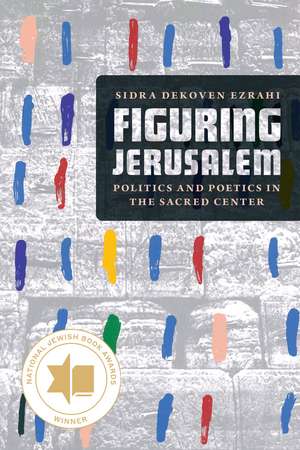
Figuring Jerusalem: Politics and Poetics in the Sacred Center
Autor Professor Sidra DeKoven Ezrahien Limba Engleză Paperback – 22 apr 2022
Considerăm că Figuring Jerusalem reprezintă o resursă academică fundamentală pentru studenții și cercetătorii din domeniul studiilor iudaice, literaturii comparate și istoriei Orientului Mijlociu, fiind o lucrare de referință pentru înțelegerea modului în care imaginarul poetic modelează realitatea politică. Professor Sidra DeKoven Ezrahi investiguează o tensiune istorică profundă: timp de două milenii, distanța exilului a oferit scriitorilor evrei o „licență pentru invenție”, însă revenirea fizică în „centrul sacru” a forțat o recalibrare dureroasă a limbajului literar.
Subliniem structura tripartită a volumului, care ghidează cititorul de la „Arheologii literare” — analizând Akeda, Cântarea Cântărilor și filosofia lui Maimonide — către dilemele modernității. Analiza se concentrează în special pe figurile canonice ale lui S. Y. Agnon și Yehuda Amichai, explorând cum poezia acestuia din urmă reușește să integreze sacrul în cotidian. Această abordare completează perspectiva oferită de City of Song de Michael A. Figueroa; în timp ce Figueroa explorează peisajul muzical ca factor de definire a conștiinței politice, Ezrahi se apleacă asupra textului scris și a modului în care convențiile diasporice au supraviețuit chiar și după fondarea statului Israel în 1948.
În contextul operei sale anterioare, precum By Words Alone, unde a analizat limitele imaginației în fața Holocaustului, Sidra DeKoven Ezrahi revine aici la tema memoriei, dar dintr-o perspectivă spațială. Ea demonstrează că înțelepciunea acumulată în exil trebuie redescoperită pentru a permite coexistența în Ierusalimul actual. Volumul nu este doar o critică literară, ci o geografie spirituală a unui oraș aflat la intersecția dintre poezie și politică.
Preț: 225.40 lei
Carte disponibilă
Livrare economică 22 septembrie-06 octombrie
Livrare express 05-11 septembrie pentru 32.29 lei
Specificații
ISBN-10: 022678746X
Pagini: 352
Ilustrații: 11 halftones
Dimensiuni: 152 x 229 x 23 mm
Greutate: 0.45 kg
Editura: University of Chicago Press
Colecția University of Chicago Press
De ce să citești această carte
Recomandăm această carte oricărui cititor interesat de modul în care literatura influențează percepția asupra unui teritoriu disputat. Veți câștiga o înțelegere profundă a modului în care Ierusalimul a fost „scris” înainte de a fi locuit și cum poezia lui Amichai sau proza lui Agnon oferă soluții simbolice pentru conflicte istorice reale. Este o lectură esențială pentru a descifra straturile culturale ale capitalei spirituale a iudaismului.
Despre autor
Sidra DeKoven Ezrahi este profesor emerit de literatură comparată la Universitatea Ebraică din Ierusalim. Cariera sa a fost dedicată explorării intersecției dintre istorie, memorie și creativitate literară. Este cunoscută la nivel internațional pentru lucrările sale despre literatura Holocaustului, volumul său By Words Alone fiind nominalizat la National Book Award. În Figuring Jerusalem, ea își valorifică deceniile de cercetare pentru a analiza evoluția imaginarului ebraic, fiind una dintre cele mai autoritare voci în critica literară israeliană contemporană.
Descriere scurtă
For two thousand years, Hebrew writers used their exile from the Holy Land as a license for invention. The question at the heart of Figuring Jerusalem is this: how did these writers bring their imagination “home” in the Zionist century? Sidra DeKoven Ezrahi finds that the same diasporic conventions that Hebrew writers practiced in exile were maintained throughout the first half of the twentieth century. And even after 1948, when the state of Israel was founded but East Jerusalem and its holy sites remained under Arab control, Jerusalem continued to figure in the Hebrew imagination as mediated space. It was only in the aftermath of the Six Day War that the temptations and dilemmas of proximity to the sacred would become acute in every area of Hebrew politics and culture.
Figuring Jerusalem ranges from classical texts, biblical and medieval, to the post-1967 writings of S. Y. Agnon and Yehuda Amichai. Ultimately, DeKoven Ezrahi shows that the wisdom Jews acquired through two thousand years of exile, as inscribed in their literary imagination, must be rediscovered if the diverse inhabitants of Jerusalem are to coexist.
Notă biografică
Cuprins
Prologue Why Jerusalem? The Politics of Poetry
Introduction “This House, which is called by My Name”
Part 1 Literary Archaeologies
1 “Yes, you did laugh!”: The Secret of the Akeda
2 “You are as majestic as Jerusalem”: The Song and the City
3 “Apples of gold in ornaments of silver”: Maimonides’s Guide to the Poetic Imagination
Part 2 Agnon’s Dilemma
4 “What may this be likened to?”: Agnon and the Poetics of Space
5 “Every day I have regretted not having stood in the breach”: Agnon in Jerusalem
Part 3 Amichai in the Breach
6 “He comes out of a swimming pool or the sea . . . and he laughs and blesses”: Yehuda Amichai, Poet of the Sacred Quotidian
7 “Visit my tears and the east wind, which is the true Western Wall”: Amichai in Jerusalem
Coda
Acknowledgments: Ancient Debts and Ongoing Gratitude
Notes
Bibliography
Index
Recenzii
poetic representations of Jerusalem."