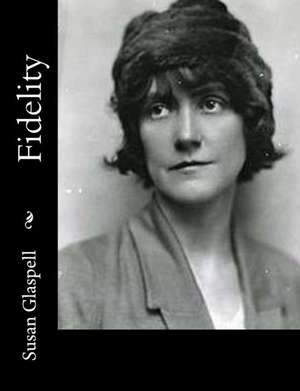
Fidelity
Autor Susan Glaspellen Limba Engleză Paperback
Out of print in the United States since its original publication in 1915, Susan Glaspell’s largely forgotten novel Fidelity tells the story of Ruth Holland, a young woman who returns to her small Midwestern hometown after eleven years’ absence. Forced home by the death of her father, Ruth must face a family and community that have largely turned against her following her affair with a married man.
Glaspell, mostly known as a playwright and for her founding of the Provincetown Players, was also an accomplished novelist. Inspired by events in Glaspell’s own life, Fidelity portrays Ruth’s struggle to find fulfillment, love, and purpose in a society that imposes rigid expectations and limitations on how a woman should live. Ruth is a woman torn between love and commitment to her family—and between love and commitment to herself. Glaspell’s narrative shifts between characters, offering glimpses through the community’s eyes of the ways that Ruth’s return forces residents to confront their beliefs and the impact that they have. In the vein of Chopin’s The Awakening and Flaubert’s Madame Bovary, Glaspell’s Fidelity holds an important place in the history of early twentieth-century feminist literature and is long overdue to be back in print.
Students at the University of Nebraska–Lincoln, under the guidance of Kevin McMullen, project manager of the Walt Whitman Archive, have resurrected this neglected novel. The text includes contemporary photographs of Susan Glaspell, a new introduction, and annotations throughout, which provide useful commentary for students and general readers alike.
Preț: 72.54 lei
Puncte Express: 109
Carte disponibilă
Livrare economică 11-25 noiembrie
Livrare prin curier în România Termenul estimat este afișat lângă disponibilitate.
Transport gratuit de la 400.00 lei Plată online sau ramburs, în funcție de opțiunile comenzii.
Retur gratuit în 14 zile Comandă securizată și suport în română.
Specificații
ISBN-13: 9781982011413
ISBN-10: 1982011416
Pagini: 196
Dimensiuni: 189 x 246 x 11 mm
Greutate: 0.36 kg
ISBN-10: 1982011416
Pagini: 196
Dimensiuni: 189 x 246 x 11 mm
Greutate: 0.36 kg
V-ar putea interesa
-
 FAMILY DRAMA EXAIIE PBRebecca FallonPreț: 109.22 lei
 -
 IN FAMILY WAY EXAIIE PBLaney Katz BeckerPreț: 114.26 lei
 -
 From Man to Man or Perhaps Only—Olive Schreiner-16%Preț: 68.33 lei81.49 lei
 -
 A Doll's House, Men of Honour, When We Dead AwakenHenrik Ibsen-17%Preț: 54.19 lei65.62 lei
 -
 Preț: 37.47 lei
 -
 SummerEdith WhartonPreț: 34.93 lei
 -
 The Ha-HaJennifer DawsonPreț: 71.45 lei
 -
 The Awakening and Other StoriesKate Chopin-29%Preț: 45.24 lei63.40 lei
 -
 The BostoniansHenry JamesPreț: 56.71 lei
 -
 -26%Preț: 47.92 lei64.48 lei
 -
 I Who Have Never Known Men. Deluxe EditionJacqueline HarpmanPreț: 121.60 lei
 -
 The Country of the Pointed FirsSarah Orne JewettPreț: 36.09 lei
 -
 The Yellow WallpaperCharlotte Perkins GilmanPreț: 31.67 lei
 -
 The Yellow Wall-Paper and Other StoriesCharlotte Perkins GilmanPreț: 58.14 lei
 -
 Big Kiss, Bye-ByeClaire-Louise BennettPreț: 93.07 lei
 -
 House of MirthEdith WhartonPreț: 28.01 lei
 -
 All The Sad Young MenF. Scott FitzgeraldPreț: 57.30 lei
 -
 DublinersJames JoycePreț: 28.01 lei
 -
 The Four Spent the Day TogetherChris KrausPreț: 123.53 lei
Notă biografică
Susan Glaspell (1876–1948), an influential American playwright and novelist, is celebrated as a pioneer of American drama and co-founder of the Provincetown Players. Notable works include the play Trifles and the short story “A Jury of Her Peers,” inspired by her coverage of a real-life murder trial, as well as her Pulitzer Prize-winning play Alison’s House. Her novels include Fidelity, The Morning is Near Us, and Judd Rankin’s Daughter.
Kevin McMullen is a research associate professor in the English department at the University of Nebraska–Lincoln. He is the project manager of both the Walt Whitman Archive and the Charles W. Chesnutt Archive, as well as the co-creator and editor of a digital edition of the newspaper writings of Fanny Fern (http://fannyfern.org).
Associate Editors: Sophie Anderson, Kayla Barnes, Ian Byington, Sam Cobb, Sarah Danielson, Hanna Dannar, Drew Fridrich, Edison Geiler, Rylee Gregg, Marissa Hanley, Bella Hardy, Michael Hodge, Ben Jezewski, Jackson Kissler, Wallace Langdon, Madalyn Meyer, Zoë Olson, Angelina Pattavina, Gabriel Reiman, Grace Reiman, Halle Ross, Audrey Salber, Fatima Salman, McKenna Sender, Presley Shonka, Paige Trutna, and Tyler Wagner
Kevin McMullen is a research associate professor in the English department at the University of Nebraska–Lincoln. He is the project manager of both the Walt Whitman Archive and the Charles W. Chesnutt Archive, as well as the co-creator and editor of a digital edition of the newspaper writings of Fanny Fern (http://fannyfern.org).
Associate Editors: Sophie Anderson, Kayla Barnes, Ian Byington, Sam Cobb, Sarah Danielson, Hanna Dannar, Drew Fridrich, Edison Geiler, Rylee Gregg, Marissa Hanley, Bella Hardy, Michael Hodge, Ben Jezewski, Jackson Kissler, Wallace Langdon, Madalyn Meyer, Zoë Olson, Angelina Pattavina, Gabriel Reiman, Grace Reiman, Halle Ross, Audrey Salber, Fatima Salman, McKenna Sender, Presley Shonka, Paige Trutna, and Tyler Wagner
Extras
Introduction
The central conflict of Fidelity revolves around a marriage, or rather, several marriages, and the individuals involved in them. The marriages of Stuart and Marion Williams and Deane and Amy Franklin—one established, one new—are, in the novel, set in opposition to the singular freedom of Ruth Holland, and much of the book's plot involves the ways in which Ruth's presence disrupts what once seemed set and stable. The shifting views of love, marriage, and fidelity held by these characters—and the town of Freeport more broadly—reflect the changing views of the time period. Understanding how these topics were viewed in the early twentieth century is thus crucial to comprehending the novel's importance.
While the roles of husband and wife had been relatively well-defined throughout the nineteenth century, the beginning of the twentieth century—in which Fidelity is set—saw views on marriage undergo a change. As conservatives had warned, increased expectations about finding romantic happiness in a marriage—rather than traditional marital roles largely removed from emotion—caused an increasing amount of friction in couples. This change caused a rift in expectations where both husbands and wives felt they were lacking in companionship but did not see their spouse as a potential source. This, along with marriages of necessity and a negative view of unmarried women that caused many to fear remaining single, led to many marriages being strained from the start.
In 1880, 35 years before Fidelity was published, the United States had a divorce rate of 1 in 21 marriages. By 1915, the United States had the highest divorce rate in the world; at ten percent, this was the first time the rate had reached double digits. In smaller towns, 1 in 7 marriages ended in divorce, while in larger towns around 1 in 4 marriages led to a divorce. Following the outbreak of the First World War in 1914, some women began working in traditionally male roles while the men were at war. Then in 1919, women gained the right to vote. Women were starting to become more independent, meaning the typical image of marriage was changing.
The spread of divorce led to a panic, causing states to wage campaigns to amend their local divorce laws. The common belief was that divorce destroyed the family, which was seen as the foundation of society. The Episcopal Church, led mostly by Albany Bishop William Croswell Doane, fought to prohibit divorce entirely. Doane wanted to push for the guidelines of the Roman Catholic Church, which prohibited any divorced person from remarrying no matter the reason. Doane's campaign was ultimately unsuccessful, however, and by the 1920s the campaign to restrict or get rid of divorce was over.
Nearly two-thirds of divorces were awarded to women. A feature in the North American Review in 1889, titled “Are Women to Blame?”, summed up a common attitude of the time. The contributors to the feature—all women writers—accused women of being responsible for high divorce rates, blaming it in part on the rise of successful female authors and romantic notions.
However, the societal attitude toward infidelity during the late nineteenth and early twentieth century was highly variable depending on gender. For example, while seduction laws at the time tended to punish men more, women were more often the ones judged by society. Women were seen as the pillar of the family, and marriage was seen as a fundamental part of society, so even if their husbands turned to adultery, many women were fearful of resorting to divorce. Men were seen to be instinctively promiscuous, and their infidelity had to be tolerated for the sake of the greater good. In the words of an 1856 Iowa Supreme Court ruling on seduction, "All men could be seducers; only certain types of women could be seduced." Most of the "seduced" women were young and unmarried, so committing an act of seduction was seen as a crime against society, and the laws were meant to protect unmarried women of a chaste nature. And while sex was often seen as being confined to marriage, premarital sex was more common than one might expect. The practice was a risky one, however, as negative sentiments toward premarital sex were strong and lasted through generations.
[end of excerpt]
The central conflict of Fidelity revolves around a marriage, or rather, several marriages, and the individuals involved in them. The marriages of Stuart and Marion Williams and Deane and Amy Franklin—one established, one new—are, in the novel, set in opposition to the singular freedom of Ruth Holland, and much of the book's plot involves the ways in which Ruth's presence disrupts what once seemed set and stable. The shifting views of love, marriage, and fidelity held by these characters—and the town of Freeport more broadly—reflect the changing views of the time period. Understanding how these topics were viewed in the early twentieth century is thus crucial to comprehending the novel's importance.
While the roles of husband and wife had been relatively well-defined throughout the nineteenth century, the beginning of the twentieth century—in which Fidelity is set—saw views on marriage undergo a change. As conservatives had warned, increased expectations about finding romantic happiness in a marriage—rather than traditional marital roles largely removed from emotion—caused an increasing amount of friction in couples. This change caused a rift in expectations where both husbands and wives felt they were lacking in companionship but did not see their spouse as a potential source. This, along with marriages of necessity and a negative view of unmarried women that caused many to fear remaining single, led to many marriages being strained from the start.
In 1880, 35 years before Fidelity was published, the United States had a divorce rate of 1 in 21 marriages. By 1915, the United States had the highest divorce rate in the world; at ten percent, this was the first time the rate had reached double digits. In smaller towns, 1 in 7 marriages ended in divorce, while in larger towns around 1 in 4 marriages led to a divorce. Following the outbreak of the First World War in 1914, some women began working in traditionally male roles while the men were at war. Then in 1919, women gained the right to vote. Women were starting to become more independent, meaning the typical image of marriage was changing.
The spread of divorce led to a panic, causing states to wage campaigns to amend their local divorce laws. The common belief was that divorce destroyed the family, which was seen as the foundation of society. The Episcopal Church, led mostly by Albany Bishop William Croswell Doane, fought to prohibit divorce entirely. Doane wanted to push for the guidelines of the Roman Catholic Church, which prohibited any divorced person from remarrying no matter the reason. Doane's campaign was ultimately unsuccessful, however, and by the 1920s the campaign to restrict or get rid of divorce was over.
Nearly two-thirds of divorces were awarded to women. A feature in the North American Review in 1889, titled “Are Women to Blame?”, summed up a common attitude of the time. The contributors to the feature—all women writers—accused women of being responsible for high divorce rates, blaming it in part on the rise of successful female authors and romantic notions.
However, the societal attitude toward infidelity during the late nineteenth and early twentieth century was highly variable depending on gender. For example, while seduction laws at the time tended to punish men more, women were more often the ones judged by society. Women were seen as the pillar of the family, and marriage was seen as a fundamental part of society, so even if their husbands turned to adultery, many women were fearful of resorting to divorce. Men were seen to be instinctively promiscuous, and their infidelity had to be tolerated for the sake of the greater good. In the words of an 1856 Iowa Supreme Court ruling on seduction, "All men could be seducers; only certain types of women could be seduced." Most of the "seduced" women were young and unmarried, so committing an act of seduction was seen as a crime against society, and the laws were meant to protect unmarried women of a chaste nature. And while sex was often seen as being confined to marriage, premarital sex was more common than one might expect. The practice was a risky one, however, as negative sentiments toward premarital sex were strong and lasted through generations.
[end of excerpt]
Recenzii
“Kevin McMullen and his students have richly contextualized one of Glaspell’s most complex and provocative novels, illuminating still-relevant questions of love, marriage, and divorce that confront and challenge the characters.”—Marcia Noe, author of Susan Glaspell: Voice from the Heartland
“Fidelity is Glaspell’s most powerful, contemporary, wide-ranging novel, whose persona—like Glaspell herself—is feminist: daring to break social mores, love with great courage, and to move on, if necessary, for a new life.”—Linda Ben-Zvi, author of Susan Glaspell: Her Life and Times
“Fidelity is Glaspell’s most powerful, contemporary, wide-ranging novel, whose persona—like Glaspell herself—is feminist: daring to break social mores, love with great courage, and to move on, if necessary, for a new life.”—Linda Ben-Zvi, author of Susan Glaspell: Her Life and Times
Descriere
Descriere de la o altă ediție sau format:
Students at the University of Nebraska-Lincoln annotated and wrote the introduction to the 1915 edition of Susan Glaspell's novel Fidelity, the only edition published during Glaspell's lifetime.
Students at the University of Nebraska-Lincoln annotated and wrote the introduction to the 1915 edition of Susan Glaspell's novel Fidelity, the only edition published during Glaspell's lifetime.