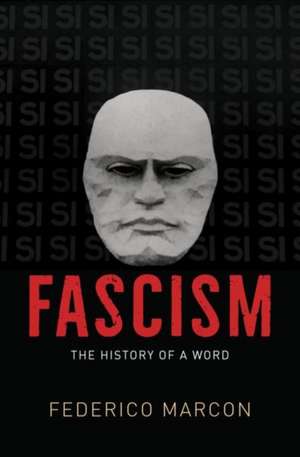
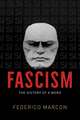
Fascism: The History of a Word: The Life of Ideas
Autor Federico Marconen Limba Engleză Hardback – 4 iun 2025
Această monografie de istorie intelectuală, publicată sub egida University of Chicago Press în seria The Life of Ideas, propune o investigație riguroasă asupra unuia dintre cei mai utilizați și, paradoxal, imprecisi termeni din vocabularul politic global. Ne-a atras atenția modul în care Federico Marcon reușește să depășească simpla cronică politică pentru a oferi o istorie a cuvântului în sine, explorând cum „fascismul” a fost conceptualizat, contestat și redefinit de-a lungul a peste un secol. Remarcăm structura tripartită a volumului, care ghidează cititorul de la consolidarea semantică dintre 1922 și 1945, trecând prin perspectivele liberale și marxiste ale antifascismului, până la căutarea academică a unui „minim fascist” în perioada postbelică.
Autorul analizează scrierile liderilor politici, dar și ale filozofilor și artiștilor, pentru a înțelege de ce oamenii au ales voluntar să renunțe la idealurile de libertate în favoarea autoritarismului. Cititorii familiarizați cu Fascism Comes to America de Bruce Kuklick vor aprecia aici perspectiva globală și teoretică mult mai extinsă; în timp ce volumul lui Kuklick se concentrează pe spațiul american, Marcon investighează semiotica termenului la nivel internațional, oferind un instrument de analiză pentru „fuzziness-ul” (imprecizia) sa actuală. Merită menționat că, deși lucrările anterioare ale lui Marcon, precum The Knowledge of Nature and the Nature of Knowledge in Early Modern Japan, par să aparțină altui spectru, ele împărtășesc aceeași preocupare fundamentală: modul în care sistemele de cunoaștere se nasc, se transformă și dispar sub presiunea contextului istoric. Volumul reprezintă o resursă esențială pentru înțelegerea modului în care limbajul modelează realitatea politică.
Din seria The Life of Ideas
-
 Preț: 248.91 lei
 -
 Preț: 173.26 lei
 -
 Preț: 293.08 lei
 -
 Preț: 180.77 lei
 -
 Preț: 329.34 lei
 -
 Preț: 207.58 lei
 -
 Preț: 223.18 lei
 -
 Preț: 297.49 lei
 -
 Preț: 243.15 lei
 -
 Preț: 297.69 lei
 -
 Preț: 384.73 lei
 -
 Preț: 207.49 lei
 -
 Preț: 383.63 lei
 -
 Preț: 239.83 lei
 -
 Preț: 241.96 lei
 -
 Preț: 240.70 lei
 -
 Preț: 206.42 lei
 - nou
 Preț: 208.16 lei
Preț: 696.03 lei
Preț vechi: 764.87 lei
-9%
Carte indisponibilă temporar
Specificații
ISBN-10: 0226841308
Pagini: 448
Dimensiuni: 152 x 229 x 30 mm
Greutate: 0.74 kg
Ediția:First Edition
Editura: University of Chicago Press
Colecția University of Chicago Press
Seria The Life of Ideas
De ce să citești această carte
Această lucrare se adresează cercetătorilor și studenților la istorie sau științe politice, dar și publicului informat care dorește să înțeleagă de ce eticheta de „fascist” este atât de prezentă în discursul actual. Cititorul câștigă o claritate conceptuală rară, învățând să distingă între fascismul istoric și utilizările sale retorice contemporane. Este un ghid indispensabil pentru navigarea într-un peisaj politic marcat de reapariția autoritarismului.
Despre autor
Federico Marcon este profesor asistent de istorie japoneză în cadrul Departamentului de Istorie și al Departamentului de Studii Est-Asiatice de la Universitatea Princeton. Expertiza sa vastă în istoria ideilor și a circulației cunoașterii este evidentă în lucrările sale anterioare, unde a explorat tranziția de la istoria naturală tradițională la știința modernă în Japonia. În volumul de față, Marcon își aplică rigoarea metodologică asupra istoriei europene și globale, demonstrând o capacitate remarcabilă de a sintetiza curente filozofice complexe și evoluții politice majore.
Descriere scurtă
The rise and popular support for authoritarianism around the world and within traditional democracies have spurred debates over the meaning of the term “fascist” and when and whether it is appropriate to use it. The landmark study Fascism: The History of a Word takes this debate further by tackling its most fundamental questions: How did the terms “fascism” and “fascist” come to be in the first place? How and in what circumstances have they been used? How can they be understood today? And what are the advantages (or disadvantages) of using “fascism” to make sense of interwar authoritarianism as well as contemporary politics?
Exploring the writings and deeds of political leaders, activists, artists, authors, and philosophers, Federico Marcon traces the history of the term’s use (and usefulness) in relation to Mussolini’s political regime, antifascist resistance, and the quest of postwar historians to develop a definition of a “fascist minimum.” This investigation of the semiotics of “fascism” also aims to inquire about people’s voluntary renunciation of the modern emancipatory ideals of freedom, equality, and solidarity.
Notă biografică
Cuprins
Introduction: The Advantages and Disadvantages of “Fascism” for History (and for Life)
Part I: The Invention of “Fascism”
1. “Fascism” before Fascism
2. The Advent of “Fascism”
3. The Semantic Consolidation of “Fascism,” 1922–1945
4. The Language of Fascism
Part II: Antifascists’ “Fascism”
5. Contexts: The Global Reception of Fascism and the Invention of “Antifascism”
6. Liberals’ “Fascism”
7. Marxists’ “Fascism”
8. The Liberals’ Genericizations of “Fascism”
9. The Marxists’ Genericizations of “Fascism”
Part III: “Fascism” since 1945
10. Contexts: “Fascism” between the Postwar Era and the Cold War
11. The Search for a “Fascist Minimum”
12. Historical Knowledge and the Unbearable Fuzziness of “Fascism”
Conclusions: On the Advantages and Disadvantages of “Fascism,” Again
Acknowledgments
Notes
Index