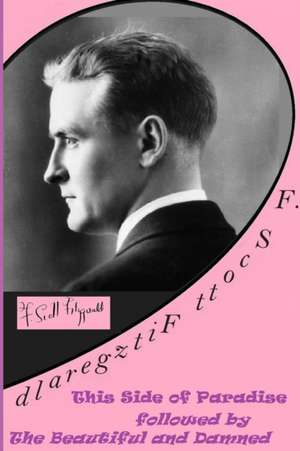
F. Scott Fitzgerald
Autor F. Scott Fitzgeralden Limba Engleză Paperback
| Toate formatele și edițiile | Preț | Express |
|---|---|---|
| Paperback (2) | 209.89 lei 6-8 săpt. | |
| Cambridge University Press – 14 dec 2022 | 209.89 lei 6-8 săpt. | |
| – | 295.88 lei 6-8 săpt. | |
| Hardback (2) | 77.93 lei 3-5 săpt. | +66.65 lei 4-10 zile |
| Little Brown – 17 oct 2013 | 77.93 lei 3-5 săpt. | +66.65 lei 4-10 zile |
| Cambridge University Press – 30 aug 1991 | 663.75 lei 3-5 săpt. |
Preț: 295.88 lei
Puncte Express: 444
Preț estimativ în valută:
52.28€ • 60.20$ • 45.25£
52.28€ • 60.20$ • 45.25£
Carte tipărită la comandă
Livrare economică 11-25 mai
Specificații
ISBN-13: 9781326944759
ISBN-10: 1326944754
Pagini: 548
Dimensiuni: 156 x 234 x 28 mm
Greutate: 0.76 kg
ISBN-10: 1326944754
Pagini: 548
Dimensiuni: 156 x 234 x 28 mm
Greutate: 0.76 kg
V-ar putea interesa
-
 Tales of the Jazz AgeF. Scott FitzgeraldPreț: 24.60 lei
 -
 The Great GatsbyF. Scott FitzgeraldPreț: 24.60 lei
 -
 Critical Studies: The Great GatsbyKathleen ParkinsonPreț: 32.57 lei
 -
 Oxford Bookworms Library: Level 5:: The Great GatsbyF. Scott Fitzgerald-18%Preț: 89.33 lei109.05 lei
 -
 The Great GatsbyF. Scott FitzgeraldPreț: 75.32 lei
 -
 This Side Of ParadiseF. Scott FitzgeraldPreț: 38.46 lei
 -
 The Great Gatsby - Variorum editionF. Scott FitzgeraldPreț: 211.29 lei
 -
 The Great Gatsby and Other Classic WorksF. Scott Fitzgerald-30%Preț: 201.09 lei289.29 lei
 -
 The Great Gatsby (Graphic Art Collector's Edition)F. Scott Fitzgerald-32%Preț: 64.95 lei95.74 lei
 -
 Flappers and PhilosophersF. Scott FitzgeraldPreț: 46.15 lei
 -
 The Great GatsbyF. Scott Fitzgerald-19%Preț: 190.93 lei236.44 lei
 -
 -23%Preț: 195.60 lei252.39 lei
 -
 -19%Preț: 89.70 lei111.14 lei
 -
 The Annotated Great Gatsby: 100th Anniversary Deluxe EditionF. Scott Fitzgerald-22%Preț: 198.01 lei253.85 lei
 -
 The Great Gatsby and Other WorksF. Scott Fitzgerald-19%Preț: 117.89 lei145.25 lei
 -
 Preț: 40.38 lei
 -
 The Great Gatsby (Heritage Collection)F. Scott FitzgeraldPreț: 127.65 lei
 -
 All The Sad Young MenF. Scott FitzgeraldPreț: 55.54 lei
 -
 The Great Gatsby - Lined Journal & NovelF. Scott FitzgeraldPreț: 162.35 lei
Notă biografică
F. SCOTT FITZGERALD (1896-1940) was born in Minnesota to upper middle-class parents and married socialite Zelda, which heavily influenced his literary masterwork, The Great Gatsby (1925). Fitzgerald is noted for his depiction of The Jazz Age and as a short story writer, screenwriter, and great American novelist.
Cuprins
Acknowledgments; Chronology of composition and publication; Introduction; 1. The composition and revision of The Great Gatsby; 2. Reception and reputation; 3. The manuscript; 4. The unrevised galleys; 5. The revised galleys; 6. Editorial principles and procedures; The Great Gatsby: Substantive emendations and textual notes; Emendations of accidentals in the base-text; Late Fitzgerald corrections and revisions; Revisions and textual annotations in Fitzgerald's copy; Word division; Explanatory notes; Appendices.
Recenzii
"Although it is hard to believe this novel could improve, it has. Considering the book's significance to American letters, the Cambridge edition of The Great Gatsby could very well be the literary publishing event of the year." Library Journal
"Now we have an American masterpiece in its final form: the original crystal has shaped itself into the true diamond. This is the novel as Fitzgerald wished it to be, and so it is what we have dreamed of, sleeping and waking." James Dickey
"Now we have an American masterpiece in its final form: the original crystal has shaped itself into the true diamond. This is the novel as Fitzgerald wished it to be, and so it is what we have dreamed of, sleeping and waking." James Dickey
Descriere
Descriere de la o altă ediție sau format:
No writer portrayed Americas Roaring Twenties as vividly as F. Scott Fitzgerald. In his effervescent tales of elegant ingenues on the prowl for husbands, Ivy League heirs en route to futures of idle entitlement, and endless alcohol-fueled dance parties at ritzy country clubs, he limned a culture giddy with excess and as reckless as it was refined. Gifted with remarkable powers of observation and a witty way with words, Fitzgerald wrote stories that seem as fresh and modern today as they did when published nearly a century ago. F. Scott Fitzgerald: Classic Works features two full-length novels--This Side of Paradise and The Beautiful and Damned--and nineteen short stories, including the classics "Bernice Bobs Her Hair," "The Diamond as Big as the Ritz," and "The Curious Case of Benjamin Button." Written as only they could be by an insider to the society that they protray, the twenty-one works collected in this volume capture the precarious splendor and doomed glory of that opulent era that their author called the Jazz Age.
No writer portrayed Americas Roaring Twenties as vividly as F. Scott Fitzgerald. In his effervescent tales of elegant ingenues on the prowl for husbands, Ivy League heirs en route to futures of idle entitlement, and endless alcohol-fueled dance parties at ritzy country clubs, he limned a culture giddy with excess and as reckless as it was refined. Gifted with remarkable powers of observation and a witty way with words, Fitzgerald wrote stories that seem as fresh and modern today as they did when published nearly a century ago. F. Scott Fitzgerald: Classic Works features two full-length novels--This Side of Paradise and The Beautiful and Damned--and nineteen short stories, including the classics "Bernice Bobs Her Hair," "The Diamond as Big as the Ritz," and "The Curious Case of Benjamin Button." Written as only they could be by an insider to the society that they protray, the twenty-one works collected in this volume capture the precarious splendor and doomed glory of that opulent era that their author called the Jazz Age.