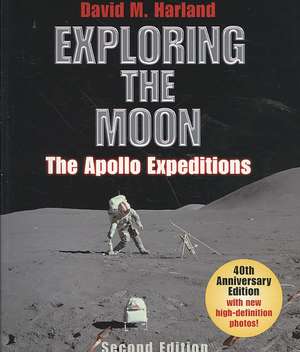
Exploring the Moon: Springer Praxis Books
Autor David M. Harlanden Limba Engleză Paperback – 11 mar 2008
Publicul țintă principal al acestei lucrări este format din studenții de la facultățile de științe planetare, cercetători și jurnaliști de știință, care vor găsi aici o resursă tehnică solidă pentru înțelegerea geologiei selenare. Subliniem faptul că, deși este scrisă într-un stil accesibil entuziaștilor, volumul nu este doar o cronică a explorării, ci un instrument academic care transformă aventura spațială în date concrete despre structura suprafeței lunii.
Ne-a atras atenția modul în care David M. Harland reușește să sintetizeze decenii de analize post-misiune. Această a doua ediție din 2008 a fost actualizată pentru a marca 40 de ani de la Apollo 11, oferind o perspectivă matură asupra succeselor programului. Structura este riguroasă, debutând cu misiunile robotice Ranger și Surveyor, care au pregătit terenul, și culminând cu detalierea misiunilor J (Apollo 15, 16 și 17), orientate preponderent spre cercetare științifică. Putem afirma că includerea unui log al zborurilor și a datelor despre eșantioanele lunare transformă cartea într-o enciclopedie tehnică indispensabilă.
În contextul operei autorului, Exploring the Moon acționează ca o sinteză între lucrările sale nișate, precum The First Men on the Moon sau Apollo 12 - On the Ocean of Storms, integrând experiența acumulată în documentarea misiunilor individuale într-o viziune de ansamblu. Ca alternativă la Early Exploration of the Moon de Tom Lund pentru cursurile de astronomie sau istoria tehnologiei, lucrarea lui Harland vine cu avantajul unei abordări axate pe geologie planetară, oferind o profunzime mai mare analizei solului și craterelor decât un simplu atlas istoric.
Din seria Springer Praxis Books
-
 Preț: 300.82 lei
 -
 Preț: 289.78 lei
 -
 Preț: 212.55 lei
 -
 Preț: 322.33 lei
 -
 Preț: 324.12 lei
 -
 Preț: 299.26 lei
 -
 Preț: 507.31 lei
 -
 Preț: 223.52 lei
 -
 Preț: 310.41 lei
 -
 Preț: 333.61 lei
 -
 Preț: 230.44 lei
 - 18%
 Preț: 911.62 lei
 -
 Preț: 216.42 lei
 -
 Preț: 227.02 lei
 -
 Preț: 315.58 lei
 -
 Preț: 215.75 lei
 -
 Preț: 266.34 lei
 -
 Preț: 260.26 lei
 -
 Preț: 253.05 lei
 -
 Preț: 351.38 lei
 -
 Preț: 227.17 lei
 -
 Preț: 281.23 lei
 -
 Preț: 159.75 lei
 - 18%
 Preț: 1256.95 lei
 - 18%
 Preț: 940.46 lei
 -
 Preț: 323.74 lei
 - 18%
 Preț: 1250.20 lei
 - 18%
 Preț: 975.90 lei
 -
 Preț: 216.72 lei
 -
 Preț: 269.95 lei
 -
 Preț: 217.22 lei
 -
 Preț: 316.07 lei
 -
 Preț: 256.84 lei
 - 18%
 Preț: 972.77 lei
 -
 Preț: 219.27 lei
 -
 Preț: 222.12 lei
 -
 Preț: 392.52 lei
 -
 Preț: 257.95 lei
 -
 Preț: 319.85 lei
 -
 Preț: 350.65 lei
 - 15%
 Preț: 632.63 lei
 -
 Preț: 330.21 lei
 -
 Preț: 322.04 lei
 -
 Preț: 208.76 lei
 -
 Preț: 246.55 lei
 -
 Preț: 326.81 lei
 -
 Preț: 106.06 lei
 - 18%
 Preț: 1178.23 lei
Preț: 298.45 lei
Carte disponibilă
Livrare economică 30 octombrie-13 noiembrie
Specificații
ISBN-10: 0387746382
Pagini: 460
Ilustrații: XXIV, 404 p. 176 illus., 16 illus. in color.
Dimensiuni: 209 x 265 x 25 mm
Greutate: 1.05 kg
Ediția:2nd edition 2008
Editura: Praxis
Colecția Springer Praxis Books
Seria Springer Praxis Books
Locul publicării:New York, NY, United States
V-ar putea interesa
-
 Across the Airless WildsEarl SwiftPreț: 173.42 lei
 -
 Lunar: A History of the Moon in Myths, Maps, and MatterMatthew ShindellPreț: 441.08 lei
 -
 A Man on the MoonAndrew Chaikin-17%Preț: 80.33 lei96.27 lei
 -
 -20%Preț: 160.62 lei199.83 lei
 -
 Moon Landing: The Incredible Story of the Apollo 11 MissionStephen Krensky-19%Preț: 57.48 lei71.14 lei
 -
 Apollo 7 in Photographs: The Apollo Photo ArchiveJ. L. PickeringPreț: 361.48 lei
 -
 Moonshots and Snapshots of Project ApolloJohn BisneyPreț: 372.57 lei
 -
 Apollo to the MoonTeasel E Muir-HarmonyPreț: 226.11 lei
 -
 Space RoverStewart Lawrence Sinclair-32%Preț: 51.12 lei75.46 lei
 -
 Moon Mission: The Epic 400-Year Journey to Apollo 11Sigmund Brouwer-18%Preț: 100.54 lei122.20 lei
 -
 Interplanetary RobotsRod PylePreț: 106.92 lei
 -
 Moon LandingsDalton RainsPreț: 51.85 lei
 -
 NASA Moon Mission Operations ManualDavid BakerPreț: 231.17 lei
 -
 Preț: 146.25 lei
 -
 SpaceTim Peake-31%Preț: 64.75 lei93.38 lei
 -
 Preț: 235.15 lei
 -
 ApolloDelano SteenmeijerPreț: 433.52 lei
 -
 Apollo VII-XVIIFloris HeynePreț: 406.77 lei
Public țintă
Popular/generalDe ce să citești această carte
Recomandăm această carte oricărui cititor care dorește să treacă de mitul „steagului și al urmelor de pași” pentru a înțelege complexitatea științifică a programului Apollo. Este un volum esențial pentru studenți, oferind fundalul necesar cursurilor de geologie planetară. Câștigați o perspectivă tehnică unică asupra modului în care roboții și oamenii au colaborat pentru a mapa și a înțelege singurul satelit natural al Pământului.
Despre autor
David M. Harland este un autor prolific și istoric al explorării spațiale, recunoscut pentru rigoarea cu care documentează misiunile NASA și programele internaționale. Expertiza sa acoperă o gamă vastă, de la sistemul saturnian în Cassini at Saturn, până la detaliile tehnice din Gemini Manual. Stilul său se caracterizează prin capacitatea de a extrage date științifice complexe din arhivele oficiale și de a le prezenta într-o formă narativă coerentă. Prin colaborările sale cu editura Springer Praxis Books, Harland a devenit o voce de referință în literatura de specialitate dedicată astronomiei și ingineriei aerospațiale.
Cuprins
Recenzii
"A detailed guide to what the astronauts did during their stays on the lunar surface. Walk(s) the reader through the prospecting excursions and then incorporate(s) decades of subsequent analysis to put the explorations of dust, rocks, craters, and rilles into geologic context." SKY & TELESCOPE
"EXPLORING THE MOON is very well illustrated…All aficionados of the Apollo program will find much to appreciate in [this book].
"…this is an interesting account of one of the most extraordinary decades in history…a very different book. David Harland probably knows more about the nuts and bolts of the Russian and American space programs than any other author and it shows.”LUNAR & PLANETARY INFORMATION BULLETIN
From the reviews of the second edition:
"David Harland’s book is an honourable addition to the ranks. Exploring the Moon – The Apollo Expeditions is packed with photos, and features a historically detailed text backed by a thorough index. … If you want to know the exact order in which NASA’s Apollo astronauts surveyed particular zones of their landing sites, or which craters delivered the most interesting scientific clues about the origins of the Moon, then this is the book for you. … a fantastic resource for fans of the Apollo era." (Piers Bizony, BBC Sky at Night, July, 2008)
"A wealth of knowledge regarding the early days of manned space exploration. … Its high resolution photography brings a surface that few have seen before into crystal clarity." (James M. Busby, Space Times, Vol. 47 (3), 2008)
Textul de pe ultima copertă
Highlighted as a "Commemorative Edition" on the cover, this second edition has a new foreword by one of the original astronauts and a short extra section at the end previewing the prospect of a renewal of human exploration of the Moon. It will include new extra high quality graphics which are only now available and 32 pages of colour illustrations.
From the reviews of the first edition -
"A detailed guide to what the astronauts did during their stays on the lunar surface. Walk(s) the reader through the prospecting excursions and then incorporate(s) decades of subsequent analysis to put the explorations of dust, rocks, craters, and rilles into geologic context." SKY & TELESCOPE
"EXPLORING THE MOON is very well illustrated…All aficionados of the Apolloprogram will find much to appreciate in [this book].
"…this is an interesting account of one of the most extraordinary decades in history…a very different book. David Harland probably knows more about the nuts and bolts of the Russian and American space programs than any other author and it shows.”LUNAR & PLANETARY INFORMATION BULLETIN