
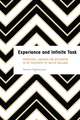
Experience and Infinite Task: Knowledge, Language and Messianism in the Philosophy of Walter Benjamin: Founding Critical Theory
Autor Tamara Tagliacozzoen Limba Engleză Hardback – 20 dec 2017
| Toate formatele și edițiile | Preț | Express |
|---|---|---|
| Paperback (1) | 269.85 lei 6-8 săpt. | |
| Bloomsbury Publishing – 8 mar 2019 | 269.85 lei 6-8 săpt. | |
| Hardback (1) | 503.63 lei 6-8 săpt. | |
| Bloomsbury Publishing – 20 dec 2017 | 503.63 lei 6-8 săpt. |
Preț: 503.63 lei
Preț vechi: 735.03 lei
-31%
Puncte Express: 755
Preț estimativ în valută:
89.16€ • 103.82$ • 77.46£
89.16€ • 103.82$ • 77.46£
Carte tipărită la comandă
Livrare economică 23 februarie-09 martie
Preluare comenzi: 021 569.72.76
Specificații
ISBN-13: 9781786600417
ISBN-10: 1786600412
Pagini: 200
Dimensiuni: 142 x 232 x 18 mm
Greutate: 0.44 kg
Editura: Bloomsbury Publishing
Colecția Rowman & Littlefield Publishers
Seria Founding Critical Theory
Locul publicării:New York, United States
ISBN-10: 1786600412
Pagini: 200
Dimensiuni: 142 x 232 x 18 mm
Greutate: 0.44 kg
Editura: Bloomsbury Publishing
Colecția Rowman & Littlefield Publishers
Seria Founding Critical Theory
Locul publicării:New York, United States
Cuprins
1. Philosophy of Language and Critique of Knowledge in the early Works and Fragments of Walter Benjamin / 2. Messianism and Political Theology in Walter Benjamin / 3. The "Constellation" of Capitalism. Walter Benjamin and Max Weber / 4. Messianism and Music in Walter Benjamin / Bibliography / Index
Recenzii
Tagliacozzo's contribution to Benjamin scholarship within the Italian academia is already well established; her foray into the anglophone industry is a welcome and original addition.
Experience and Infinite Task is an engaging study of some of the most complex aspects of Benjamin's thought. Taking off from his critique of Kant and neo-Kantianism, Tagliacozzo offers new perspectives on the linguistic and epistemological dynamics that inform his theory of messianic history.
Experience and Infinite Task accomplishes the difficult task of giving readers of Benjamin an experience of the remarkable breadth of his philosophical itinerary. With comprehensive knowledge of the relevant texts and the course of scholarly debates in German, Italian, and English, Professor Tagliacozzo provides a unified, coherent, yet context-sensitive account of Benjamin's revision of Kantian critique, neo-Kantianism, and phenomenology that will be of lasting value to both students of his work and those interested in early twentieth-century German thought in general.
Relying on new readings, this precise reconstruction of Benjamin's early philosophy unearths a unique and almost forgotten constellation of neo-Kantianism, phenomenology, messianic theology and analytic philosophy.
Walter Benjamin confided in his friend and intellectual partner Gershom Scholem that were he ever to have his own philosophy, it would one day be rightfully called a philosophy of Judaism. The attempt to hue a new direction in philosophy also coincided with a mutual interest and exchange of ideas in a different tone: in Neo-Kantianism, but also the concept of revolution, the origins of violence, language and religion as a structural or organizing category. In themselves, these are complex themes. Spoken together with the promise of a philosophical program, the undertaking becomes immense. It is all the more for the scholar who uncovers the systemic features of these ideas in their historical wake. After many years of careful research and archeological restoration of Benjamin's early writings, Tamara Tagliacozzo has brought forth a book of tremendous value. Experience and Infinite Task weaves together these seemingly diverse elements in a comprehensive, rigorous and original manner, revealing an intricate tapestry from the early period of Benjamin's philosophy and the formative role these ideas would play in his work as a whole. This is a rich and valuable guide for any student of Walter Benjamin in his early period.
Experience and Infinite Task is an engaging study of some of the most complex aspects of Benjamin's thought. Taking off from his critique of Kant and neo-Kantianism, Tagliacozzo offers new perspectives on the linguistic and epistemological dynamics that inform his theory of messianic history.
Experience and Infinite Task accomplishes the difficult task of giving readers of Benjamin an experience of the remarkable breadth of his philosophical itinerary. With comprehensive knowledge of the relevant texts and the course of scholarly debates in German, Italian, and English, Professor Tagliacozzo provides a unified, coherent, yet context-sensitive account of Benjamin's revision of Kantian critique, neo-Kantianism, and phenomenology that will be of lasting value to both students of his work and those interested in early twentieth-century German thought in general.
Relying on new readings, this precise reconstruction of Benjamin's early philosophy unearths a unique and almost forgotten constellation of neo-Kantianism, phenomenology, messianic theology and analytic philosophy.
Walter Benjamin confided in his friend and intellectual partner Gershom Scholem that were he ever to have his own philosophy, it would one day be rightfully called a philosophy of Judaism. The attempt to hue a new direction in philosophy also coincided with a mutual interest and exchange of ideas in a different tone: in Neo-Kantianism, but also the concept of revolution, the origins of violence, language and religion as a structural or organizing category. In themselves, these are complex themes. Spoken together with the promise of a philosophical program, the undertaking becomes immense. It is all the more for the scholar who uncovers the systemic features of these ideas in their historical wake. After many years of careful research and archeological restoration of Benjamin's early writings, Tamara Tagliacozzo has brought forth a book of tremendous value. Experience and Infinite Task weaves together these seemingly diverse elements in a comprehensive, rigorous and original manner, revealing an intricate tapestry from the early period of Benjamin's philosophy and the formative role these ideas would play in his work as a whole. This is a rich and valuable guide for any student of Walter Benjamin in his early period.