Cantitate/Preț
Produs

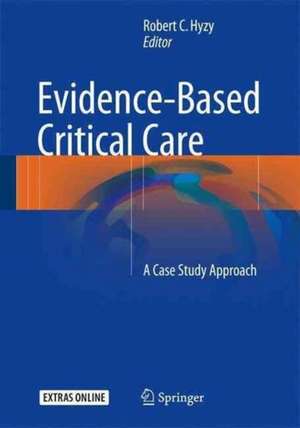
Evidence-Based Critical Care: A Case Study Approach

Editat de Robert C. Hyzy
en Limba Engleză Hardback – 7 iun 2017

În fața unui pacient aflat în stare critică, unde secundele dictează prognosticul, dilema diagnostică între un șoc nediferențiat și o insuficiență cardiacă acută necesită o sinteză rapidă a dovezilor clinice. Evidence-Based Critical Care abordează direct această provocare prin utilizarea unei metodologii pedagogice inovatoare: învățarea bazată pe caz. Notăm cu interes modul în care fiecare capitol debutează cu o vignetă clinică autentică, ce culminează cu o întrebare critică de management, oferind ulterior o rezoluție bazată pe cele mai recente date din literatura de specialitate.

Suntem de părere că structura acestui manual, editat de Robert C. Hyzy, transformă lectura dintr-o acumulare pasivă de informații într-un exercițiu activ de raționament medical. Volumul parcurge sistematic scenarii complexe, de la implementarea ventilației non-invazive în exacerbările BPOC, până la gestionarea intoxicațiilor specifice (antidepresive triciclice sau etilenglicol) și a urgențelor aortice. Comparativ cu alte lucrări, acest titlu completează Case Studies in Adult Intensive Care Medicine prin accentul pus pe fundamentarea riguroasă a fiecărei decizii terapeutice prin dovezi, nu doar prin prezentarea protocolului de examen. De asemenea, dacă Evidence-Based Practice of Critical Care se concentrează pe întrebări teoretice vaste, volumul de față ancorează teoria în realitatea patului de spital, fiind un instrument esențial pentru pregătirea examenelor de specialitate. Descoperim aici o resursă clinică în care rigoarea academică a editurii Springer se întâlnește cu necesitățile practice ale unității de terapie intensivă.

Citește tot Restrânge

Preț: 112402 lei

Preț vechi: 118318 lei
-5%

Puncte Express: 1686

Carte disponibilă

Livrare economică 16-30 mai
Livrare express 05-09 mai pentru 10146 lei


Specificații

ISBN-13: 9783319433394
ISBN-10: 3319433393
Pagini: 728
Dimensiuni: 178 x 254 x 45 mm
Greutate: 1.91 kg
Ediția:1st ed. 2017
Editura: Springer
Colecția Springer
Locul publicării:Cham, Switzerland

De ce să citești această carte

Această lucrare este esențială pentru medicii din terapia intensivă și medicina de urgență care doresc să își rafineze procesul decizional. Cititorul câștigă capacitatea de a aplica dovezi clinice complexe în scenarii reale de viață și moarte. Este un ghid practic care transformă incertitudinea diagnosticului în acțiune medicală fundamentată, fiind ideal atât pentru practica zilnică, cât și pentru revizuirea cunoștințelor înaintea examenelor de board.


Despre autor

Robert C. Hyzy este un specialist recunoscut în medicină critică și boli pulmonare, activând ca profesor și clinician cu o vastă experiență în managementul unităților de terapie intensivă. În calitate de editor pentru Springer, el a coordonat numeroase proiecte editoriale axate pe siguranța pacientului și implementarea protocoalelor bazate pe dovezi în mediul clinic. Expertiza sa este reflectată în acest volum prin selecția riguroasă a cazurilor și prin claritatea cu care sunt prezentate intervențiile salvatoare, adaptate nevoilor de formare ale medicilor tineri și specialiștilor deopotrivă.


Descriere scurtă

This book provides learners with a unique opportunity by virtue of the format outlined above.  Each case presentation has a case vignette, which leads up to an important clinical question, and is followed by additional discussion which resolves the question posed. This is a new way to present knowledge in a medical book and should help critical care practitioners, fellows, residents, allied health professionals and students expand their critical care knowledge in an efficient and effective manner.  This approach should also benefit those preparing for board examinations.  


Cuprins

Cardiac Arrest Management.- Post- Cardiac Arrest Management.- Undifferentiated Shock.- Hypovolemic Shock and Massive Transfusion.- Acute Respiratory Failure - NIV Implementation and Intubation.- Diagnosis and Management of Tricyclic Antidepressant Ingestion.- Management of Calcium Channel Blocker Poisoning.- Diagnosis and Management of Ethylene Glycol Ingestion.- Accidental Hypothermia.- Management of Cardiogenic Shock.- Management of Acute Heart Failure.- Management of Acute Coronary Syndrome.- Complications of Myocardial Infarction.- Management of Cardiac Tamponade.- Hypertensive Crises.- Atrial Fibrillation and Other Supraventricular Tachycardias.- Ventricular Arrhythmias.- Management of Acute Aortic Syndromes.- Management of Endocarditis.- Community Acquired Pneumonia.- Management of Acute Respiratory Distress Syndrome.- Acute Exacerbation of COPD:  Non-Invasive Positive Pressure Ventilation.- Management of Status Asthmaticus.- Immunocompromised Pneumonia.- Venous Thromboembolism in the Intensive Care Unit.- Massive Hemoptysis.- Sedation and Delirium.- Prolonged Mechanical Ventilation.- Ventilator-Associated Pneumonia and Other Complications.- Respiratory Failure in a Patient with Idiopathic Pulmonary Fibrosis.- Weaning from Mechanical Ventilation.- The Post-Intensive Care Syndrome.- Management of Decompensated Right Ventricular Failure in the Intensive Care Unit.- Diffuse Alveolar Hemorrhage.- Acute Stroke Emergency Management.- Bacterial Meningitis in the ICU.- Management of Intracerebral Hemorrhage.- Status Epilepticus.- Neuroleptic Malignant Syndrome.- Traumatic Brain Injury.- Management of Anoxic Brain Injury.- Traditional and Novel Tools for Diagnosis of Acute Kidney Injury.- Management of Acute Kidney Injury.- Rhabdomyolysis.- Hyponatremia.- Management of Severe Hyponatremia and SIADH.- Diabetic Ketoacidosis.- Thyroid Storm.- Adrenal Insufficiency.- Management of Hyperglycemic Hyperosmolar Syndrome.- Management of Myxedema Coma.- Urosepsis.- Management of Sepsis and Septic Shock.- Invasive Aspergillus.- Management of Strongyloides Hyperinfection Syndrome.- Treatment of Viral Hemorrhagic Fever in a Well-Resourced Environment.- Management of Severe Malaria.- Dengue.- Chikungunya.- Leptospirosis.- Management of Acute Upper Gastrointestinal Hemorrhage.- Variceal Hemorrhage.- Acute Pancreatitis.- Management of Acute Liver Failure.- Acute Lower Gastrointestinal Bleeding.- Diagnosis and Management of Clostridium Difficile Infection (CDI).- Principles of Nutrition in the Critically Ill Patient.- Spontaneous Bacterial Peritonitis.- ICU Management of the Patient with Alcoholic Liver Disease.- Diagnosis and Management of Thrombotic.- Thrombocytopenic Purpura.- Acute Leukemia Presentation with DIC.- Disseminated Intravascular Coagulation.- Hemophagocytic Lymphohistiocytosis.- ICU Complications of Hematopoietic Stem Cell.- Transplantation Including Graft vs. Host Disease.- Tumor Lysis Syndrome.- Management of Hyperviscosity Syndromes.- Thoracic Trauma.- Blunt Abdominal Trauma.- Abdominal Sepsis and Complicated Intraabdominal Infection.- Intestinal Obstruction: Small and Large Bowel.- Management of Acute Compartment Syndrome.- Extracorporeal Membrane Oxygenation (ECMO) and Extracorporeal CO2 Removal (ECCO2R).- Management of Acute Thermal Injury.- Acute Arterial Ischemia.- Management of Necrotizing Soft Tissue Infection.- Biliary Infections.- Peripartum Cardiomyopathy.- Management of Amniotic Fluid Embolism.- Respiratory Diseases of Pregnancy.- Preeclampsia, Eclampsia and HELLP Syndrome.- Management of Severe Skin Eruptions.- Management of Alcohol Withdrawal Syndromes.- End of Life Care in the ICU

Recenzii

“Evidence-Based Critical Care: A Case Study Approach is an invaluable source of knowledge and reference for anesthesiologists and perioperative physicians. This textbook is a well-written, easy-to-understand reference that covers a broad range of critical care topics organized according to syndrome or diagnosis. ... Clinicians in training will benefit from the entirety of the chapters, whereas attending physicians may find the greatest value in the evidence portions.” (Warren Luksun and Marcin Wąsowicz, Anesthesia & Analgesia, Vol. 126 (4), April, 2018)

Notă biografică

Dr. Robert C. Hyzy is a Professor of Medicine in the Division of Pulmonary and Critical Care Medicine at the University of Michigan in Ann Arbor. Dr. Hyzy is a graduate of Kenyon College and received his medical degree from New York University School of Medicine in New York City. Dr. Hyzy completed his residency in Internal Medicine and fellowship in Pulmonary and Critical Care Medicine at the University of Michigan. He is Director of the Critical Care Medicine Unit at the University of Michigan Hospital and Co-Chair of the University of Michigan Hospital Critical Care Committee. Dr. Hyzy’s research interests are in the area of critical care medicine, including ARDS, ventilator associated pneumonia, and quality improvement. He was the principal investigator of an NIH funded trial examining the efficacy of GM-CSF in patients with Acute Lung Injury. He is currently the site Principal Investigator of NIH sponsored trials in the treatment of ARDS and in the treatment of delirium in the intensive care unit. He is a member of the American College of Chest Physicians Guidelines Oversight Committee and Chairs the American Thoracic Society Quality Improvement Committee. Dr. Hyzy has spoken nationally and internationally on several topics related to Critical Care Medicine. He has published multiple articles and chapters in medical journals and textbooks and has served as a reviewer for several major medical journals including Critical Care Medicine, Chest, Annals of Internal Medicine and the American Journal of Respiratory and Critical Care Medicine. His editorial work includes a volume of the Clinics in Critical Care Medicine, entitled, “Enhancing the Quality of Care in the ICU, ” published in 2013. In addition, Dr. Hyzy contributes thirteen topics on mechanical ventilation to the web based medical resource UpToDate.

Textul de pe ultima copertă

This textbook approaches the study of critical care with teaching in mind. In medicine “teachable moments” usually occur in clinical context, where the engagement in a real case exemplifies principles of diagnosis or therapy. In order to replicate the teaching method, selected cases are presented within each chapter offering the reader an opportunity to process and reflect on the components of the topic within a practical scenario.  

While medical practice attempts to be evidence-based, common approaches to diagnosis and management incorporate not only evidence but heuristics and biases which await either validation or repudiation.  Hence, each chapter is divided into two segments:  the “Principles of Management” section – the common approach to the care of patients having a given condition is presented – and the “Evidence Contour” section, in which each author discusses the aspects of diagnosis and management that are the subject of ongoing debate.

Evidence-Based Critical Care: A Case Study Approach bridges the gulf between the traditional encyclopedic textbook and the single-hit online repository. This approach will help critical care practitioners, fellows, residents, allied health professionals and students expand their critical care knowledge in an efficient and effective manner, while being especially important for those preparing for board examinations.


Caracteristici

Case-based approach closely replicates the usual clinical learning process in medicine

Takes a novel approach to the presentation of information with the emphasis placed on evidenced based medicine and the boundaries of current knowledge, what we are calling the “evidence contour”​

Bridges the gulf between the traditional encyclopedic textbook and the single-hit online reference