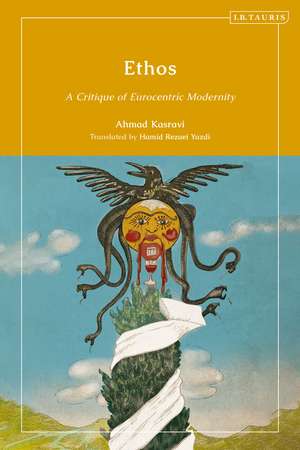
Ethos: A Critique of Eurocentric Modernity
Autor Ahmad Kasravi Traducere de Dr. Hamid Rezai Yazdien Limba Engleză Paperback – 20 feb 2025
Preț: 196.80 lei
Preț vechi: 269.73 lei
-27%
Puncte Express: 295
Carte disponibilă
Livrare economică 20 august-03 septembrie
Livrare prin curier în România Termenul estimat este afișat lângă disponibilitate.
Transport gratuit de la 400.00 lei Plată online sau ramburs, în funcție de opțiunile comenzii.
Retur gratuit în 14 zile Comandă securizată și suport în română.
Specificații
ISBN-13: 9780755647798
ISBN-10: 0755647793
Pagini: 224
Dimensiuni: 154 x 234 x 16 mm
Greutate: 0.34 kg
Editura: Bloomsbury Publishing
Colecția I.B.Tauris
Locul publicării:London, United Kingdom
ISBN-10: 0755647793
Pagini: 224
Dimensiuni: 154 x 234 x 16 mm
Greutate: 0.34 kg
Editura: Bloomsbury Publishing
Colecția I.B.Tauris
Locul publicării:London, United Kingdom
Cuprins
Translator's Note / Introduction by Mohamad Tavakoli-Targhi
Part I.
Thesis one: The earth and earthlings
Thesis two: Is the world progressing?
Thesis three: The consequence of Europe's inventions
Thesis four: The instruments have changed, the war remains
Thesis five: Europe disrupts the world's tranquillity
Thesis six: Can law replace religion?
Thesis seven: Europe's woes
Thesis eight: What will be the consequence of machinism?
Thesis nine: What have the prophets said and what does Europe say?
Thesis ten: The Eurocentric movement in Iran
Thesis eleven: The East loses its treasures
Thesis twelve: What is civilization?
Thesis thirteen: European sciences
Thesis fourteen: Women should not be headstrong
Thesis fifteen: A leader does not lie to his own people
Thesis sixteen: We must not look to Europe
Thesis seventeen: What is religion?
Thesis eighteen: Religion is humanism
Part II
Thesis one: In the Creator's virtuous name
Thesis two: How has Europe become entangled?
Thesis three: Ancient grudges
Thesis four: Irreligiosity and unethical education
Thesis five: The harms of machinism
Thesis six: Madness
Thesis seven: Bolshevism
Thesis eight: Three principles of life
Thesis nine: Deviant leaders
Thesis ten: The rites of life
Thesis eleven: Brotherly behaviour
Thesis twelve: Agriculture
Thesis thirteen: European laws [1]
Thesis fourteen: European laws [2]
Thesis fifteen: European laws [3]
Thesis sixteen: Righteous and evil dispositions
Thesis seventeen: The value of European inventions
Thesis eighteen: The Orient and the Occident
Thesis nineteen: The great Geneva Convention
Thesis twenty: What is our claim?
Part I.
Thesis one: The earth and earthlings
Thesis two: Is the world progressing?
Thesis three: The consequence of Europe's inventions
Thesis four: The instruments have changed, the war remains
Thesis five: Europe disrupts the world's tranquillity
Thesis six: Can law replace religion?
Thesis seven: Europe's woes
Thesis eight: What will be the consequence of machinism?
Thesis nine: What have the prophets said and what does Europe say?
Thesis ten: The Eurocentric movement in Iran
Thesis eleven: The East loses its treasures
Thesis twelve: What is civilization?
Thesis thirteen: European sciences
Thesis fourteen: Women should not be headstrong
Thesis fifteen: A leader does not lie to his own people
Thesis sixteen: We must not look to Europe
Thesis seventeen: What is religion?
Thesis eighteen: Religion is humanism
Part II
Thesis one: In the Creator's virtuous name
Thesis two: How has Europe become entangled?
Thesis three: Ancient grudges
Thesis four: Irreligiosity and unethical education
Thesis five: The harms of machinism
Thesis six: Madness
Thesis seven: Bolshevism
Thesis eight: Three principles of life
Thesis nine: Deviant leaders
Thesis ten: The rites of life
Thesis eleven: Brotherly behaviour
Thesis twelve: Agriculture
Thesis thirteen: European laws [1]
Thesis fourteen: European laws [2]
Thesis fifteen: European laws [3]
Thesis sixteen: Righteous and evil dispositions
Thesis seventeen: The value of European inventions
Thesis eighteen: The Orient and the Occident
Thesis nineteen: The great Geneva Convention
Thesis twenty: What is our claim?
Recenzii
This translation of Kasravi's A'in (Ethos) is an outstanding contribution to nativist works and critiques of Orientalism from Iran. There are only a few English translations of Kasravi's compositions, and this is an accurate and valuable addition to the literature on this provocative pre-WWII observer of the ills of Europe. The translation by Rezae Yazdi is precise and readable, and the work is contextualised superbly by an introduction and afterward by Tavakoli-Targhi and Jaskowski respectively
Hamid Rezaei Yazdi's excellent translation of Ahmad Kasravi's text is a major addition to growing non-western intellectual contribution to post-colonial literature. Kasravi's critique of Eurocentrism modernity marks Iran's vibrant intellectual atmosphere during the inter-war period. This book represents a more 'cosmopolitan' view of Iran's encounter with the modern west and Mohamad Tavakol Taraghi's introduction provides a thoughtful historical context in understanding Kasravi's vision for his country.
At the turn of the twentieth century, a surge of brilliant intellectual personalities with many-sided interests and activities emerged in Iran. The profound discussions on modernity and tradition, nationalism and Islam, East and West, during this period heavily influence present-day Iran. One of the most fascinating individuals of this period was Ahmad Kasravi (1890-1946) - a historian, linguist, lawyer and journalist. He is widely known for his hostility towards Shi'i Islam and Sufism and his controversial book-burning rituals. The present translation of his fundamental, yet little-known treatise A'in (Ethos), together with its excellent foreword by Tavakoli-Targhi and afterword by Jaskowski, gives insight into Kasravi's intellectual legacy that usually passes unnoticed. This book demonstrates his highly critical attitude towards Western civilization and its disastrous influence on the East, and his belief in religion as a shield against the temptations of dehumanizing Western materialism. Interestingly, Kasravi calls for a charismatic leader who would bring the disoriented East back to its right path. The lecture of A'in makes one understand the winding and tangled ways the modern Persian mind travels: the ideological forerunners of the Islamic Revolution, Al-e Ahmad and Shari'ati, Kasravi's critics, unexpectedly turn out to be continuators and creative developers of his ideas. The book is therefore required reading for anyone interested in the intellectual history of modern Iran.
Hamid Rezaei Yazdi's excellent translation of Ahmad Kasravi's text is a major addition to growing non-western intellectual contribution to post-colonial literature. Kasravi's critique of Eurocentrism modernity marks Iran's vibrant intellectual atmosphere during the inter-war period. This book represents a more 'cosmopolitan' view of Iran's encounter with the modern west and Mohamad Tavakol Taraghi's introduction provides a thoughtful historical context in understanding Kasravi's vision for his country.
At the turn of the twentieth century, a surge of brilliant intellectual personalities with many-sided interests and activities emerged in Iran. The profound discussions on modernity and tradition, nationalism and Islam, East and West, during this period heavily influence present-day Iran. One of the most fascinating individuals of this period was Ahmad Kasravi (1890-1946) - a historian, linguist, lawyer and journalist. He is widely known for his hostility towards Shi'i Islam and Sufism and his controversial book-burning rituals. The present translation of his fundamental, yet little-known treatise A'in (Ethos), together with its excellent foreword by Tavakoli-Targhi and afterword by Jaskowski, gives insight into Kasravi's intellectual legacy that usually passes unnoticed. This book demonstrates his highly critical attitude towards Western civilization and its disastrous influence on the East, and his belief in religion as a shield against the temptations of dehumanizing Western materialism. Interestingly, Kasravi calls for a charismatic leader who would bring the disoriented East back to its right path. The lecture of A'in makes one understand the winding and tangled ways the modern Persian mind travels: the ideological forerunners of the Islamic Revolution, Al-e Ahmad and Shari'ati, Kasravi's critics, unexpectedly turn out to be continuators and creative developers of his ideas. The book is therefore required reading for anyone interested in the intellectual history of modern Iran.