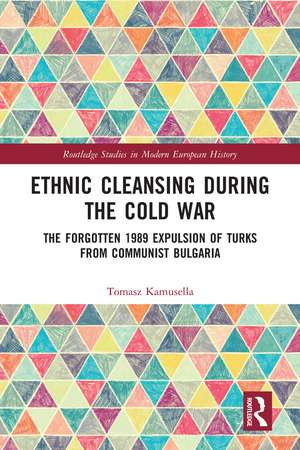
Ethnic Cleansing During the Cold War: The Forgotten 1989 Expulsion of Turks from Communist Bulgaria: Routledge Studies in Modern European History
Autor Tomasz Kamusellaen Limba Engleză Paperback – 30 iun 2020
Relevanța acestei lucrări pentru cercetarea academică și studiile de securitate europeană este incontestabilă, oferind cadrul necesar pentru înțelegerea mecanismelor de epurare etnică ce au precedat conflictele din fosta Iugoslavie. Observăm cum Ethnic Cleansing During the Cold War umple un gol istoriografic major, fiind prima monografie care documentează expulzarea a 360.000 de etnici turci din Bulgaria anului 1989 — un eveniment de o amploare fără precedent în a doua jumătate a secolului XX. Ne-a atras atenția modul în care Tomasz Kamusella demonstrează că acest act unilateral a fost singura încălcare majoră a Cortinei de Fier prin deplasări forțate de populație.
Din punct de vedere al structurii, volumul este organizat riguros, pornind de la stadiul actual al cercetării și analiza presei internaționale, până la consecințele politice imediate care au dus la prăbușirea regimului Todor Jivkov. Spre deosebire de Redrawing Nations de Philipp Ther, care se concentrează pe transferurile de populație de după cel de-al Doilea Război Mondial, lucrarea de față analizează un fenomen mult mai recent, subliniind caracterul reversibil al acestuia prin întoarcerea a aproape jumătate dintre expulzați. Cartea reprezintă o alternativă necesară la Bulgaria In Transition pentru cursurile de istorie contemporană a Balcanilor, având avantajul de a pune în lumină rolul crucial al „cardului etnonațional” în supraviețuirea și ulterior căderea sistemului comunist.
Poziționată în contextul operei autorului, lucrarea continuă temele explorate în Politics and the Slavic Languages și Languages and Nationalism Instead of Empires, rafinând analiza legăturii dintre identitate, limbă și control statal. Este un text dens, bazat pe surse primare, care nu doar recuperează o memorie traumatizantă, dar oferă și o perspectivă critică asupra justiției de tranziție în Europa de Est.
Din seria Routledge Studies in Modern European History
- 9%
 Preț: 1353.30 lei
-
 Preț: 493.63 lei
- 18%
 Preț: 1307.48 lei
- 18%
 Preț: 1119.14 lei
- 18%
 Preț: 1251.35 lei
- 15%
 Preț: 463.17 lei
-
 Preț: 482.00 lei
- 15%
 Preț: 452.13 lei
- 18%
 Preț: 1117.60 lei
- 18%
 Preț: 760.71 lei
-
 Preț: 410.99 lei
- 18%
 Preț: 1250.55 lei
-
 Preț: 474.19 lei
- 15%
 Preț: 536.60 lei
- 18%
 Preț: 1293.77 lei
- 18%
 Preț: 1151.85 lei
- 18%
 Preț: 1298.13 lei
- 18%
 Preț: 1252.93 lei
- 18%
 Preț: 1252.93 lei
-
 Preț: 302.43 lei
- 18%
 Preț: 1297.80 lei
-
 Preț: 441.26 lei
- 18%
 Preț: 1256.11 lei
-
 Preț: 486.16 lei
- 18%
 Preț: 1317.91 lei
- 5%
 Preț: 1505.99 lei
- 18%
 Preț: 1252.37 lei
- 18%
 Preț: 1260.05 lei
- 18%
 Preț: 1116.43 lei
- 18%
 Preț: 1295.57 lei
- 18%
 Preț: 1117.96 lei
- 18%
 Preț: 1251.60 lei
- 18%
 Preț: 1350.53 lei
-
 Preț: 470.92 lei
- 18%
 Preț: 1249.78 lei
- 18%
 Preț: 1286.90 lei
- 18%
 Preț: 1252.93 lei
- 18%
 Preț: 1112.48 lei
- 18%
 Preț: 1255.51 lei
- 18%
 Preț: 1248.98 lei
- 18%
 Preț: 1154.26 lei
- 18%
 Preț: 1114.04 lei
Preț: 383.44 lei
Preț vechi: 423.69 lei
-9%
Carte indisponibilă temporar
Specificații
ISBN-10: 0367588560
Pagini: 316
Dimensiuni: 156 x 234 x 21 mm
Greutate: 0.58 kg
Ediția:1
Editura: Taylor & Francis
Colecția Routledge
Seria Routledge Studies in Modern European History
Locul publicării:Oxford, United Kingdom
Public țintă
PostgraduateDe ce să citești această carte
Această monografie este esențială pentru studenții și cercetătorii în istorie europeană și științe politice care doresc să înțeleagă rădăcinile conflictelor etnice moderne. Cititorul câștigă o perspectivă documentată asupra unui eveniment ignorat de istoriografia clasică, dar care a modelat Bulgaria de astăzi și relațiile sale cu Turcia și Uniunea Europeană. Este un instrument critic pentru înțelegerea mecanismelor de putere din spatele Cortinei de Fier.
Despre autor
Tomasz Kamusella este un cercetător recunoscut, activ la Universitatea din Opole, Polonia, din 1995. Expertiza sa acoperă domenii complexe precum etnicismul, naționalismul și formarea limbilor în context european. Prin lucrările sale anterioare, precum The Szlonzoks and Their Language și studii despre naționalismul lingvistic în Europa Centrală, Kamusella s-a impus ca o voce autorizată în analiza modului în care statele-națiune manipulează identitățile culturale. Abordarea sa în acest volum reflectă o carieră dedicată înțelegerii integrării europene și a tensiunilor istorice din spațiul est-european.