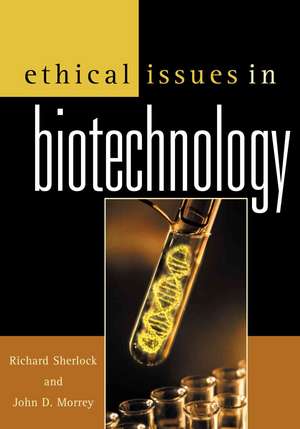
Ethical Issues in Biotechnology
Editat de Richard Sherlock, John D. Morrey Contribuţii de Nicholas Agar, Miguel Altieri, American Association for the Advancement of Science, F H. Bach et. al, eds., Coalition of Americans for Research Ethics, Carl Cohen, Ronnie Cummings, Joyce D'Silva, H T. Englehardt, Ron Epstein, J.R.S Fincham, Mira Fong, R G. Frey, Jean Halloran, Michael Hansen, Heta Hayry, Bette Hillman, A Holland, Leon Kass, D A. Kessler et. al, Andrew Linzey, Miriam McGillis, Martina McGloughlin, National Academy of Sciences, National Bioethics Advisory Commission, Organization for Economic Cooperation, Development, Julie Palmer, Steven Palumbi, Madison Powers, J R. Ravetz, Rosamond Rhodes, B E. Rollin, Peter M. Rosset, Paul Thompson, Harold Vanderpool, Allen Verhey, Robert Wachbroit, LeRoy Waltersen Limba Engleză Paperback – 9 oct 2002
A general introduction to both the moral philosophy and fundamentals of genetics is enhanced throughout the text with section-specific introductions addressing the particular philosophical and scientific challenges posed by the topic under consideration. Diagrams and drawings, study cases, liberal use of practical examples, and suggestions for further reading make the text an ideal resource for a broad range of students interested in issues and questions lying at the intersection of philosophy and genetics.
Preț: 500.60 lei
Preț vechi: 675.99 lei
-26%
Puncte Express: 751
Carte tipărită la comandă
Livrare economică 30 noiembrie-14 decembrie
Livrare prin curier în România Termenul estimat este afișat lângă disponibilitate.
Transport gratuit pentru acest produs Plată online sau ramburs, în funcție de opțiunile comenzii.
Retur gratuit în 14 zile Comandă securizată și suport în română.
Specificații
ISBN-13: 9780742513778
ISBN-10: 0742513777
Pagini: 358
Dimensiuni: 173 x 261 x 30 mm
Greutate: 1.15 kg
Ediția:New.
Editura: Bloomsbury Publishing
Colecția Rowman & Littlefield
Locul publicării:New York, United States
ISBN-10: 0742513777
Pagini: 358
Dimensiuni: 173 x 261 x 30 mm
Greutate: 1.15 kg
Ediția:New.
Editura: Bloomsbury Publishing
Colecția Rowman & Littlefield
Locul publicării:New York, United States
V-ar putea interesa
-
 -26%Preț: 438.59 lei589.92 lei
 -
 The Ethics of Transplants: Why Careless Thought Costs LivesJanet Radcliffe Richards-19%Preț: 126.78 lei156.17 lei
 -
 Careless Thought Costs Lives: The Ethics of TransplantsJanet Radcliffe Richards-18%Preț: 120.73 lei148.02 lei
 -
 The Future of Bioethics: International DialoguesAkira Akabayashi-24%Preț: 851.65 lei1114.10 lei
 -
 -24%Preț: 602.74 lei795.94 lei
 -
 -33%Preț: 740.14 lei1100.19 lei
 -
 -26%Preț: 741.98 lei999.63 lei
 -
 -16%Preț: 934.82 lei1112.43 lei
 -
 Ethics Field Guide: Applications to Rehabilitation PsychologyThomas R. Kerkhoff-31%Preț: 480.57 lei692.94 lei
 -
 -5%Preț: 194.49 lei204.73 lei
 -
 Ethics in Speech and Language TherapyRichard Body-8%Preț: 445.05 lei483.76 lei
 -
 Taking Biology Seriously: What Biology Can and Cannot Tell Us About Moral and Public Policy IssuesInmaculada De Melo-Martín-28%Preț: 241.80 lei333.60 lei
 -
 -16%Preț: 95.47 lei113.46 lei
 -
 PsychosurgeryMarc Lévêque-21%Preț: 620.00 lei785.86 lei
 -
 Handbook of Global BioethicsHenk A. M. J. Ten Have-18%Preț: 3223.45 lei3931.03 lei
Cuprins
Chapter 1 Introduction
Part 2 I. Fundamental Issues of Ethics and Biotechnology
Chapter 3 How to Assess the Consequences of Genetic Engineering
Chapter 4 Redesigning the World: Ethical Questions About Genetic Engineering
Chapter 5 "Playing God" and Invoking a Perspective
Chapter 6 Genetic Trespassing and Environmental Ethics
Part 7 II. Agricultural Biotechnology
Chapter 8 Differing Views of the Benefits and Risks of Agricultural Biotechnology
Chapter 9 Risk and Risk Management
Chapter 10 Journey to the Origin: Biological Integrity and Agriculture
Chapter 11 Three Concepts of Genetic Trespassing
Chapter 12 Ten Reasons Why Biotechnology Will Be Important to the Developing World
Chapter 13 Ten Reasons Why Biotechnology Will Not Ensure Food Security, Protect the Environment, or Reduce Poverty in the Developing World
Part 14 III. Food Biotechnology
Chapter 15 The Scientific and Health Aspects of Genetically Modified Foods: Rapporteurs' Summary
Chapter 16 The Safety of Foods Developed by Biotechnology
Chapter 17 Hazards of Genetically Engineered Foods and Crops: Why We Need a Global Moratorium
Chapter 18 Why We Need Labeling of Genetically Engineered Food
Chapter 19 Ethical Issues in Food Biotechnology
Part 20 IV. Animal Biotechnology
Chapter 21 A Critical View of the Genetic Engineering of Farm Animals
Chapter 22 The "Frankenstein Thing": The Moral Impact of Genetic Engineering of Agricultural Animals on Society and Future Science
Chapter 23 On the Ethics of Using Animals for Human Benefit
Chapter 24 The Case for the Use of Animals in Biomedical Research
Chapter 25 Artificial Lives: Philosophical Dimensions of Farm Animal Biotechnology
Chapter 26 Genetic Engineering as Animal Slavery
Chapter 27 Uncertainty in Xenotransplantation: Individual Benefit versus Collective Risk
Chapter 28 Critical Ethical Issues in Clinical Trials with Xenotransplants
Part 29 V. Human Genetic Testing and Therapy
Chapter 30 Social, Legal, and Ethical Implications of Genetic Testing
Chapter 31 Genetic Links, Family Ties, and Social Bonds: Rights and Responsibilities in the Face of Genetic Knowledge
Chapter 32 Privacy and the Control of Genetic Information
Chapter 33 The Ethics of Somatic Cell Gene Therapy
Chapter 34 Human Inheritable Genetic Modifications: Assessing Scientific, Ethical, Religious, and Policy Issues
Chapter 35 Germ-Line Genetic Engineering and Moral Diversity: Moral Controversies in a Post-Christian World
Part 36 VI. Human Cloning and Stem Cell Research
Chapter 37 Human Cloning: Report and Recommendations of the Natioanl Bioethics Advisory Commission
Chapter 38 The Wisdom of Repugnance
Chapter 39 Genetic Encores: The Ethics of Human Cloning
Chapter 40 Stem Cell Research and Applications: Findings and Recommendations
Chapter 41 On Human Embryos and Stem Cell Research: An Appeal for Legally and Ethically Responsible Science and Public Policy
Chapter 42 Suggestions for Further Study
Chapter 43 Study Cases
Part 2 I. Fundamental Issues of Ethics and Biotechnology
Chapter 3 How to Assess the Consequences of Genetic Engineering
Chapter 4 Redesigning the World: Ethical Questions About Genetic Engineering
Chapter 5 "Playing God" and Invoking a Perspective
Chapter 6 Genetic Trespassing and Environmental Ethics
Part 7 II. Agricultural Biotechnology
Chapter 8 Differing Views of the Benefits and Risks of Agricultural Biotechnology
Chapter 9 Risk and Risk Management
Chapter 10 Journey to the Origin: Biological Integrity and Agriculture
Chapter 11 Three Concepts of Genetic Trespassing
Chapter 12 Ten Reasons Why Biotechnology Will Be Important to the Developing World
Chapter 13 Ten Reasons Why Biotechnology Will Not Ensure Food Security, Protect the Environment, or Reduce Poverty in the Developing World
Part 14 III. Food Biotechnology
Chapter 15 The Scientific and Health Aspects of Genetically Modified Foods: Rapporteurs' Summary
Chapter 16 The Safety of Foods Developed by Biotechnology
Chapter 17 Hazards of Genetically Engineered Foods and Crops: Why We Need a Global Moratorium
Chapter 18 Why We Need Labeling of Genetically Engineered Food
Chapter 19 Ethical Issues in Food Biotechnology
Part 20 IV. Animal Biotechnology
Chapter 21 A Critical View of the Genetic Engineering of Farm Animals
Chapter 22 The "Frankenstein Thing": The Moral Impact of Genetic Engineering of Agricultural Animals on Society and Future Science
Chapter 23 On the Ethics of Using Animals for Human Benefit
Chapter 24 The Case for the Use of Animals in Biomedical Research
Chapter 25 Artificial Lives: Philosophical Dimensions of Farm Animal Biotechnology
Chapter 26 Genetic Engineering as Animal Slavery
Chapter 27 Uncertainty in Xenotransplantation: Individual Benefit versus Collective Risk
Chapter 28 Critical Ethical Issues in Clinical Trials with Xenotransplants
Part 29 V. Human Genetic Testing and Therapy
Chapter 30 Social, Legal, and Ethical Implications of Genetic Testing
Chapter 31 Genetic Links, Family Ties, and Social Bonds: Rights and Responsibilities in the Face of Genetic Knowledge
Chapter 32 Privacy and the Control of Genetic Information
Chapter 33 The Ethics of Somatic Cell Gene Therapy
Chapter 34 Human Inheritable Genetic Modifications: Assessing Scientific, Ethical, Religious, and Policy Issues
Chapter 35 Germ-Line Genetic Engineering and Moral Diversity: Moral Controversies in a Post-Christian World
Part 36 VI. Human Cloning and Stem Cell Research
Chapter 37 Human Cloning: Report and Recommendations of the Natioanl Bioethics Advisory Commission
Chapter 38 The Wisdom of Repugnance
Chapter 39 Genetic Encores: The Ethics of Human Cloning
Chapter 40 Stem Cell Research and Applications: Findings and Recommendations
Chapter 41 On Human Embryos and Stem Cell Research: An Appeal for Legally and Ethically Responsible Science and Public Policy
Chapter 42 Suggestions for Further Study
Chapter 43 Study Cases
Recenzii
This will be the field-defining book for the ethics of biotechnology. It is the best one-volume guide to the issues currently being debated with respect to the new genetic technologies, and the only one that illuminates the connections between medical and agricultural applications. Teachers will use it in the classroom, but beyond that it should be thought of as an indispensable read for anyone who wants to be informed about science, ethics, and public policy.
Richard Sherlock and John Morrey have developed a timely anthology on the ethical dimensions in biotechnology that is both scientifically sound and philosophically provocative. Engaging readings as well as a compendium of cases offer many formats for teachable dialogue between instructor and students. The questions-scientific, philosophical, political, legal, moral-examined through Ethical Issues in Biotechnology illustrate the urgent need for critical ethical scholarship in this rapidly emerging field. This anthology meets that need.
The most substantial and sophisticated treatment of biomedical ethics that I have come across recently, and a treatment that remains quite accessible to undergraduate students.
It is refreshingly atypical that the book does not just focus on human cloning or human genetic screening but takes on the whole topic of biotechnology. It is enterprising and clever to have a book edited collaboratively by a biologist and a philosopher, and the result is a balanced treatment. The readings have already been proven successful with students. With diagrams, study cases, examples, and suggestions for further research, the book is a comprehensive and well-expressed introduction to the science and ethics of biotechnology.
All who are involved in ethics and biotechnology should be immensely grateful for [Sherlock and Morrey's] efforts. Balanced and teachable, Ethical Issues in Biotechnology is a valuable contribution to the field, and a must-have for those teaching either undergraduates enrolled in upper-level courses, or graduates students, across the disciplines of science and humanities.
Sherlock and Morrey cover a fascinating and engaging set of cutting edge issues. This work covers biotechnology in the broadest sense of the word, contains masterfully selected readings, and challenges the reader to think into the future. It should be very useful to college, graduate, and professional students.
Richard Sherlock and John Morrey have developed a timely anthology on the ethical dimensions in biotechnology that is both scientifically sound and philosophically provocative. Engaging readings as well as a compendium of cases offer many formats for teachable dialogue between instructor and students. The questions-scientific, philosophical, political, legal, moral-examined through Ethical Issues in Biotechnology illustrate the urgent need for critical ethical scholarship in this rapidly emerging field. This anthology meets that need.
The most substantial and sophisticated treatment of biomedical ethics that I have come across recently, and a treatment that remains quite accessible to undergraduate students.
It is refreshingly atypical that the book does not just focus on human cloning or human genetic screening but takes on the whole topic of biotechnology. It is enterprising and clever to have a book edited collaboratively by a biologist and a philosopher, and the result is a balanced treatment. The readings have already been proven successful with students. With diagrams, study cases, examples, and suggestions for further research, the book is a comprehensive and well-expressed introduction to the science and ethics of biotechnology.
All who are involved in ethics and biotechnology should be immensely grateful for [Sherlock and Morrey's] efforts. Balanced and teachable, Ethical Issues in Biotechnology is a valuable contribution to the field, and a must-have for those teaching either undergraduates enrolled in upper-level courses, or graduates students, across the disciplines of science and humanities.
Sherlock and Morrey cover a fascinating and engaging set of cutting edge issues. This work covers biotechnology in the broadest sense of the word, contains masterfully selected readings, and challenges the reader to think into the future. It should be very useful to college, graduate, and professional students.