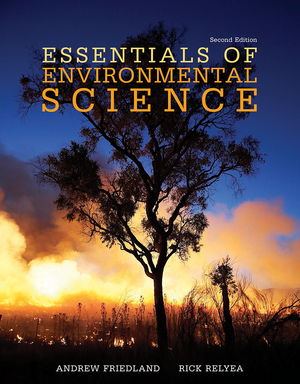
Essentials of Environmental Science
Autor Andrew Friedland, Rick Relyeaen Limba Engleză Paperback – 14 dec 2015
Analiza proceselor geologice, a solurilor și a mineralelor din capitolul al șaselea subliniază rigoarea științifică a acestui volum, oferind studenților o bază solidă pentru înțelegerea resurselor terestre. În această a doua ediție a Essentials of Environmental Science, autorii Andrew Friedland și Rick Relyea au reușit să condenseze materia vastă a științelor mediului în doar 15 capitole, format ideal pentru parcurgerea într-un singur semestru universitar. Apreciem în mod deosebit modul în care textul a fost simplificat: spre deosebire de edițiile anterioare sau de manualele tehnice exhaustive, această variantă pune un accent redus pe calculele matematice, prioritizând în schimb accesibilitatea și înțelegerea conceptuală. Structura volumului urmează o progresie logică, pornind de la fundamentele materiei și energiei, trecând prin dinamica populației umane și culminând cu soluții de politici publice și economie de mediu. Această organizare reflectă expertiza autorilor acumulată în lucrări precum Strive for a 5: Preparing for the AP® Environmental Science Exam, unde accentul era pus pe fixarea conceptelor-cheie și pregătirea pentru evaluări. Totuși, dacă lucrările lor anterioare erau ghiduri de studiu aplicate, volumul de față reprezintă resursa teoretică centrală, oferind contextul științific necesar. Considerăm că Essentials of Environmental Science completează perspectiva oferită de Environmental Science ISE de Eldon Enger. În timp ce lucrarea lui Enger se concentrează pe interrelațiile dintre realitățile politice și sociale, Friedland și Relyea oferă o tratare mai fluidă și mai sintetică a științelor pure — agricultură, energie și apă — fără a supraîncărca cititorul cu detalii tehnice care ar putea distrage de la conceptele fundamentale de conservare și schimbare globală.
Preț: 535.77 lei
Preț vechi: 898.00 lei
-40%
Carte disponibilă
Livrare economică 16-30 noiembrie
Specificații
ISBN-10: 131906566X
Pagini: 444
Dimensiuni: 235 x 279 x 19 mm
Greutate: 0.92 kg
Ediția:2nd edition
Editura: W. H. Freeman
V-ar putea interesa
-
 Environmental Science for the AP* CourseRick Relyea-26%Preț: 656.91 lei887.71 lei
 -
 Strive for a 5: Preparing for the AP® Environmental Science ExamAndrew FriedlandPreț: 425.40 lei
 -
 Preț: 322.09 lei
 -
 Raven Biology of PlantsRay Evert-18%Preț: 2086.06 lei2543.98 lei
 -
 Preț: 212.20 lei
 -
 -57%Preț: 254.63 lei596.24 lei
 -
 Psychiatrie, Psychoanalyse und die neue Biologie des GeistesEric R. KandelPreț: 141.86 lei
 -
 Acide rétinoïque et TGF-betaValérie Pendaries - Rahoul-19%Preț: 412.56 lei509.33 lei
 -
 -19%Preț: 479.61 lei592.11 lei
 -
 Le développement des plantes: rôle des gènes KNOXOlivier Hamant-19%Preț: 418.01 lei516.07 lei
 -
 Analyse et rationalisation des réseaux piézométriquesFaten Jarraya Horriche-23%Preț: 650.45 lei844.74 lei
De ce să citești această carte
Recomandăm acest manual studenților și autodidacților care doresc o introducere clară și imparțială în știința mediului. Prin eliminarea barierelor matematice dificile și concentrarea pe date esențiale, Essentials of Environmental Science permite o înțelegere rapidă a provocărilor ecologice actuale. Este resursa perfectă pentru un curs scurt, oferind instrumentele necesare pentru a analiza critic problemele de mediu, de la poluarea aerului la economia sustenabilă.
Descriere scurtă
Cuprins
Ch. 2 Matter, Energy, and Change
Ch. 3 Ecosystem Ecology and Biomes
Ch. 4 Evolution, Biodiversity, and Community Ecology
Ch. 5 Human Population Growth
Ch. 6 Geologic Processes, Soils, and Minerals
Ch. 7 Land Resources and Agriculture
Ch. 8 Nonrenewable and Renewable Energy
Ch. 9 Water Resources and Water Pollution
Ch. 10 Air Pollution
Ch. 11 Solid Waste Generation and Disposal
Ch. 12 Human Health Risk
Ch. 13 Conservation of Biodiversity
Ch. 14 Climate Alteration and Global Change
Ch. 15 Environmental Economics, Equity, and Policy