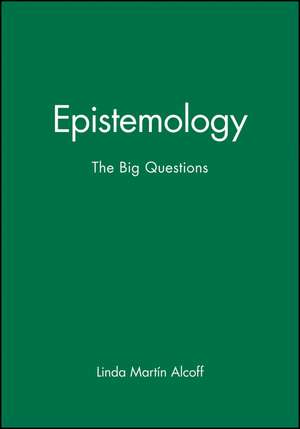
Epistemology
Autor Alcoff Editat de Linda Martin Alcoffen Limba Engleză Paperback – 1900
Preț: 463.00 lei
Preț vechi: 601.31 lei
-23%
Puncte Express: 695
Carte tipărită la comandă
Livrare economică 12-26 noiembrie
Livrare prin curier în România Termenul estimat este afișat lângă disponibilitate.
Transport gratuit pentru acest produs Plată online sau ramburs, în funcție de opțiunile comenzii.
Retur gratuit în 14 zile Comandă securizată și suport în română.
Specificații
ISBN-13: 9780631205807
ISBN-10: 0631205802
Pagini: 464
Dimensiuni: 170 x 244 x 25 mm
Greutate: 0.79 kg
Editura: Wiley
Locul publicării:Chichester, United Kingdom
ISBN-10: 0631205802
Pagini: 464
Dimensiuni: 170 x 244 x 25 mm
Greutate: 0.79 kg
Editura: Wiley
Locul publicării:Chichester, United Kingdom
V-ar putea interesa
-
 Visible Identities: Race, Gender, and the SelfLinda Martín Alcoff-19%Preț: 369.00 lei455.72 lei
 -
 -16%Preț: 115.35 lei137.56 lei
 -
 -11%Preț: 453.95 lei510.05 lei
 -
 Reasoning: A Social PictureAnthony Simon Laden-20%Preț: 303.90 lei381.20 lei
 -
 Epistemological DisjunctivismDuncan PritchardPreț: 211.27 lei
 -
 Knowledge on TrustPaul Faulkner-19%Preț: 283.37 lei349.61 lei
 -
 Knowing Right From WrongKieran Setiya-19%Preț: 269.40 lei331.36 lei
 -
 Free: Why Science Hasn't Disproved Free WillAlfred R. Mele-22%Preț: 108.85 lei139.26 lei
 -
 -21%Preț: 350.54 lei442.08 lei
 -
 Scepticism and Perceptual JustificationDylan Dodd-31%Preț: 697.56 lei1009.48 lei
 -
 Knowledge: A Very Short IntroductionJennifer Nagel-20%Preț: 55.78 lei70.14 lei
 -
 Quitting Certainties: A Bayesian Framework Modeling Degrees of BeliefMichael G. Titelbaum-19%Preț: 325.75 lei400.59 lei
 -
 Introduction to Contemporary EpistemologyJonathan DancyPreț: 283.18 lei
 -
 Preț: 394.89 lei
 -
 TruthChase WrennPreț: 187.50 lei
 -
 Against EpistemologyTheodor W AdornoPreț: 153.85 lei
 -
 Groups as AgentsDeborah Perron TollefsenPreț: 170.64 lei
 -
 A Companion to the Philosophy of ActionTimothy O'ConnorPreț: 390.74 lei
 -
 -9%Preț: 1233.58 lei1355.58 lei
 -
 Critical Thinking 2EHunter-8%Preț: 442.48 lei480.95 lei
 -
 Guide Through the Theory 3eMortonPreț: 284.77 lei
 -
 EpistemologyFumertonPreț: 291.10 lei
 -
 Insensitive SemanticsCappelenPreț: 363.17 lei
 -
 Tentacles Longer Than Night - Horror of Philosophy vol. 3Eugene ThackerPreț: 83.42 lei
Public țintă
undergraduate and beginning graduate students in epistemology, theory of knowledge, contemporary epistemologyNotă biografică
Linda Martin Alcoff is Associate Professor of Philosophy at Syracuse University. She is the author of Real Knowing: New Versions of the Coherence Theory of Knowledge (1996) and co-editor of Feminist Epistemologies (1993) which was named a Critic's Choice Book for 1993 by the American Educational Studies Association.
Cuprins
Preface. Acknowledgments.
Part I: What is Knowledge?:.
1. Introduction.
2. Meditations: Rene Descartes.
3. On Certainty: Ludwig Wittgenstein.
4. The Right to be Sure: A. J. Ayer.
5. Epistemology's End: Catherine Elgin.
Further Reading.
Part II: How Are Beliefs Justified?:.
6. Introduction.
7. Internalism and Externalism in Epistemology: William P. Alston.
8. The General Conditions of Knowledge: Justification: Carl Ginet.
9. What is Justified Belief?: Alvin Goldman.
10. Contextualism and Knowledge Attributions: Keith DeRose.
11. Taking Subjectivity into Account: Lorraine Code.
12. The Practices of Justification: Alessandra Tanesini.
Further Reading.
Part III: What is the Structure of Knowledge?:.
13. Introduction.
14. The Myth of the Given: Roderick Chisholm.
15. The Raft and the Pyramid: Ernest Sosa.
16. The Elements of Coherentism: Laurence BonJour.
17. The Hermeneutic Code: Hans-Georg Gadamer. Further Reading.
Part IV: What is Naturalized Epistemology?:.
18. Introduction.
19. Epistemology Naturalized: W. V. O. Quine.
20. What is 'Naturalized Epistemology? Jaegwon Kim.
21. Putting Naturalized Epistemology to Work: Phyllis Rooney. Further Reading.
Part V: What is Truth?:.
22. Introduction.
23. The Minimal Theory: Paul Horwich.
24. Language, Truth and Reason: Ian Hacking.
25. Pragmatism, Relativism, Irrationalism: Richard Rorty. Further Reading.
Part VI: What if We Don't Know Anything At All?:.
26. Introduction.
27. Cartesian Scepticism and Inference to the Best Explanation: Jonathan Vogel.
28. Skepticism and the Possibility of Knowledge: Barry Stroud.
29. Othello's Doubt/Desdemona's Death: The Engendering of Scepticism: Naomi Scheman.
Further Reading.
Part VII: How is Epistemology Political?.
30. Introduction.
31. The 'Maleness' of Reason: Genevieve Lloyd.
32. Alternative Epistemologies: Charles W. Mills.
33. Idols of the Cave: Mary Tiles and Jim Tiles.
Index.
Part I: What is Knowledge?:.
1. Introduction.
2. Meditations: Rene Descartes.
3. On Certainty: Ludwig Wittgenstein.
4. The Right to be Sure: A. J. Ayer.
5. Epistemology's End: Catherine Elgin.
Further Reading.
Part II: How Are Beliefs Justified?:.
6. Introduction.
7. Internalism and Externalism in Epistemology: William P. Alston.
8. The General Conditions of Knowledge: Justification: Carl Ginet.
9. What is Justified Belief?: Alvin Goldman.
10. Contextualism and Knowledge Attributions: Keith DeRose.
11. Taking Subjectivity into Account: Lorraine Code.
12. The Practices of Justification: Alessandra Tanesini.
Further Reading.
Part III: What is the Structure of Knowledge?:.
13. Introduction.
14. The Myth of the Given: Roderick Chisholm.
15. The Raft and the Pyramid: Ernest Sosa.
16. The Elements of Coherentism: Laurence BonJour.
17. The Hermeneutic Code: Hans-Georg Gadamer. Further Reading.
Part IV: What is Naturalized Epistemology?:.
18. Introduction.
19. Epistemology Naturalized: W. V. O. Quine.
20. What is 'Naturalized Epistemology? Jaegwon Kim.
21. Putting Naturalized Epistemology to Work: Phyllis Rooney. Further Reading.
Part V: What is Truth?:.
22. Introduction.
23. The Minimal Theory: Paul Horwich.
24. Language, Truth and Reason: Ian Hacking.
25. Pragmatism, Relativism, Irrationalism: Richard Rorty. Further Reading.
Part VI: What if We Don't Know Anything At All?:.
26. Introduction.
27. Cartesian Scepticism and Inference to the Best Explanation: Jonathan Vogel.
28. Skepticism and the Possibility of Knowledge: Barry Stroud.
29. Othello's Doubt/Desdemona's Death: The Engendering of Scepticism: Naomi Scheman.
Further Reading.
Part VII: How is Epistemology Political?.
30. Introduction.
31. The 'Maleness' of Reason: Genevieve Lloyd.
32. Alternative Epistemologies: Charles W. Mills.
33. Idols of the Cave: Mary Tiles and Jim Tiles.
Index.
Descriere
Includes new papers by distinguished authors. Extensive treatment of currently "hot" topics. Helpful suggestions concerning use with the most popular single-author texts. Covers a much wider range of topics than the competition.