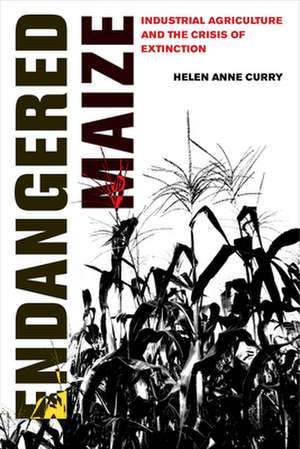
Endangered Maize: University of California Press
Autor Helen Anne Curryen Limba Engleză Paperback – 25 ian 2022
Găsim în Endangered Maize – Industrial Agriculture and the Crisis of Extinction o analiză riguroasă a metodologiilor care au definit conservarea diversității culturilor agricole în ultimul secol. Structura materialului urmărește evoluția eforturilor de salvare a porumbului, de la schimburile de semințe între fermieri până la băncile de gene de înaltă tehnologie, demonstrând cum deciziile politice și sociale au modelat prioritățile științifice. Autoarea Helen Anne Curry organizează volumul în jurul unei premise provocatoare: strategiile de conservare nu au fost doar răspunsuri la pierderea genetică, ci au fost construite pe acceptarea tacită a dispariției modului de viață al micilor fermieri. Putem afirma că acest volum aduce o perspectivă critică asupra modului în care „narațiunile despre extincție” dictează politicile agricole globale. Spre deosebire de abordările pur economice, Curry investighează legătura dintre cultură și știință, arătând cum așteptările privind transformarea socială au dus la izolarea semințelor în bănci de gene, în detrimentul menținerii lor în câmpurile fermierilor. Cititorii familiarizați cu The Struggle for Maize de Elizabeth Fitting vor aprecia modul în care Curry extinde dezbaterea de la globalizarea neoliberală către o istorie profundă a practicilor de cercetare din secolul XX. De asemenea, lucrarea completează temele din Saving the Seed de Renee Vellve, oferind un context istoric mult mai detaliat asupra modului în care uniformitatea industrială a devenit norma. Această carte reprezintă o continuare firească a cercetărilor autoarei din Evolution Made to Order, unde a explorat controlul uman asupra naturii prin tehnologie. Dacă în lucrările anterioare s-a concentrat pe instrumentele de modificare a plantelor, aici Helen Anne Curry analizează consecințele acestui control asupra biodiversității și societății, propunând o reevaluare a modului în care înțelegem pericolele ce pândesc sistemele noastre alimentare.
Din seria University of California Press
- 15%
 Preț: 489.42 lei
 - 16%
 Preț: 603.40 lei
 - 27%
 Preț: 718.91 lei
 -
 Preț: 308.50 lei
 - 23%
 Preț: 559.15 lei
 -
 Preț: 271.45 lei
 -
 Preț: 242.07 lei
 - 23%
 Preț: 523.05 lei
 - 23%
 Preț: 563.01 lei
 -
 Preț: 278.09 lei
 -
 Preț: 344.88 lei
 -
 Preț: 275.79 lei
 - 23%
 Preț: 468.62 lei
 -
 Preț: 314.96 lei
 - 23%
 Preț: 562.36 lei
 - 23%
 Preț: 507.53 lei
 - 23%
 Preț: 564.30 lei
 -
 Preț: 284.85 lei
 -
 Preț: 278.80 lei
 -
 Preț: 325.72 lei
 -
 Preț: 277.62 lei
 - 23%
 Preț: 561.82 lei
 - 23%
 Preț: 560.56 lei
 - 23%
 Preț: 561.87 lei
 - 23%
 Preț: 560.85 lei
 - 23%
 Preț: 566.17 lei
 -
 Preț: 166.31 lei
 -
 Preț: 526.65 lei
 -
 Preț: 277.16 lei
 - 23%
 Preț: 568.62 lei
 -
 Preț: 316.93 lei
 - 23%
 Preț: 563.97 lei
 -
 Preț: 165.19 lei
 -
 Preț: 515.97 lei
 -
 Preț: 196.27 lei
 -
 Preț: 255.56 lei
 - 23%
 Preț: 565.31 lei
 -
 Preț: 254.23 lei
 - 23%
 Preț: 565.58 lei
 -
 Preț: 301.23 lei
 - 23%
 Preț: 565.70 lei
 - 23%
 Preț: 562.07 lei
 -
 Preț: 285.86 lei
 - 23%
 Preț: 564.09 lei
Preț: 240.02 lei
Carte tipărită la comandă
Livrare economică 23 noiembrie-07 decembrie
Specificații
ISBN-10: 0520307690
Pagini: 336
Dimensiuni: 155 x 230 x 25 mm
Greutate: 0.43 kg
Editura: UCAL POD
Colecția University of California Press
Seria University of California Press
De ce să citești această carte
Această lucrare este esențială pentru studenții și specialiștii în studii culturale, agronomie și istoria științei. Cititorul câștigă o înțelegere profundă a motivelor pentru care metodele actuale de conservare a biodiversității eșuează adesea să protejeze comunitățile care au creat această diversitate. Este un argument solid pentru strategii alternative de conservare care să pună preț pe oameni, nu doar pe codul genetic al plantelor.
Despre autor
Helen Anne Curry este un istoric al științei și tehnologiei, preocupat de impactul inovației asupra agriculturii și mediului. În opera sa, care include titluri precum Evolution Made to Order și contribuții în Worlds of Natural History, Curry explorează modul în care intervenția umană a remodelat lumea naturală. Cercetările sale se concentrează pe istoria biotehnologiei și pe politicile de conservare a resurselor genetice, oferind o perspectivă critică asupra modului în care instituțiile internaționale, precum CGIAR, au influențat dezvoltarea agricolă globală în ultimele decenii.
Descriere
Charting the political, social, and environmental history of efforts to conserve crop diversity.
Many people worry that we're losing genetic diversity in the foods we eat. Over the past century, crop varieties standardized for industrial agriculture have increasingly dominated farm fields. Concerned about what this transition means for the future of food, scientists, farmers, and eaters have sought to protect fruits, grains, and vegetables they consider endangered. They have organized high-tech genebanks and heritage seed swaps. They have combed fields for ancient landraces and sought farmers growing Indigenous varieties. Behind this widespread concern for the loss of plant diversity lies another extinction narrative that concerns the survival of farmers themselves, a story that is often obscured by urgent calls to collect and preserve. Endangered Maize draws on the rich history of corn in Mexico and the United States to uncover this hidden narrative and show how it shaped the conservation strategies adopted by scientists, states, and citizens.
In Endangered Maize, historian Helen Anne Curry investigates more than a hundred years of agriculture and conservation practices to understand the tasks that farmers and researchers have considered essential to maintaining crop diversity. Through the contours of efforts to preserve diversity in one of the world's most important crops, Curry reveals how those who sought to protect native, traditional, and heritage crops forged their methods around the expectation that social, political, and economic transformations would eliminate diverse communities and cultures. In this fascinating study of how cultural narratives shape science, Curry argues for new understandings of endangerment and alternative strategies to protect and preserve crop diversity.