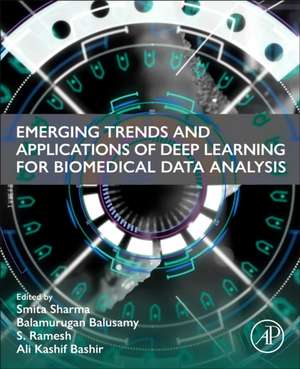
Emerging Trends and Applications of Deep Learning for Biomedical Data Analysis
Editat de Smita Sharma, Balamurugan Balusamy, S. Ramesh, Ali Kashif Bashiren Limba Engleză Paperback – 18 iun 2025
● Provides a succinct overview of the cutting-edge technologies that are altering disease diagnosis, patient monitoring, and medical research
● Bridges the gap between biomedical engineering and deep learning by providing a comprehensive resource for comprehending the intersection of these disciplines
● Investigates how deep learning may change healthcare by providing new insights, diagnostics, and treatments via intelligent biomedical systems
Preț: 870.62 lei
Preț vechi: 1234.11 lei
-29% Nou
Puncte Express: 1306
Preț estimativ în valută:
154.03€ • 179.73$ • 134.67£
154.03€ • 179.73$ • 134.67£
Carte tipărită la comandă
Livrare economică 10-24 ianuarie 26
Preluare comenzi: 021 569.72.76
Specificații
ISBN-13: 9780443267659
ISBN-10: 0443267650
Pagini: 232
Dimensiuni: 152 x 229 x 12 mm
Greutate: 0.39 kg
Editura: ELSEVIER SCIENCE
ISBN-10: 0443267650
Pagini: 232
Dimensiuni: 152 x 229 x 12 mm
Greutate: 0.39 kg
Editura: ELSEVIER SCIENCE
Cuprins
1. Deep learning, artificial intelligence, and bioinformatics promises innovations and imminent forecasts in SARS-COVID-19 genome data analysis
S. Sheik Asraf, P. Nagaraj, and V. Muneeswaran
1.1 Introduction
1.2 COVID-19—a global pandemic
1.3 Genomics of COVID-19
1.4 Applications of deep learning in COVID-19 genomics studies
1.5 Role of artificial intelligence in COVID-19 genomics research
1.6 Usage of bioinformatics tools, software, and databases in COVID-19 genomics investigation
1.7 Challenges and prospects of deep learning, artificial intelligence, and bioinformatics in COVID-19 genomics
1.8 Conclusion
References
2. Integration of IoT and AI for potato leaf disease detection: enhancing agricultural efficiency and sustainability
E. Senthamil Selvi and S. Anusuya
2.1 Introduction
2.2 Literature survey
2.3 Classification process for potato leaf diseases
2.4 Image preliminary processing
2.5 Image augmentation
2.6 Feature extraction
2.7 Evaluation and recognition
2.8 Methods and materials
2.9 Transfer learning
2.10 Pretrained network model
2.11 Proposed model
2.12 Result and discussion
2.13 Conclusion
2.14 Future work
References
3. A hybridized long–short-term memory networks-based deep learning model using reptile search optimization for COVID-19 prediction
Balakrishnama Manohar, Raja Das, Potharla Ramadevi, and Balamurugan Balusamy
3.1 Introduction
3.2 Materials and methods
3.3 Data preprocessing
3.4 Data normalization
3.5 Proposed methodology
3.6 Methodology
3.7 Reptile search algorithm
3.8 Encircling phase (global search or exploration)
3.9 Hunting phase (local search or exploitation)
3.10 Optimized long–short-term memory networks-reptile search algorithm model
3.11 Model evaluation
3.12 Results
3.13 Conclusion
References
4. Improving coronavirus classification accuracy with transfer learning and chest radiograph analysis
M. Lakshmi, Raja Das, Balakrishnama Manohar, and Balamurugan Balusamy
4.1 Introduction
4.2 Related works
4.3 Materials and methods
4.4 Results and discussion
4.5 Conclusion
References
5. A hybrid deep neural network using the Levenberg–Marquardt algorithm applied to the nonlinear magnetohydrodynamic Jeffery–Hamel blood flow problem
Priyanka Chandra, Raja Das, and Smita Sharma
5.1 Introduction
5.2 Mathematical modeling
5.3 Solution methodology
5.4 Result and discussion
5.5 Conclusion
Ethical statement
Acknowledgment
Declaration of interest statement
Funding
Data availability statement
References
6. An image segmentation method using intuitionistic fuzzy k-means and convolutional neural networks in multiclass image classification
Potharla Ramadevi, Raja Das, M. Lakshmi, Balakrishnama Manohar, and Smita Sharma
6.1 Introduction
6.2 Related works
6.3 Methodology
6.4 Results and discussion
6.5 Conclusion
References
7. Deep learning for wearable sensor data analysis
P. Aakash Kumar, Abha Rani, S. Amutha, and B. Surendiran
7.1 Introduction
7.2 Literature review
7.3 Methodology
7.4 Result and discussion
7.5 Conclusion
References
8. Unveiling emotions in real-time: a novel approach to face emotion recognition
Gowthami V. and Vijayalakshmi R.
8.1 Introduction
8.2 Convolutional neural network
8.3 Objective
8.4 Literature survey
8.5 Proposed work
8.6 Pseudocode for training the model
8.7 Results
8.8 Future work
References
Further reading
9. Unleashing the power of convolutional neural networks for diabetic retinopathy detection in ophthalmology
Gowthami V. and K. Alamelu
9.1 Introduction
9.2 Literature review
9.3 System methodology
9.4 Result and discussion
9.5 Conclusion and future work
References
10. Case studies and use cases of deep learning for biomedical applications
Amutha Prabakar Muniyandi, Padmavathy T., and Balamurugan Balusamy
10.1 Introduction
10.2 Impact of deep learning in bio-engineering
10.3 Evolution of artificial neural networks
10.4 Applications of deep learning—bioinformatics
10.5 Explainable artificial intelligence in bioinformatics
10.6 Conclusion
References
11. A convolutional neural network-based deep ensemble method for computed tomography scan image-based lung cancer diagnosis
R. Jothi, Shravani Swaroop Urala, and K. Muthukumaran
11.1 Introduction
11.2 Related work
11.3 Dataset
11.4 Methodology
11.5 Experimental results and discussion
11.6 Conclusion
References
Index
S. Sheik Asraf, P. Nagaraj, and V. Muneeswaran
1.1 Introduction
1.2 COVID-19—a global pandemic
1.3 Genomics of COVID-19
1.4 Applications of deep learning in COVID-19 genomics studies
1.5 Role of artificial intelligence in COVID-19 genomics research
1.6 Usage of bioinformatics tools, software, and databases in COVID-19 genomics investigation
1.7 Challenges and prospects of deep learning, artificial intelligence, and bioinformatics in COVID-19 genomics
1.8 Conclusion
References
2. Integration of IoT and AI for potato leaf disease detection: enhancing agricultural efficiency and sustainability
E. Senthamil Selvi and S. Anusuya
2.1 Introduction
2.2 Literature survey
2.3 Classification process for potato leaf diseases
2.4 Image preliminary processing
2.5 Image augmentation
2.6 Feature extraction
2.7 Evaluation and recognition
2.8 Methods and materials
2.9 Transfer learning
2.10 Pretrained network model
2.11 Proposed model
2.12 Result and discussion
2.13 Conclusion
2.14 Future work
References
3. A hybridized long–short-term memory networks-based deep learning model using reptile search optimization for COVID-19 prediction
Balakrishnama Manohar, Raja Das, Potharla Ramadevi, and Balamurugan Balusamy
3.1 Introduction
3.2 Materials and methods
3.3 Data preprocessing
3.4 Data normalization
3.5 Proposed methodology
3.6 Methodology
3.7 Reptile search algorithm
3.8 Encircling phase (global search or exploration)
3.9 Hunting phase (local search or exploitation)
3.10 Optimized long–short-term memory networks-reptile search algorithm model
3.11 Model evaluation
3.12 Results
3.13 Conclusion
References
4. Improving coronavirus classification accuracy with transfer learning and chest radiograph analysis
M. Lakshmi, Raja Das, Balakrishnama Manohar, and Balamurugan Balusamy
4.1 Introduction
4.2 Related works
4.3 Materials and methods
4.4 Results and discussion
4.5 Conclusion
References
5. A hybrid deep neural network using the Levenberg–Marquardt algorithm applied to the nonlinear magnetohydrodynamic Jeffery–Hamel blood flow problem
Priyanka Chandra, Raja Das, and Smita Sharma
5.1 Introduction
5.2 Mathematical modeling
5.3 Solution methodology
5.4 Result and discussion
5.5 Conclusion
Ethical statement
Acknowledgment
Declaration of interest statement
Funding
Data availability statement
References
6. An image segmentation method using intuitionistic fuzzy k-means and convolutional neural networks in multiclass image classification
Potharla Ramadevi, Raja Das, M. Lakshmi, Balakrishnama Manohar, and Smita Sharma
6.1 Introduction
6.2 Related works
6.3 Methodology
6.4 Results and discussion
6.5 Conclusion
References
7. Deep learning for wearable sensor data analysis
P. Aakash Kumar, Abha Rani, S. Amutha, and B. Surendiran
7.1 Introduction
7.2 Literature review
7.3 Methodology
7.4 Result and discussion
7.5 Conclusion
References
8. Unveiling emotions in real-time: a novel approach to face emotion recognition
Gowthami V. and Vijayalakshmi R.
8.1 Introduction
8.2 Convolutional neural network
8.3 Objective
8.4 Literature survey
8.5 Proposed work
8.6 Pseudocode for training the model
8.7 Results
8.8 Future work
References
Further reading
9. Unleashing the power of convolutional neural networks for diabetic retinopathy detection in ophthalmology
Gowthami V. and K. Alamelu
9.1 Introduction
9.2 Literature review
9.3 System methodology
9.4 Result and discussion
9.5 Conclusion and future work
References
10. Case studies and use cases of deep learning for biomedical applications
Amutha Prabakar Muniyandi, Padmavathy T., and Balamurugan Balusamy
10.1 Introduction
10.2 Impact of deep learning in bio-engineering
10.3 Evolution of artificial neural networks
10.4 Applications of deep learning—bioinformatics
10.5 Explainable artificial intelligence in bioinformatics
10.6 Conclusion
References
11. A convolutional neural network-based deep ensemble method for computed tomography scan image-based lung cancer diagnosis
R. Jothi, Shravani Swaroop Urala, and K. Muthukumaran
11.1 Introduction
11.2 Related work
11.3 Dataset
11.4 Methodology
11.5 Experimental results and discussion
11.6 Conclusion
References
Index