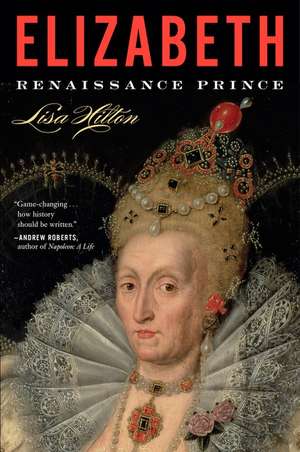
Elizabeth
Autor Lisa Hiltonen Limba Engleză Paperback – noi 2016
Observăm în literatura academică dedicată dinastiei Tudor o tendință de a analiza domnia Elisabetei I predominant prin prisma constrângerilor de gen sau a vieții sale private, lăsând adesea în plan secund rigoarea sa politică. Volumul Elizabeth de Lisa Hilton completează această lacună, propunând o reevaluare ambițioasă a reginei ca un strateg politic de tip machiavelic. Apreciem modul în care autoarea depășește clișeul „trupului slab de femeie”, demonstrând cum Elisabeta a utilizat convențiile curtenești ca instrumente deliberate de putere.
Remarcăm utilizarea unor date noi din arhivele din Franța, Italia, Rusia și Turcia, care oferă o dimensiune europeană și globală adesea ignorată în biografiile anglo-centrice. Această abordare extinde cadrul propus de The Subject of Elizabeth de Louis Montrose cu date noi din surse diplomatice externe, oferind o imagine mai clară a modului în care o conducătoare considerată ilegitimă de contemporanii săi a transformat o națiune marginalizată într-un stat modern. Dacă lucrări precum Of Chastity and Power de Philippa Berry s-au concentrat pe reprezentările culturale și literare ale reginei, Lisa Hilton se ancorează în pragmatismul politic.
În contextul operei sale, Elizabeth reprezintă o evoluție naturală de la studiile sale anterioare, precum Queens Consort: England's Medieval Queens, unde analiza rolul femeilor la vârful puterii. Totodată, tema ambiției și a confruntării într-o lume dominată de bărbați rezonează cu abordarea din Sex and the City of Ladies. Stilul este precis, academic dar narativ, reușind să transforme o analiză istorică riguroasă într-o lectură captivantă despre supraviețuire și viziune statală.
Preț: 150.59 lei
Carte disponibilă
Livrare economică 05-19 noiembrie
Specificații
ISBN-10: 0544811917
Pagini: 416
Ilustrații: 16 pp b-w illustrations
Dimensiuni: 133 x 203 x 24 mm
Greutate: 0.25 kg
Editura: Mariner Books
Locul publicării:United States
V-ar putea interesa
-
 Queen AnneAnne SomersetPreț: 122.11 lei
 -
 The Ugly RenaissanceAlexander Lee-17%Preț: 80.19 lei96.18 lei
 -
 Singled OutVirginia NicholsonPreț: 133.11 lei
 -
 A People of One Book: The Bible and the VictoriansTimothy Larsen-17%Preț: 283.41 lei339.94 lei
 -
 How to be a TudorRuth Goodman-19%Preț: 75.79 lei93.55 lei
 -
 AthenaisLisa HiltonPreț: 149.10 lei
 -
 Medieval History for DummiesStephen BatchelorPreț: 155.40 lei
 -
 She-WolvesHelen CastorPreț: 95.18 lei
 -
 -26%Preț: 58.39 lei78.71 lei
 -
 -26%Preț: 68.90 lei93.62 lei
 -
 Queens Consort: England's Medieval QueensLisa Hilton-26%Preț: 90.63 lei121.88 lei
 -
 House of Treason: The Rise and Fall of a Tudor DynastyRobert Hutchinson-27%Preț: 77.66 lei106.16 lei
 -
 -25%Preț: 70.35 lei94.33 lei
 -
 -27%Preț: 68.52 lei93.38 lei
 -
 Disraeli: or, The Two LivesDouglas Hurd-25%Preț: 70.55 lei94.44 lei
 -
 Preț: 67.94 lei
 -
 Getting Your Book Published for DummiesSarah Parsons ZackheimPreț: 139.08 lei
 -
 Basic English Grammar For Dummies, UK EditionGeraldine WoodsPreț: 130.50 lei
 -
 The Balfour Declaration: The Origins of the Arab-Israeli ConflictJonathan Schneer-26%Preț: 91.52 lei123.05 lei
 -
 A History of the WorldAndrew Marr-29%Preț: 80.16 lei112.20 lei
 -
 -25%Preț: 76.51 lei102.02 lei
 -
 Preț: 361.73 lei
 -
 Hidden Treasures of LondonMichael Mcnay-14%Preț: 208.61 lei242.95 lei
De ce să citești această carte
Recomandăm această biografie cititorilor pasionați de istoria politică a Renașterii care doresc să treacă dincolo de mitul „Reginei Fecioare”. Lisa Hilton oferă o perspectivă proaspătă, bazată pe cercetări multinaționale, transformând imaginea Elisabetei dintr-o figură tragică sau romantică într-un lider pragmatic. Este o resursă excelentă pentru înțelegerea mecanismelor puterii și a modului în care diplomația internațională a modelat Anglia modernă.
Despre autor
Lisa Hilton este o istorică și romancieră britanică de prestigiu, educată la Universitatea Oxford. Opera sa non-ficțională se concentrează pe figuri feminine marcante și pe istoria puterii în Europa, fiind cunoscută pentru lucrări precum The Real Queen of France: Athénais and Louis XIV și Queens Consort: England's Medieval Queens. Capacitatea sa de a îmbina rigoarea cercetării cu o scriitură alertă i-a adus aprecieri critice, fiind considerată una dintre vocile importante care reevaluează rolul femeilor în istoria politică europeană. Locuiește în Londra și colaborează frecvent cu publicații culturale de renume.
Descriere scurtă
[An] ambitious re-examination of the intersection of gender and monarchy.” — New York Times Book Review
Queen Elizabeth I was all too happy to play on courtly conventions of gender when it suited her “weak and feeble woman’s body” to do so for political gain. But in Elizabeth, historian Lisa Hilton offers ample evidence why those famous words should not be taken at face value. With new research out of France, Italy, Russia, and Turkey, Hilton’s fresh interpretation is of a queen who saw herself primarily as a Renaissance prince—an expert in Machiavellian statecraft.
Elizabeth depicts a queen who was much less constrained by her femininity than most accounts claim, challenging readers to reassess Elizabeth’s reign and the colorful drama and intrigue to which it is always linked. It’s a fascinating journey that shows how a marginalized newly crowned queen, whose European contemporaries considered her to be the illegitimate ruler of a pariah nation, ultimately adapted to become England’s first recognizably modern head of state.
“Hilton transforms an irreverent, centuries-old vision of a ‘bewigged farthingale with a mysterious sex life’ into a resolute, steel-spined survivor who far surpassed Henry VII’s wildest hopes for his new dynasty.” — Publishers Weekly
Recenzii
Notă biografică
Descriere
A definitive portrait of one of the most compelling monarchs England has ever had: Elizabeth I.
'We are a prince from a line of princes.'
Lisa Hilton's majestic biography of Elizabeth I, 'The Virgin Queen', uses new research to present a fresh interpretation of Elizabeth as a queen who saw herself primarily as a Renaissance prince, delivering a very different perspective on her emotional and sexual life, and upon her attempts to mould England into a European state. Elizabeth was not an exceptional woman but an exceptional ruler, and this book challenges readers to reassess her reign, and the colourful drama, scandal and intrigue to which it is always linked.