
Elementary Number Theory: Springer Undergraduate Mathematics Series
Autor Gareth A. Jones, Josephine M. Jonesen Limba Engleză Paperback – 14 ian 1998
Considerăm că utilitatea practică a acestui curs rezidă în capacitatea sa de a demistifica rigoarea matematică, oferind un punct de intrare accesibil într-un domeniu adesea perceput ca fiind abstract. Elementary Number Theory este conceput special pentru auto-studiu, eliminând barierele de intrare prin segmentarea riguroasă a dificultății. Primele trei capitole, axate pe divizibilitate, numere prime și congruențe, se bazează pe cunoștințe de nivel liceal, facilitând tranziția către concepte mai complexe. Progresia este logică: odată ce cititorul stăpânește aritmetica modulară, autorii introduc elemente de teoria grupurilor pentru a explora funcția lui Euler și rădăcinile primitive. Această lucrare completează perspectiva oferită de A Friendly Introduction to Number Theory de Joseph Silverman, adăugând o structură formală specifică seriei Springer Undergraduate Mathematics Series și o rigoare academică ce pregătește studentul pentru cursuri universitare avansate. În timp ce Silverman se concentrează pe intuiție și cercetare activă, Gareth A. Jones și Josephine M. Jones pun accent pe demonstrația completă și pe rezolvarea exhaustivă a exercițiilor. În contextul operei lui Gareth A. Jones, volumul de față servește drept fundament teoretic pentru lucrările sale mai tehnice, precum Information and Coding Theory, unde principiile numerice sunt aplicate în criptografie și comunicații. Structura cărții, care culminează cu o analiză a Marii Teoreme a lui Fermat, demonstrează că teoria numerelor nu este doar o colecție de algoritmi, ci o disciplină vie, cu o istorie bogată care se întinde până la cercetările contemporane.
Din seria Springer Undergraduate Mathematics Series
-
 Preț: 333.42 lei
 -
 Preț: 373.88 lei
 -
 Preț: 413.31 lei
 -
 Preț: 366.50 lei
 -
 Preț: 265.98 lei
 -
 Preț: 414.81 lei
 - 13%
 Preț: 403.14 lei
 - 20%
 Preț: 374.59 lei
 -
 Preț: 383.13 lei
 -
 Preț: 422.57 lei
 -
 Preț: 390.50 lei
 -
 Preț: 404.72 lei
 -
 Preț: 400.74 lei
 -
 Preț: 438.54 lei
 -
 Preț: 368.16 lei
 -
 Preț: 282.72 lei
 -
 Preț: 301.31 lei
 -
 Preț: 261.80 lei
 -
 Preț: 269.23 lei
 -
 Preț: 267.01 lei
 -
 Preț: 267.95 lei
 -
 Preț: 362.56 lei
 -
 Preț: 270.56 lei
 -
 Preț: 276.73 lei
 -
 Preț: 278.40 lei
 -
 Preț: 273.62 lei
 -
 Preț: 353.46 lei
 -
 Preț: 271.48 lei
 - 15%
 Preț: 506.44 lei
 -
 Preț: 282.17 lei
 -
 Preț: 265.85 lei
 -
 Preț: 275.65 lei
 -
 Preț: 280.67 lei
 -
 Preț: 259.16 lei
 -
 Preț: 274.44 lei
 -
 Preț: 323.68 lei
 -
 Preț: 281.19 lei
 -
 Preț: 281.87 lei
 -
 Preț: 272.46 lei
 -
 Preț: 265.55 lei
 -
 Preț: 276.32 lei
 -
 Preț: 271.25 lei
 -
 Preț: 254.58 lei
 -
 Preț: 267.93 lei
 -
 Preț: 260.53 lei
 -
 Preț: 356.95 lei
 -
 Preț: 257.69 lei
 -
 Preț: 254.70 lei
 -
 Preț: 270.73 lei
Preț: 266.17 lei
Carte disponibilă
Livrare economică 31 octombrie-14 noiembrie
Livrare express 17-23 octombrie pentru 32.74 lei
Specificații
ISBN-10: 3540761977
Pagini: 316
Ilustrații: XIV, 302 p.
Dimensiuni: 178 x 235 x 18 mm
Greutate: 0.55 kg
Ediția:1998
Editura: Springer
Colecția Springer Undergraduate Mathematics Series
Seria Springer Undergraduate Mathematics Series
Locul publicării:London, United Kingdom
V-ar putea interesa
-
 Experimental Number TheoryFernando Rodriguez Villegas-30%Preț: 347.87 lei494.18 lei
 -
 Introduction to Analytic Number TheoryTom M. ApostolPreț: 410.53 lei
 -
 Diophantine ApproximationsIvan NivenPreț: 43.35 lei
 -
 Fibonacci and Lucas Numbers, and the Golden SectionSteven VajdaPreț: 82.15 lei
 -
 Algebraic Theory of NumbersPierre SamuelPreț: 56.61 lei
 -
 Complex FunctionsGareth A. Jones-19%Preț: 630.44 lei778.32 lei
 -
 Number Theory and PolynomialsJames Mckee-11%Preț: 444.70 lei499.67 lei
 -
 Elliptic Curves and Big Galois RepresentationsDaniel Delbourgo-11%Preț: 536.17 lei602.44 lei
 -
 The Large Sieve and its ApplicationsE. Kowalski-14%Preț: 843.82 lei981.18 lei
 -
 ArithmeticsMarc Hindry-15%Preț: 485.41 lei571.07 lei
 -
 Knots and Primes: An Introduction to Arithmetic TopologyMasanori MorishitaPreț: 393.53 lei
 -
 Rational Number Theory in the 20th CenturyW¿adys¿aw Narkiewicz-18%Preț: 804.38 lei980.95 lei
 -
 A Beginner's Course in Boundary Element MethodsWhye-Teong AngPreț: 167.44 lei
 -
 Catalan's ConjectureRené SchoofPreț: 430.78 lei
 -
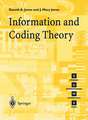
 Information and Coding TheoryGareth A. JonesPreț: 353.46 lei
 -
 An Introduction to Number TheoryG. Everest-15%Preț: 521.68 lei613.74 lei
 -
 Dessins d'Enfants on Riemann SurfacesGareth A. Jones-18%Preț: 856.13 lei1044.07 lei
 -
 -18%Preț: 1071.93 lei1307.22 lei
Public țintă
Lower undergraduateDe ce să citești această carte
Recomandăm această carte studenților de la facultățile de matematică și informatică care au nevoie de un suport de curs clar și bine structurat. Cititorul câștigă o înțelegere profundă a proprietăților numerelor întregi prin exemple lucrate și soluții detaliate. Este o resursă esențială deoarece transformă subiecte dificile în concepte digerabile, oferind independență în învățare fără a sacrifica rigoarea academică necesară la nivel universitar.
Despre autor
Gareth A. Jones este un matematician cu o vastă experiență academică, deținând funcția de Senior Lecturer la London School of Economics and Political Science. Expertiza sa acoperă domenii diverse, de la combinatorică algebrică la geometria suprafețelor Riemann. În Elementary Number Theory, Jones colaborează cu Josephine M. Jones pentru a distila concepte matematice complexe într-un format pedagogic accesibil. Autorul este cunoscut pentru abilitatea de a face legătura între matematica pură și aplicațiile practice, o trăsătură vizibilă și în celelalte lucrări ale sale dedicate teoriei codării și simetriei grafurilor.
Descriere scurtă
Cuprins
Recenzii
BULLETIN OF MATHEMATICS BOOKS
"?as a nice concluding chapter on Fermat? Last Theorem, with a brief discussion on the coup de grace."
G.A. Jones and J.M. Jones
Elementary Number Theory
"A welcome addition . . . a carefully and well-written book."—THE MATHEMATICAL GAZETTE
"This book would make an excellent text for an undergraduate course on number theory."
—MATHEMATICAL REVIEWS